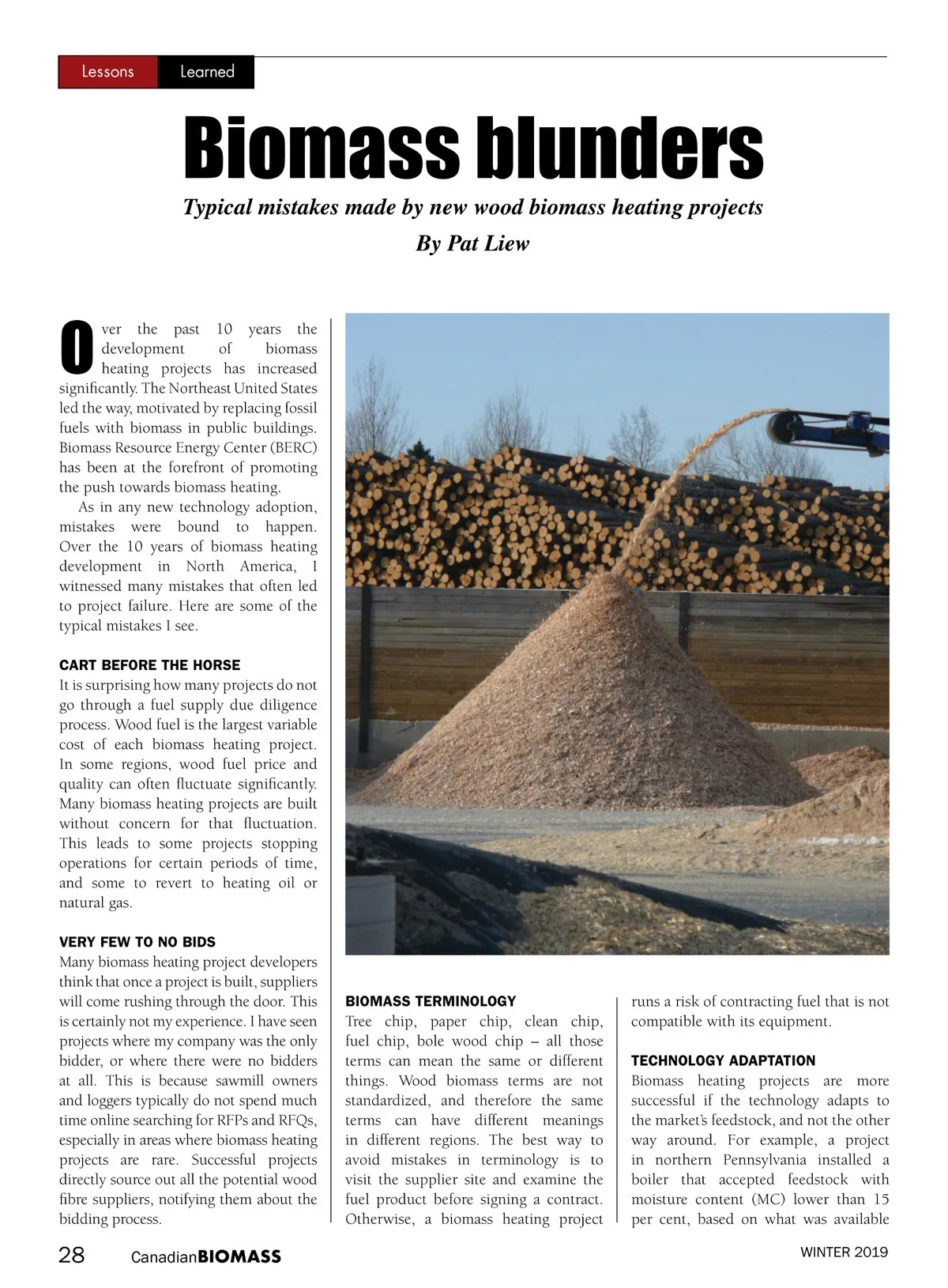
Lessons Learned Biomass blunders Typical mistakes made by new wood biomass heating projects By Pat Liew O ver the past 10 years the development of biomass heating projects has increased significantly. The Northeast United States led the way, motivated by replacing fossil fuels with biomass in public buildings. Biomass Resource Energy Center (BERC) has been at the forefront of promoting the push towards biomass heating. As in any new technology adoption, mistakes were bound to happen. Over the 10 years of biomass heating development in North America, I witnessed many mistakes that often led to project failure. Here are some of the typical mistakes I see. CART BEFORE THE HORSE It is surprising how many projects do not go through a fuel supply due diligence process. Wood fuel is the largest variable cost of each biomass heating project. In some regions, wood fuel price and quality can often fluctuate significantly. Many biomass heating projects are built without concern for that fluctuation. This leads to some projects stopping operations for certain periods of time, and some to revert to heating oil or natural gas. VERY FEW TO NO BIDS Many biomass heating project developers think that once a project is built, suppliers will come rushing through the door. This is certainly not my experience. I have seen projects where my company was the only bidder, or where there were no bidders at all. This is because sawmill owners and loggers typically do not spend much time online searching for RFPs and RFQs, especially in areas where biomass heating projects are rare. Successful projects directly source out all the potential wood fibre suppliers, notifying them about the bidding process. BIOMASS TERMINOLOGY Tree chip, paper chip, clean chip, fuel chip, bole wood chip – all those terms can mean the same or different things. Wood biomass terms are not standardized, and therefore the same terms can have different meanings in different regions. The best way to avoid mistakes in terminology is to visit the supplier site and examine the fuel product before signing a contract. Otherwise, a biomass heating project runs a risk of contracting fuel that is not compatible with its equipment. TECHNOLOGY ADAPTATION Biomass heating projects are more successful if the technology adapts to the market’s feedstock, and not the other way around. For example, a project in northern Pennsylvania installed a boiler that accepted feedstock with moisture content (MC) lower than 15 per cent, based on what was available WINTER 2019 28 Canadian BIOMASS
Canadian Biomass Winter 2019: Page 28