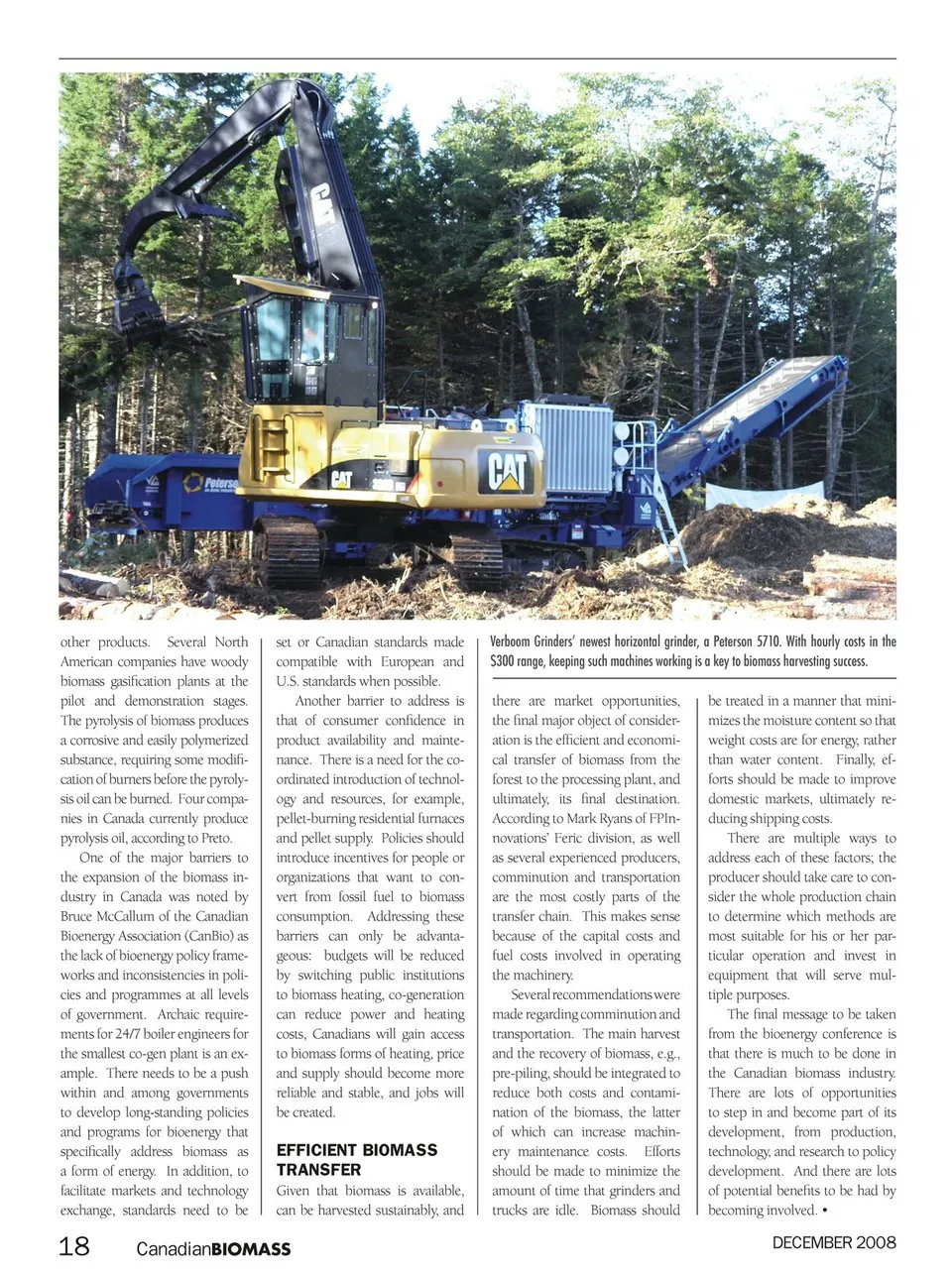
other products. Several North American companies have woody biomass gasifi cation plants at the pilot and demonstration stages. The pyrolysis of biomass produces a corrosive and easily polymerized substance, requiring some modifi- cation of burners before the pyroly- sis oil can be burned. Four compa- nies in Canada currently produce pyrolysis oil, according to Preto. One of the major barriers to the expansion of the biomass in- dustry in Canada was noted by Bruce McCallum of the Canadian Bioenergy Association (CanBio) as the lack of bioenergy policy frame- works and inconsistencies in poli- cies and programmes at all levels of government. Archaic require- ments for 24/7 boiler engineers for the smallest co-gen plant is an ex- ample. There needs to be a push within and among governments to develop long-standing policies and programs for bioenergy that specifi cally address biomass as a form of energy. In addition, to facilitate markets and technology exchange, standards need to be set or Canadian standards made compatible with European and U.S. standards when possible. Another barrier to address is that of consumer confidence in product availability and mainte- nance. There is a need for the co- ordinated introduction of technol- ogy and resources, for example, pellet-burning residential furnaces and pellet supply. Policies should introduce incentives for people or organizations that want to con- vert from fossil fuel to biomass consumption. Addressing these barriers can only be advanta- geous: budgets will be reduced by switching public institutions to biomass heating, co-generation can reduce power and heating costs, Canadians will gain access to biomass forms of heating, price and supply should become more reliable and stable, and jobs will be created. EFFICIENT BIOMASS TRANSFER Given that biomass is available, can be harvested sustainably, and 18 CanadianBIOMASS Verboom Grindersʼ newest horizontal grinder, a Peterson 5710. With hourly costs in the $300 range, keeping such machines working is a key to biomass harvesting success. there are market opportunities, the fi nal major object of consider- ation is the effi cient and economi- cal transfer of biomass from the forest to the processing plant, and ultimately, its final destination. According to Mark Ryans of FPIn- novations’ Feric division, as well as several experienced producers, comminution and transportation are the most costly parts of the transfer chain. This makes sense because of the capital costs and fuel costs involved in operating the machinery. Several recommendations were made regarding comminution and transportation. The main harvest and the recovery of biomass, e.g., pre-piling, should be integrated to reduce both costs and contami- nation of the biomass, the latter of which can increase machin- ery maintenance costs. Efforts should be made to minimize the amount of time that grinders and trucks are idle. Biomass should be treated in a manner that mini- mizes the moisture content so that weight costs are for energy, rather than water content. Finally, ef- forts should be made to improve domestic markets, ultimately re- ducing shipping costs. There are multiple ways to address each of these factors; the producer should take care to con- sider the whole production chain to determine which methods are most suitable for his or her par- ticular operation and invest in equipment that will serve mul- tiple purposes. The fi nal message to be taken from the bioenergy conference is that there is much to be done in the Canadian biomass industry. There are lots of opportunities to step in and become part of its development, from production, technology, and research to policy development. And there are lots of potential benefi ts to be had by becoming involved. • DECEMBER 2008
Canadian Biomass December 2008: Page 18