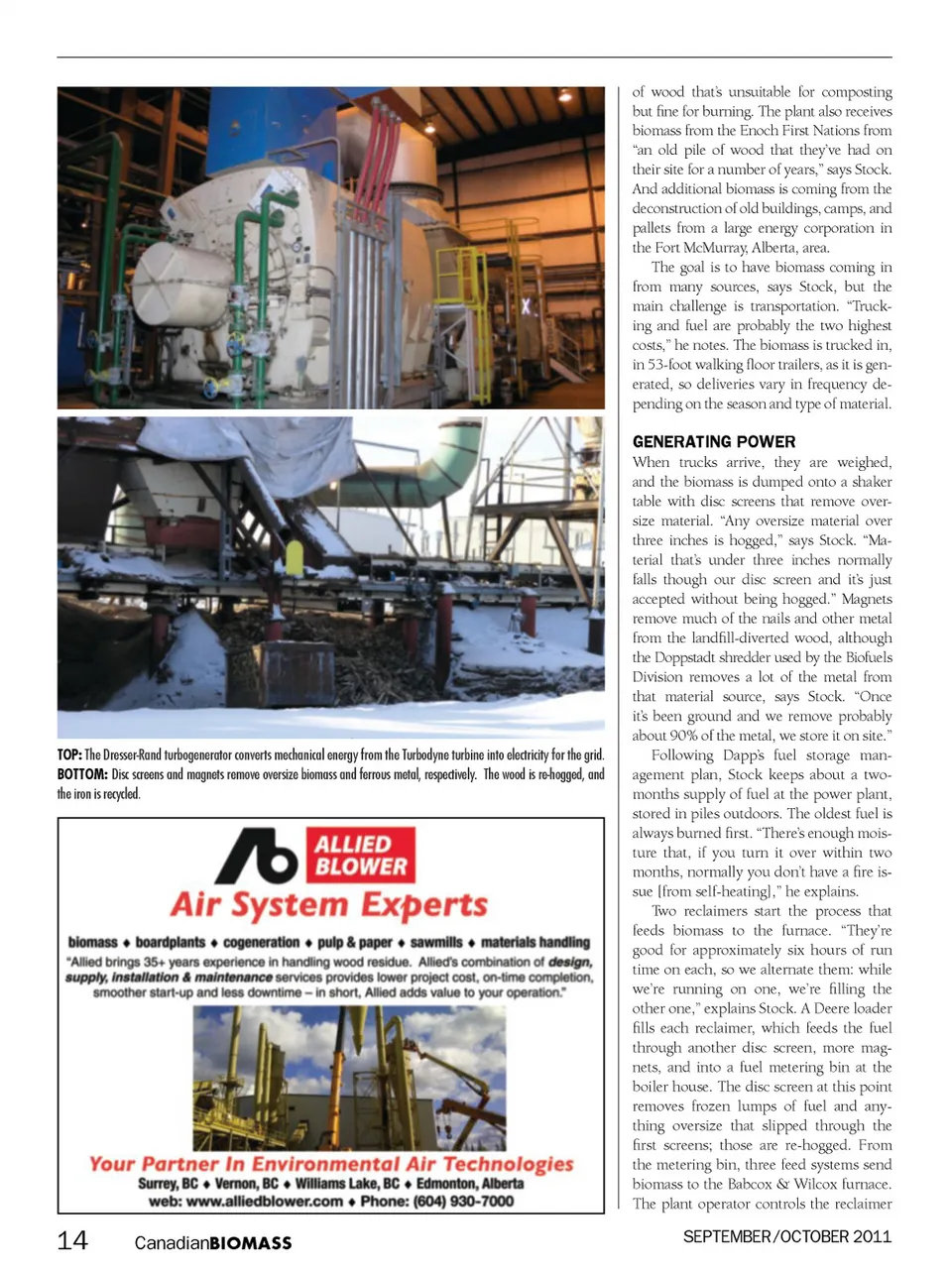
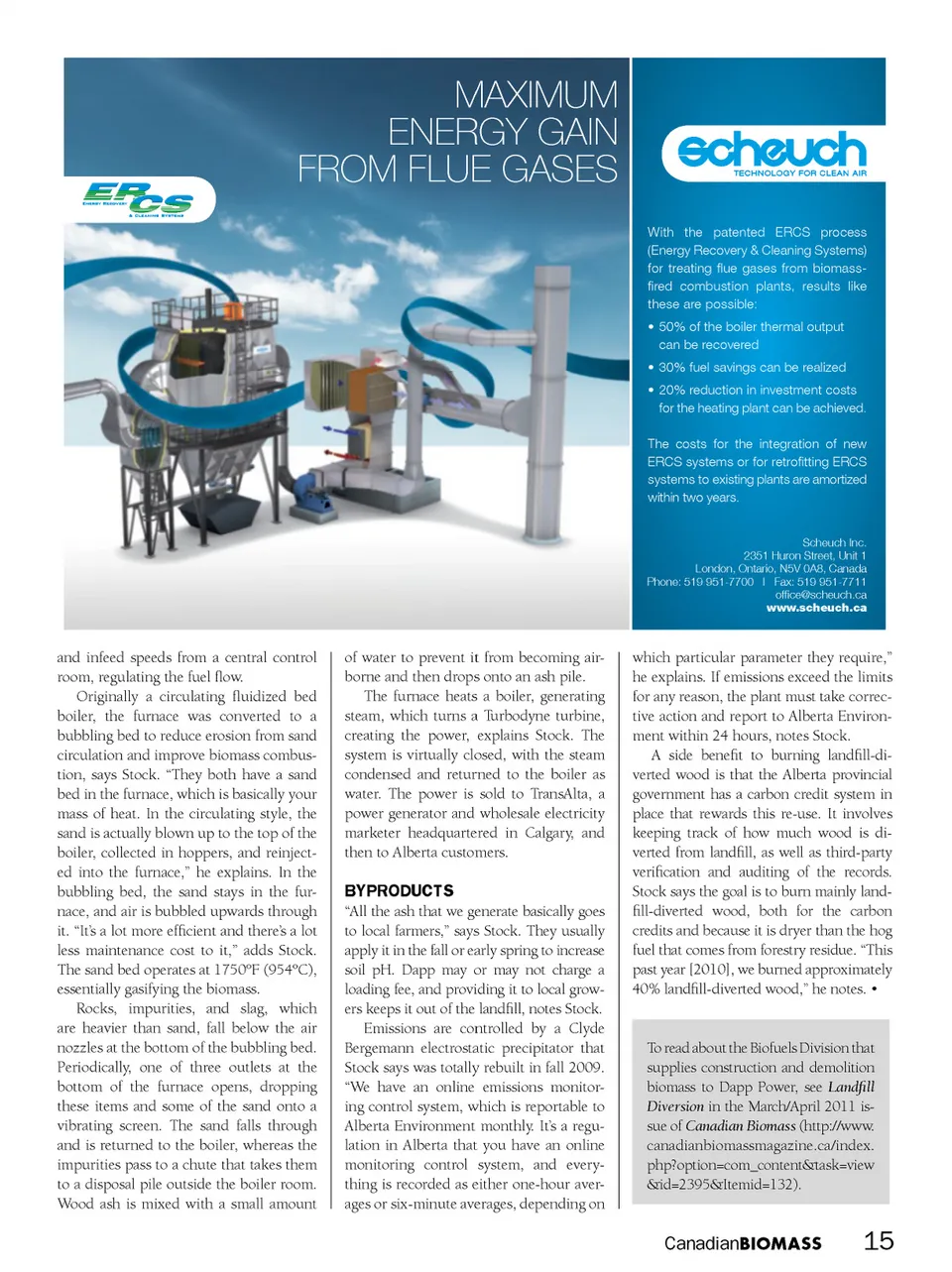
of wood that’s unsuitable for composting but fine for burning. The plant also receives biomass from the Enoch First Nations from “an old pile of wood that they’ve had on their site for a number of years,” says Stock. And additional biomass is coming from the deconstruction of old buildings, camps, and pallets from a large energy corporation in the Fort McMurray, Alberta, area. The goal is to have biomass coming in from many sources, says Stock, but the main challenge is transportation. “Truck-ing and fuel are probably the two highest costs,” he notes. The biomass is trucked in, in 53-foot walking floor trailers, as it is gen-erated, so deliveries vary in frequency de-pending on the season and type of material. geNeratiNg power TOP: The Dresser-Rand turbogenerator converts mechanical energy from the Turbodyne turbine into electricity for the grid. BOTTOM: Disc screens and magnets remove oversize biomass and ferrous metal, respectively. The wood is re-hogged, and the iron is recycled. When trucks arrive, they are weighed, and the biomass is dumped onto a shaker table with disc screens that remove over-size material. “Any oversize material over three inches is hogged,” says Stock. “Ma-terial that’s under three inches normally falls though our disc screen and it’s just accepted without being hogged.” Magnets remove much of the nails and other metal from the landfill-diverted wood, although the Doppstadt shredder used by the Biofuels Division removes a lot of the metal from that material source, says Stock. “Once it’s been ground and we remove probably about 90% of the metal, we store it on site.” Following Dapp’s fuel storage man-agement plan, Stock keeps about a two-months supply of fuel at the power plant, stored in piles outdoors. The oldest fuel is always burned first. “There’s enough mois-ture that, if you turn it over within two months, normally you don’t have a fire is-sue [from self-heating],” he explains. Two reclaimers start the process that feeds biomass to the furnace. “They’re good for approximately six hours of run time on each, so we alternate them: while we’re running on one, we’re filling the other one,” explains Stock. A Deere loader fills each reclaimer, which feeds the fuel through another disc screen, more mag-nets, and into a fuel metering bin at the boiler house. The disc screen at this point removes frozen lumps of fuel and any-thing oversize that slipped through the first screens; those are re-hogged. From the metering bin, three feed systems send biomass to the Babcox & Wilcox furnace. The plant operator controls the reclaimer SEPTEMBER/OCTOBER 2011 14 Canadian BIOMASS
Canadian Biomass September/October 2011: Page 14