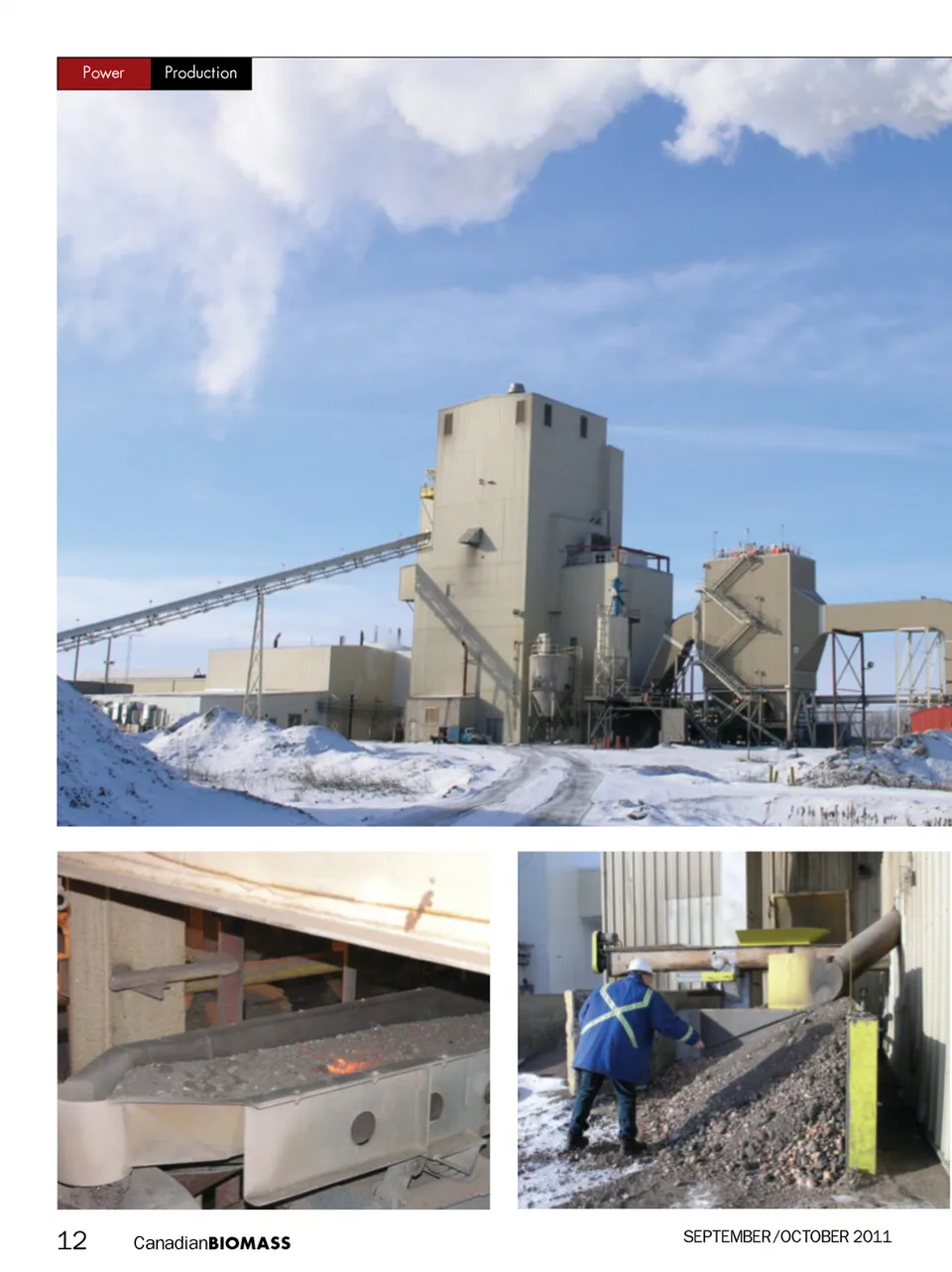
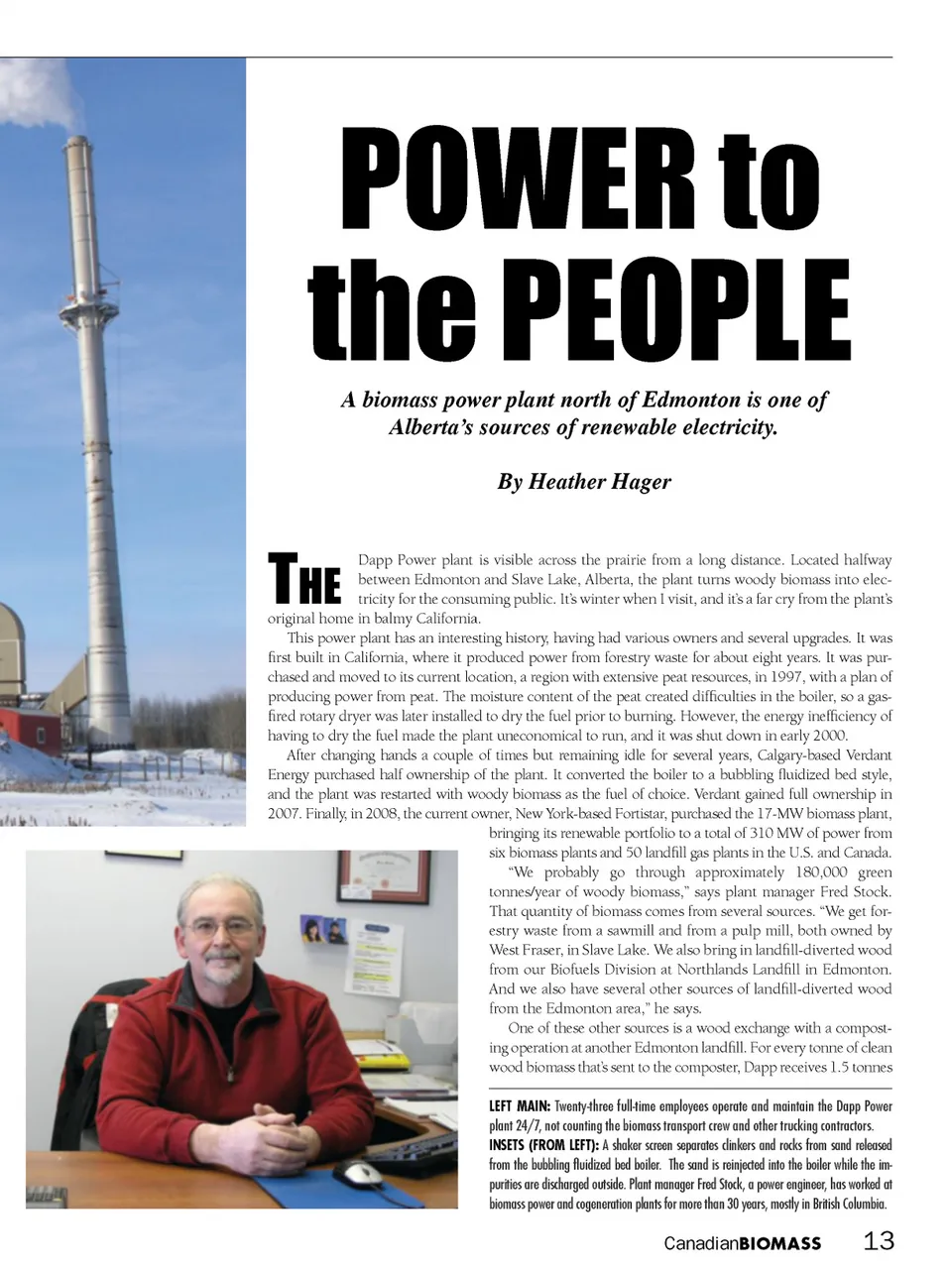
PoWEr to the PEoPlE A biomass power plant north of Edmonton is one of Alberta’s sources of renewable electricity. By Heather Hager T he Dapp Power plant is visible across the prairie from a long distance. Located halfway between Edmonton and Slave Lake, Alberta, the plant turns woody biomass into elec-tricity for the consuming public. It’s winter when I visit, and it’s a far cry from the plant’s original home in balmy California. This power plant has an interesting history, having had various owners and several upgrades. It was first built in California, where it produced power from forestry waste for about eight years. It was pur-chased and moved to its current location, a region with extensive peat resources, in 1997, with a plan of producing power from peat. The moisture content of the peat created difficulties in the boiler, so a gas-fired rotary dryer was later installed to dry the fuel prior to burning. However, the energy inefficiency of having to dry the fuel made the plant uneconomical to run, and it was shut down in early 2000. After changing hands a couple of times but remaining idle for several years, Calgary-based Verdant Energy purchased half ownership of the plant. It converted the boiler to a bubbling fluidized bed style, and the plant was restarted with woody biomass as the fuel of choice. Verdant gained full ownership in 2007. Finally, in 2008, the current owner, New York-based Fortistar, purchased the 17-MW biomass plant, bringing its renewable portfolio to a total of 310 MW of power from six biomass plants and 50 landfill gas plants in the U.S. and Canada. “We probably go through approximately 180,000 green tonnes/year of woody biomass,” says plant manager Fred Stock. That quantity of biomass comes from several sources. “We get for-estry waste from a sawmill and from a pulp mill, both owned by West Fraser, in Slave Lake. We also bring in landfill-diverted wood from our Biofuels Division at Northlands Landfill in Edmonton. And we also have several other sources of landfill-diverted wood from the Edmonton area,” he says. One of these other sources is a wood exchange with a compost-ing operation at another Edmonton landfill. For every tonne of clean wood biomass that’s sent to the composter, Dapp receives 1.5 tonnes LEFT MAIN: Twenty-three full-time employees operate and maintain the Dapp Power plant 24/7, not counting the biomass transport crew and other trucking contractors. INSETS (FROM LEFT): A shaker screen separates clinkers and rocks from sand released from the bubbling fluidized bed boiler. The sand is reinjected into the boiler while the im -purities are discharged outside. Plant manager Fred Stock, a power engineer, has worked at biomass power and cogeneration plants for more than 30 years, mostly in British Columbia. Canadian BIOMASS 13
Canadian Biomass September/October 2011: Page 13