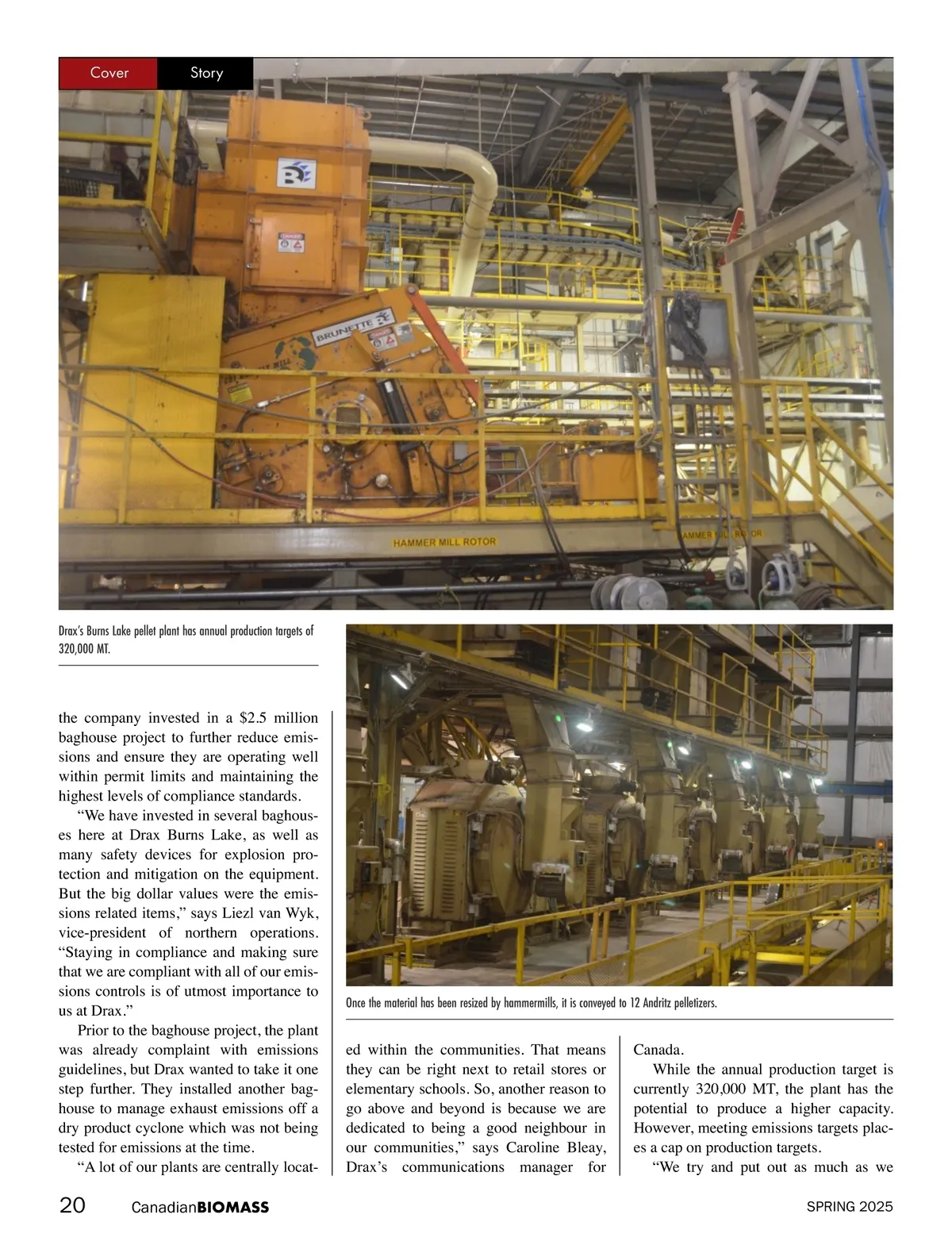
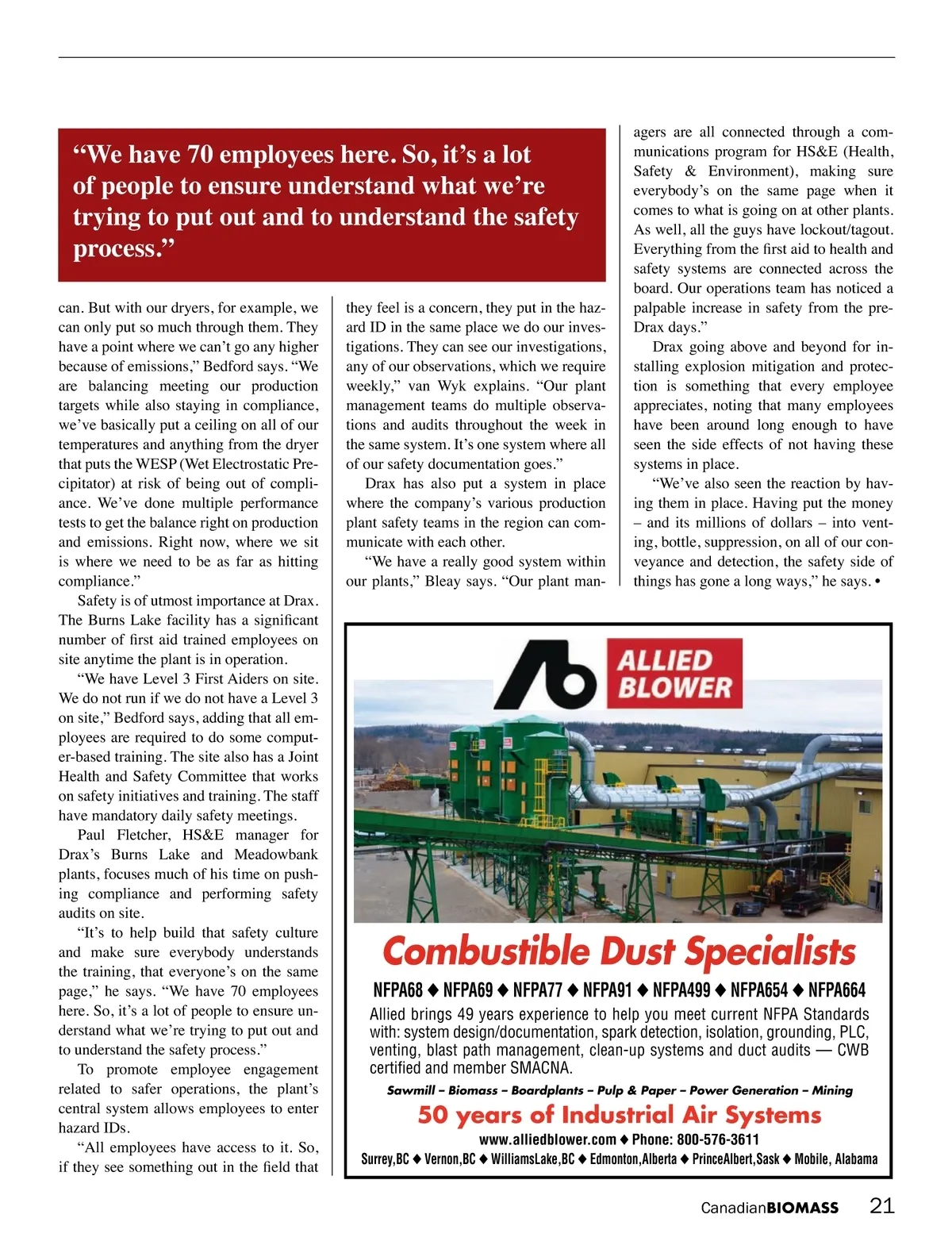
Cover Story Drax’s Burns Lake pellet plant has annual production targets of 320,000 MT. the company invested in a $2.5 million baghouse project to further reduce emis -sions and ensure they are operating well within permit limits and maintaining the highest levels of compliance standards. “We have invested in several baghous-es here at Drax Burns Lake, as well as many safety devices for explosion pro-tection and mitigation on the equipment. But the big dollar values were the emis-sions related items,” says Liezl van Wyk, vice-president of northern operations. “Staying in compliance and making sure that we are compliant with all of our emis-sions controls is of utmost importance to us at Drax.” Prior to the baghouse project, the plant was already complaint with emissions guidelines, but Drax wanted to take it one step further. They installed another bag -house to manage exhaust emissions off a dry product cyclone which was not being tested for emissions at the time. “A lot of our plants are centrally locat -Once the material has been resized by hammermills, it is conveyed to 12 Andritz pelletizers. ed within the communities. That means they can be right next to retail stores or elementary schools. So, another reason to go above and beyond is because we are dedicated to being a good neighbour in our communities,” says Caroline Bleay, Drax’s communications manager for Canada. While the annual production target is currently 320,000 MT, the plant has the potential to produce a higher capacity. However, meeting emissions targets plac-es a cap on production targets. “We try and put out as much as we SPRING 2025 20 Canadian BIOMASS
Canadian Biomass Spring 2025: Page 20