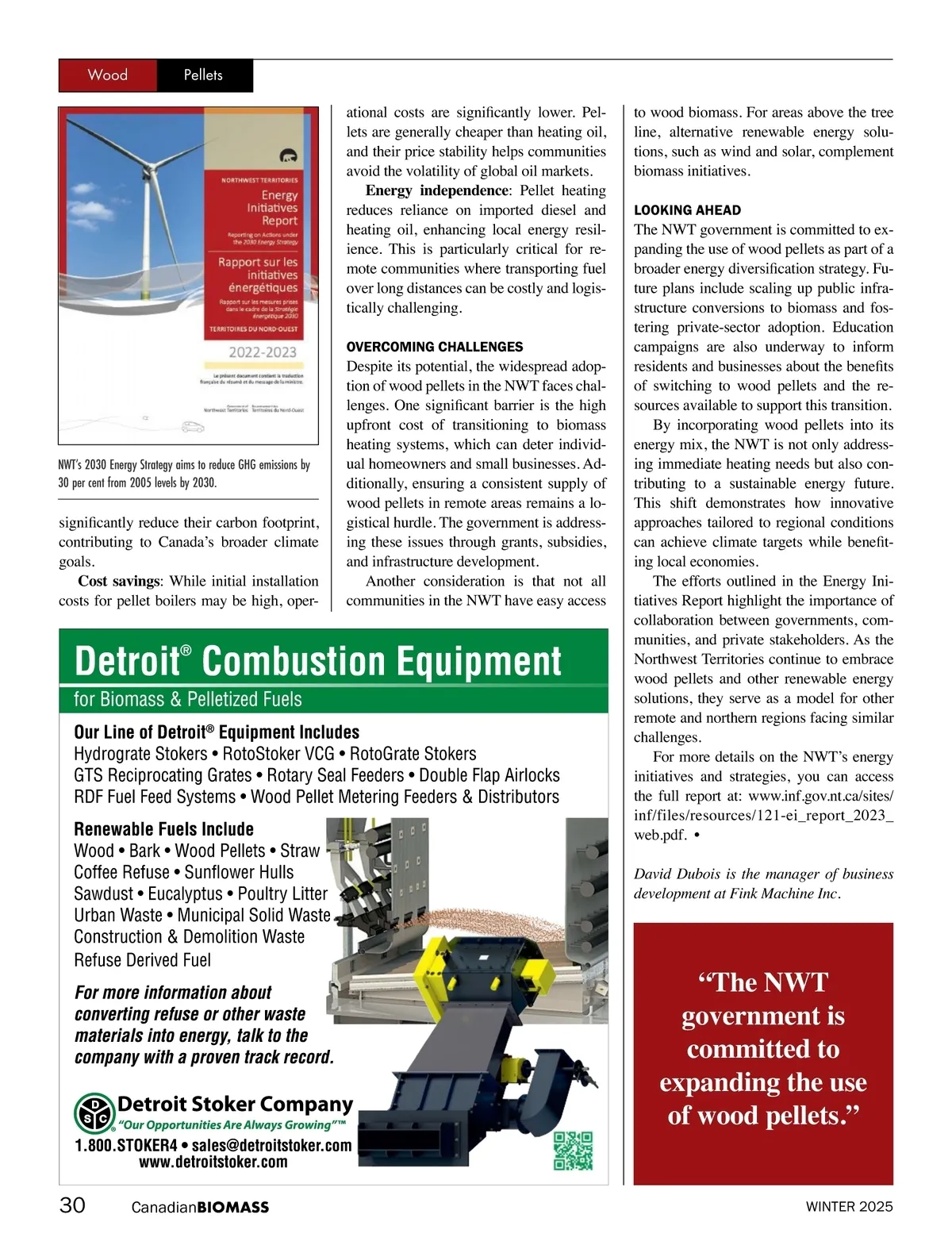
Wood Pellets ational costs are significantly lower. Pel -lets are generally cheaper than heating oil, and their price stability helps communities avoid the volatility of global oil markets. Energy independence : Pellet heating reduces reliance on imported diesel and heating oil, enhancing local energy resil -ience. This is particularly critical for re -mote communities where transporting fuel over long distances can be costly and logis -tically challenging. OVERCOMING CHALLENGES to wood biomass. For areas above the tree line, alternative renewable energy solu -tions, such as wind and solar, complement biomass initiatives. LOOKING AHEAD NWT’s 2030 Energy Strategy aims to reduce GHG emissions by 30 per cent from 2005 levels by 2030. significantly reduce their carbon footprint, contributing to Canada’s broader climate goals. Cost savings : While initial installation costs for pellet boilers may be high, oper -Despite its potential, the widespread adop -tion of wood pellets in the NWT faces chal -lenges. One significant barrier is the high upfront cost of transitioning to biomass heating systems, which can deter individ -ual homeowners and small businesses. Ad -ditionally, ensuring a consistent supply of wood pellets in remote areas remains a lo -gistical hurdle. The government is address -ing these issues through grants, subsidies, and infrastructure development. Another consideration is that not all communities in the NWT have easy access The NWT government is committed to ex -panding the use of wood pellets as part of a broader energy diversification strategy. Fu -ture plans include scaling up public infra -structure conversions to biomass and fos -tering private-sector adoption. Education campaigns are also underway to inform residents and businesses about the benefits of switching to wood pellets and the re -sources available to support this transition. By incorporating wood pellets into its energy mix, the NWT is not only address -ing immediate heating needs but also con -tributing to a sustainable energy future. This shift demonstrates how innovative approaches tailored to regional conditions can achieve climate targets while benefit -ing local economies. The efforts outlined in the Energy Ini -tiatives Report highlight the importance of collaboration between governments, com -munities, and private stakeholders. As the Northwest Territories continue to embrace wood pellets and other renewable energy solutions, they serve as a model for other remote and northern regions facing similar challenges. For more details on the NWT’s energy initiatives and strategies, you can access the full report at: www.inf.gov.nt.ca/sites/ inf/files/resources/121-ei_report_2023_ web.pdf. • David Dubois is the manager of business development at Fink Machine Inc. “The NWT government is committed to expanding the use of wood pellets.” Detroit Comb Canadian Equip & Pellet BIOMASS Meter Equip 4.6875in x 4.75in 2024-06-20 OUTLINE.indd 30 CB_Detroit Stoker_Summer24_CSA.indd 1 1 6/20/2024 3:17:37 PM 2024-06-21 12:22 PM WINTER 2025
Canadian Biomass Winter 2025: Page 30