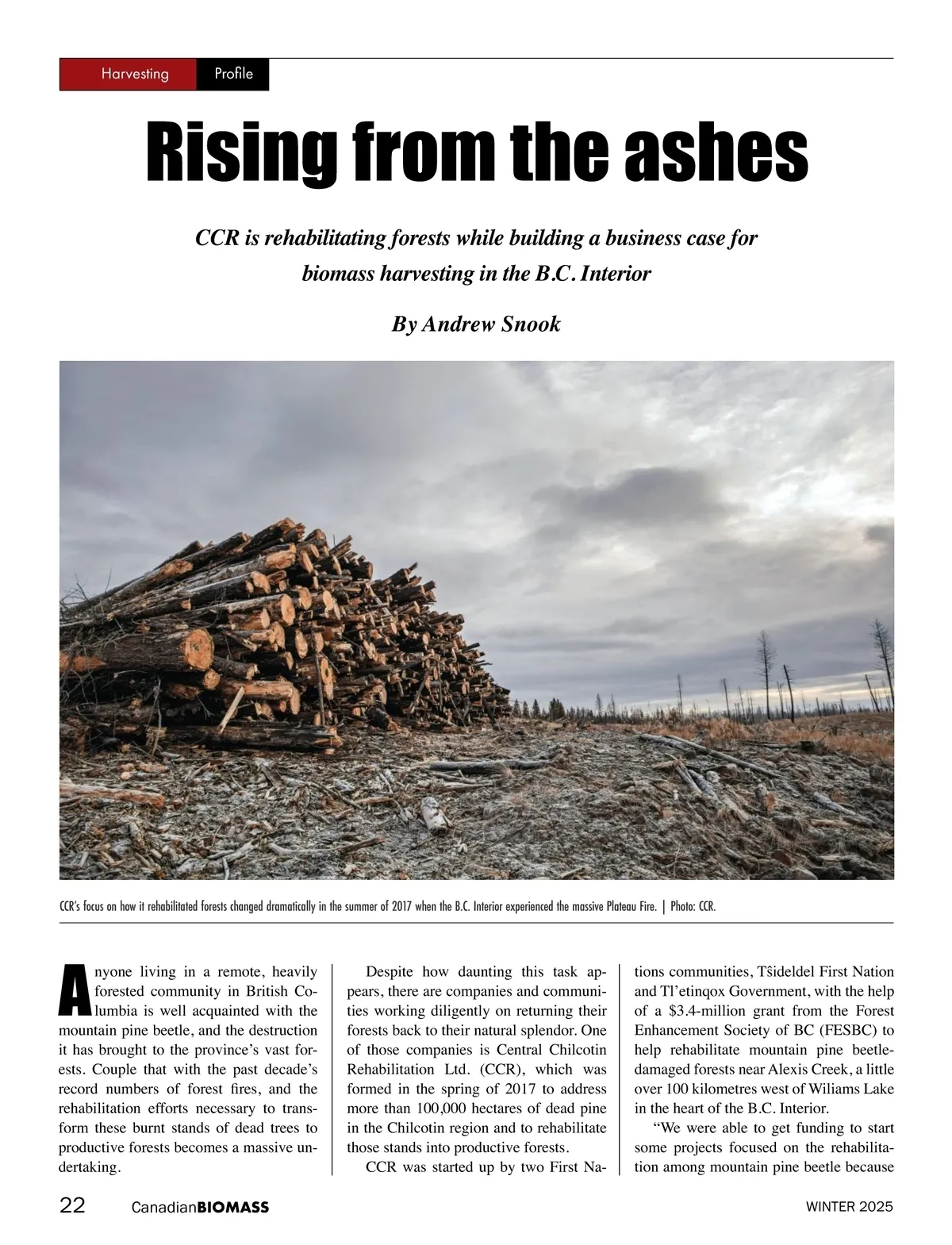
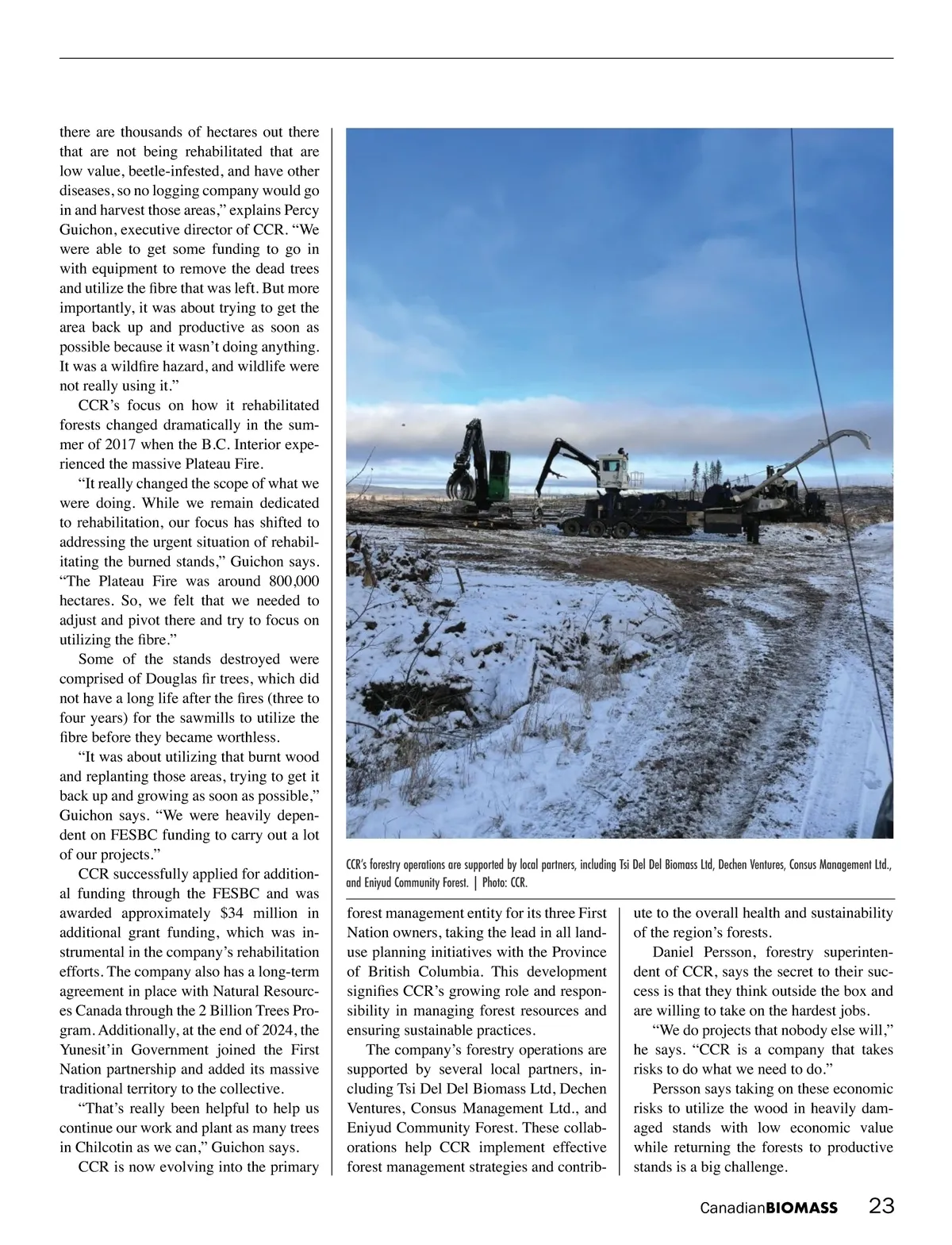
Harvesting Profile Rising from the ashes CCR is rehabilitating forests while building a business case for biomass harvesting in the B.C. Interior By Andrew Snook CCR’s focus on how it rehabilitated forests changed dramatically in the summer of 2017 when the B.C. Interior experienced the massive Plateau Fire. | Photo: CCR. A 22 nyone living in a remote, heavily forested community in British Co -lumbia is well acquainted with the mountain pine beetle, and the destruction it has brought to the province’s vast for -ests. Couple that with the past decade’s record numbers of forest fires, and the rehabilitation efforts necessary to trans -form these burnt stands of dead trees to productive forests becomes a massive un -dertaking. Despite how daunting this task ap -pears, there are companies and communi -ties working diligently on returning their forests back to their natural splendor. One of those companies is Central Chilcotin Rehabilitation Ltd. (CCR), which was formed in the spring of 2017 to address more than 100,000 hectares of dead pine in the Chilcotin region and to rehabilitate those stands into productive forests. CCR was started up by two First Na -tions communities, Tŝideldel First Nation and Tl’etinqox Government, with the help of a $3.4-million grant from the Forest Enhancement Society of BC (FESBC) to help rehabilitate mountain pine beetle-damaged forests near Alexis Creek, a little over 100 kilometres west of Wiliams Lake in the heart of the B.C. Interior. “We were able to get funding to start some projects focused on the rehabilita -tion among mountain pine beetle because WINTER 2025 Canadian BIOMASS
Canadian Biomass Winter 2025: Page 22