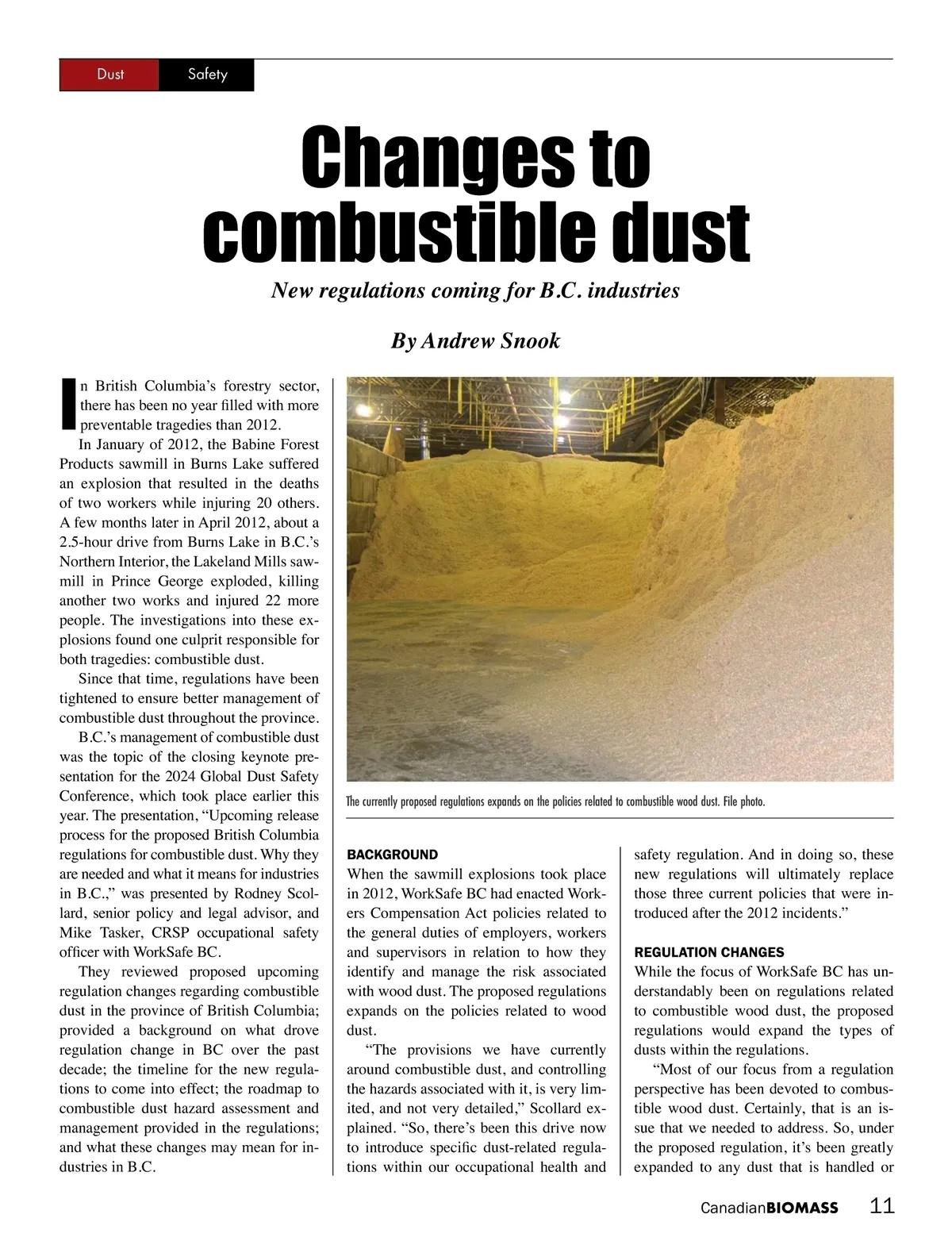
Dust Safety Changes to combustible dust New regulations coming for B.C. industries By Andrew Snook n British Columbia’s forestry sector, there has been no year filled with more preventable tragedies than 2012. In January of 2012, the Babine Forest Products sawmill in Burns Lake suffered an explosion that resulted in the deaths of two workers while injuring 20 others. A few months later in April 2012, about a 2.5-hour drive from Burns Lake in B.C.’s Northern Interior, the Lakeland Mills saw -mill in Prince George exploded, killing another two works and injured 22 more people. The investigations into these ex-plosions found one culprit responsible for both tragedies: combustible dust. Since that time, regulations have been tightened to ensure better management of combustible dust throughout the province. B.C.’s management of combustible dust was the topic of the closing keynote pre -sentation for the 2024 Global Dust Safety Conference, which took place earlier this year. The presentation, “Upcoming release process for the proposed British Columbia regulations for combustible dust. Why they are needed and what it means for industries in B.C.,” was presented by Rodney Scol-lard, senior policy and legal advisor, and Mike Tasker, CRSP occupational safety officer with WorkSafe BC. They reviewed proposed upcoming regulation changes regarding combustible dust in the province of British Columbia; provided a background on what drove regulation change in BC over the past decade; the timeline for the new regula-tions to come into effect; the roadmap to combustible dust hazard assessment and management provided in the regulations; and what these changes may mean for in-dustries in B.C. I The currently proposed regulations expands on the policies related to combustible wood dust. File photo. BACKGROUND When the sawmill explosions took place in 2012, WorkSafe BC had enacted Work -ers Compensation Act policies related to the general duties of employers, workers and supervisors in relation to how they identify and manage the risk associated with wood dust. The proposed regulations expands on the policies related to wood dust. “The provisions we have currently around combustible dust, and controlling the hazards associated with it, is very lim-ited, and not very detailed,” Scollard ex-plained. “So, there’s been this drive now to introduce specific dust-related regula -tions within our occupational health and safety regulation. And in doing so, these new regulations will ultimately replace those three current policies that were in-troduced after the 2012 incidents.” REGULATION CHANGES While the focus of WorkSafe BC has un -derstandably been on regulations related to combustible wood dust, the proposed regulations would expand the types of dusts within the regulations. “Most of our focus from a regulation perspective has been devoted to combus-tible wood dust. Certainly, that is an is-sue that we needed to address. So, under the proposed regulation, it’s been greatly expanded to any dust that is handled or Canadian BIOMASS 11
Canadian Biomass Summer 2024: Page 11