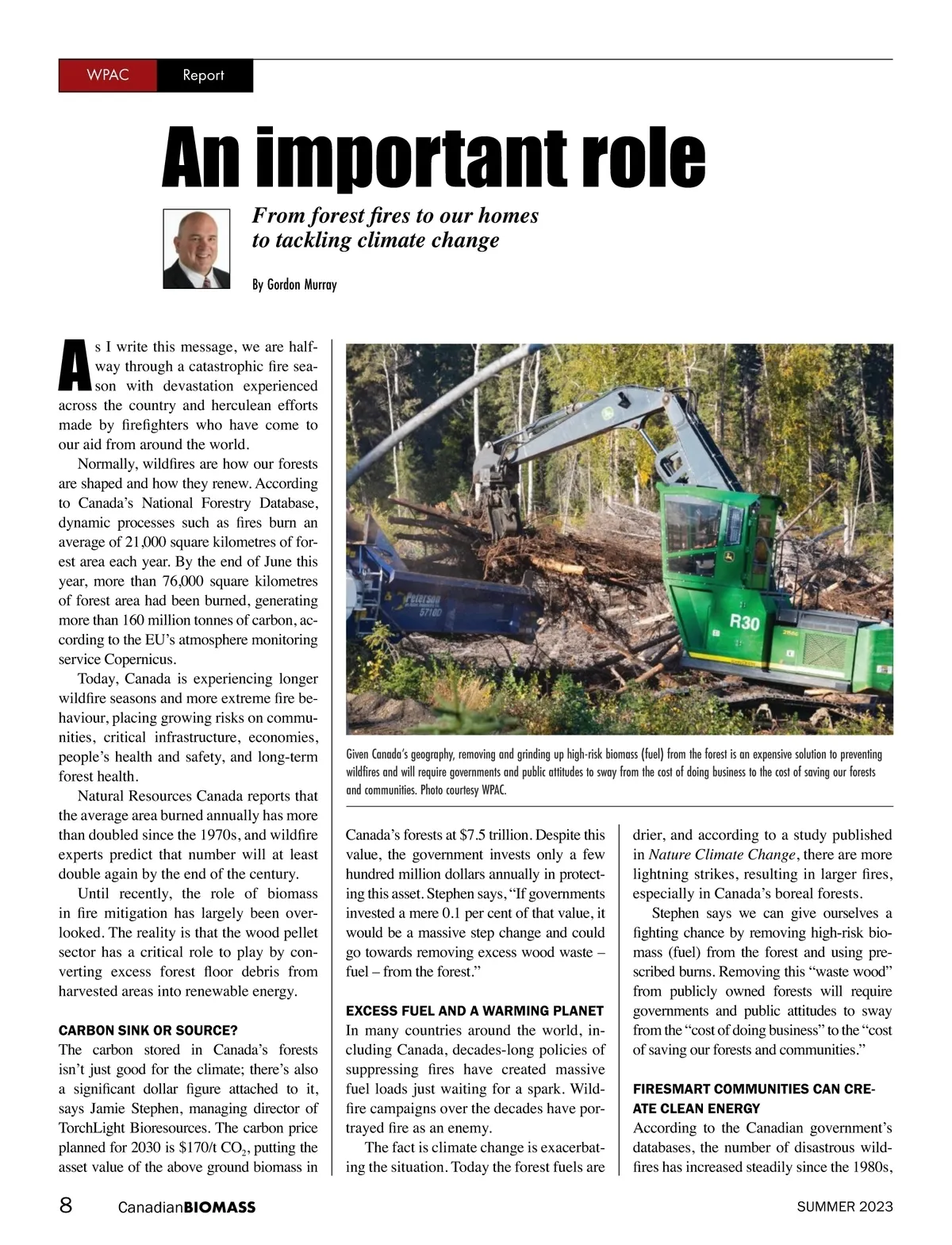
when there were fewer than 10 such fires compared to nearly 40 between 2010 and 2019. The database defines a disaster as meeting one of the following criteria: more than 10 people are killed, more than 100 people are affected, or an appeal for nation-al/international assistance was issued. To reduce the likelihood of catastroph-ic events, experts at Natural Resources Canada point to pro-active forest and fire management approaches such as reducing fuels available to burn (tree thinning, con-ducting planned burns, removing dead-wood), planting fire-tolerant tree species, and creating more fire breaks. The Nazko First Nation’s territory near Quesnel, B.C., was hit hard by the moun -tain pine beetle epidemic and by major wildfires. The Nation wanted to reduce the risk of future fires and with funding from the Forest Enhancement Society of BC, it launched an initiative selectively harvest-ing dead standing trees, dead trees that had blown down, and smaller understory trees. Resulting sawlogs went to saw -mills while pulp logs went to pulp mills in Quesnel. Waste material was processed and sent to local pellet plants. The wood pellet sector can also play an important role in rehabilitating the forest after a fire and salvaging the fibre. In 2015, the Bobtail Lake Fire burned more than 25,000 hectares of land west of Prince George, B.C. Before the arrival of the wood pellet sector, the burned wood would have been left to decay over many years, slowly emitting carbon to the atmo-sphere. Fortunately, wood pellet produc -er Pacific Bioenergy saw an opportunity to salvage fibre from this area, creating a valuable product and providing jobs, while at the same time opening up the fire area for reforestation activities to restore a healthy forest to this burned landscape. The pellets from the fuel in our forests can be used for industrial power generation globally as well as to heat and power our homes and buildings in Canada. Examples continue to grow: Ontario Power Generation operates the largest biomass plant in North America; in Yellowknife, 33 per cent of the territorial government buildings are heated with wood pellets; hospitals, schools, and commercial buildings across the Maritimes use biomass; the Tsi Del Del Nation sells biomass to the Atlantic Power facility, pro-viding power to more than 50,000 homes. MEETING OF MINDS IN OTTAWA Today, biomass is recognized by the Gov-ernment of Canada as both a solution to wildfire mitigation and as a low carbon technology. But to reach its full potential, good public policy and fair incentives from governments are needed. From investments in removal of fuel from the forest to new product innovation and incentives, there’s lots of opportunity to do more. I’m looking forward to our upcoming annual conference in Ottawa where we will explore these topics. Find my welcome mes -sage and the agenda on page 23. • Gordon Murray is the executive director of the Wood Pellet Association of Canada. Canadian BIOMASS CB_Hoffmann_Summer23_CSA.indd 1 2023-07-26 10:17 AM 9
Canadian Biomass Summer 2023: Page 9