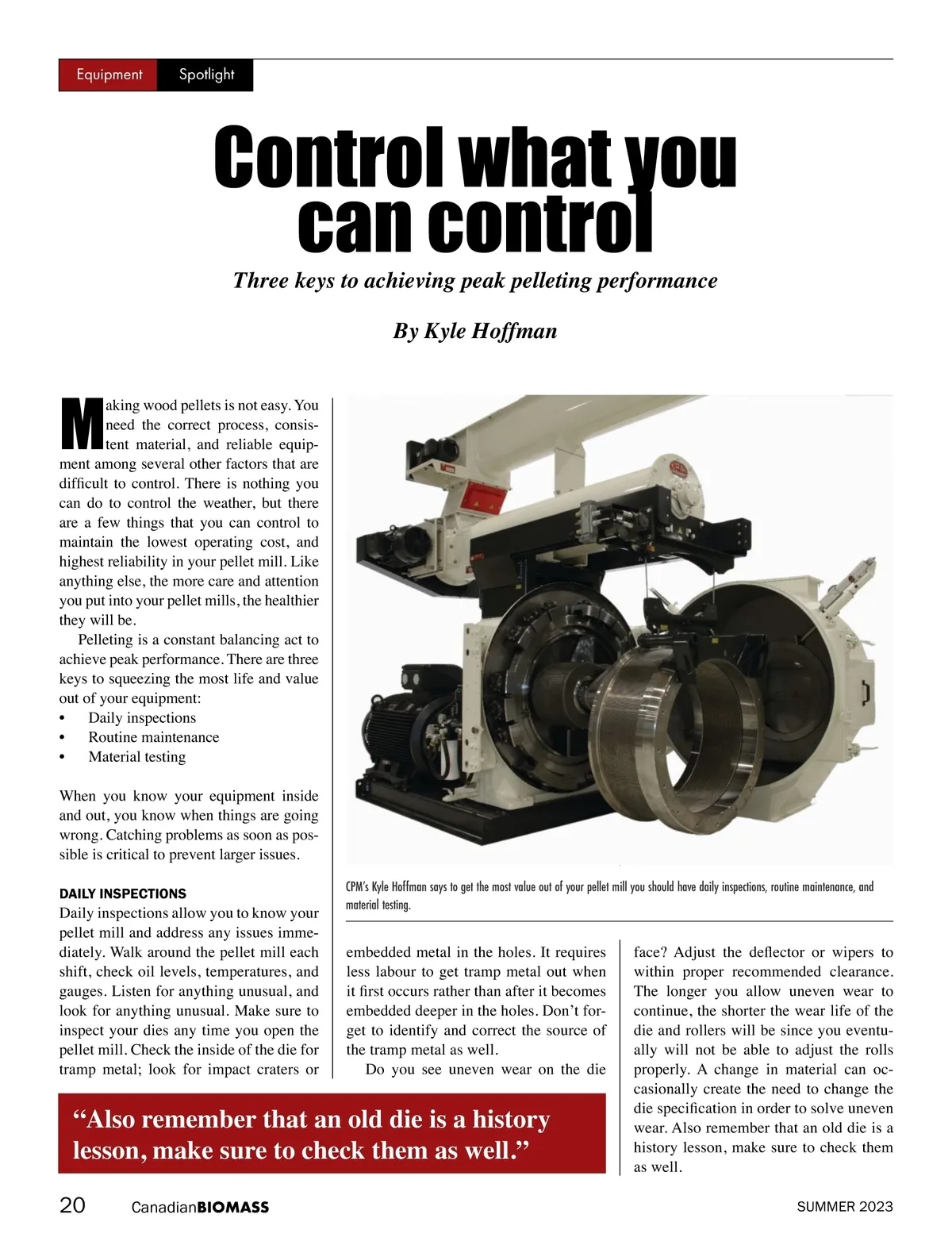
Equipment Spotlight Control what you can control Three keys to achieving peak pelleting performance By Kyle Hoffman M aking wood pellets is not easy. You need the correct process, consis-tent material, and reliable equip-ment among several other factors that are difficult to control. There is nothing you can do to control the weather, but there are a few things that you can control to maintain the lowest operating cost, and highest reliability in your pellet mill. Like anything else, the more care and attention you put into your pellet mills, the healthier they will be. Pelleting is a constant balancing act to achieve peak performance. There are three keys to squeezing the most life and value out of your equipment: • Daily inspections • Routine maintenance • Material testing When you know your equipment inside and out, you know when things are going wrong. Catching problems as soon as pos -sible is critical to prevent larger issues. DAILY INSPECTIONS Daily inspections allow you to know your pellet mill and address any issues imme-diately. Walk around the pellet mill each shift, check oil levels, temperatures, and gauges. Listen for anything unusual, and look for anything unusual. Make sure to inspect your dies any time you open the pellet mill. Check the inside of the die for tramp metal; look for impact craters or CPM’s Kyle Hoffman says to get the most value out of your pellet mill you should have daily inspections, routine maintenance, and material testing. embedded metal in the holes. It requires less labour to get tramp metal out when it first occurs rather than after it becomes embedded deeper in the holes. Don’t for -get to identify and correct the source of the tramp metal as well. Do you see uneven wear on the die “Also remember that an old die is a history lesson, make sure to check them as well.” 20 Canadian BIOMASS face? Adjust the deflector or wipers to within proper recommended clearance. The longer you allow uneven wear to continue, the shorter the wear life of the die and rollers will be since you eventu-ally will not be able to adjust the rolls properly. A change in material can oc -casionally create the need to change the die specification in order to solve uneven wear. Also remember that an old die is a history lesson, make sure to check them as well. SUMMER 2023
Canadian Biomass Summer 2023: Page 20