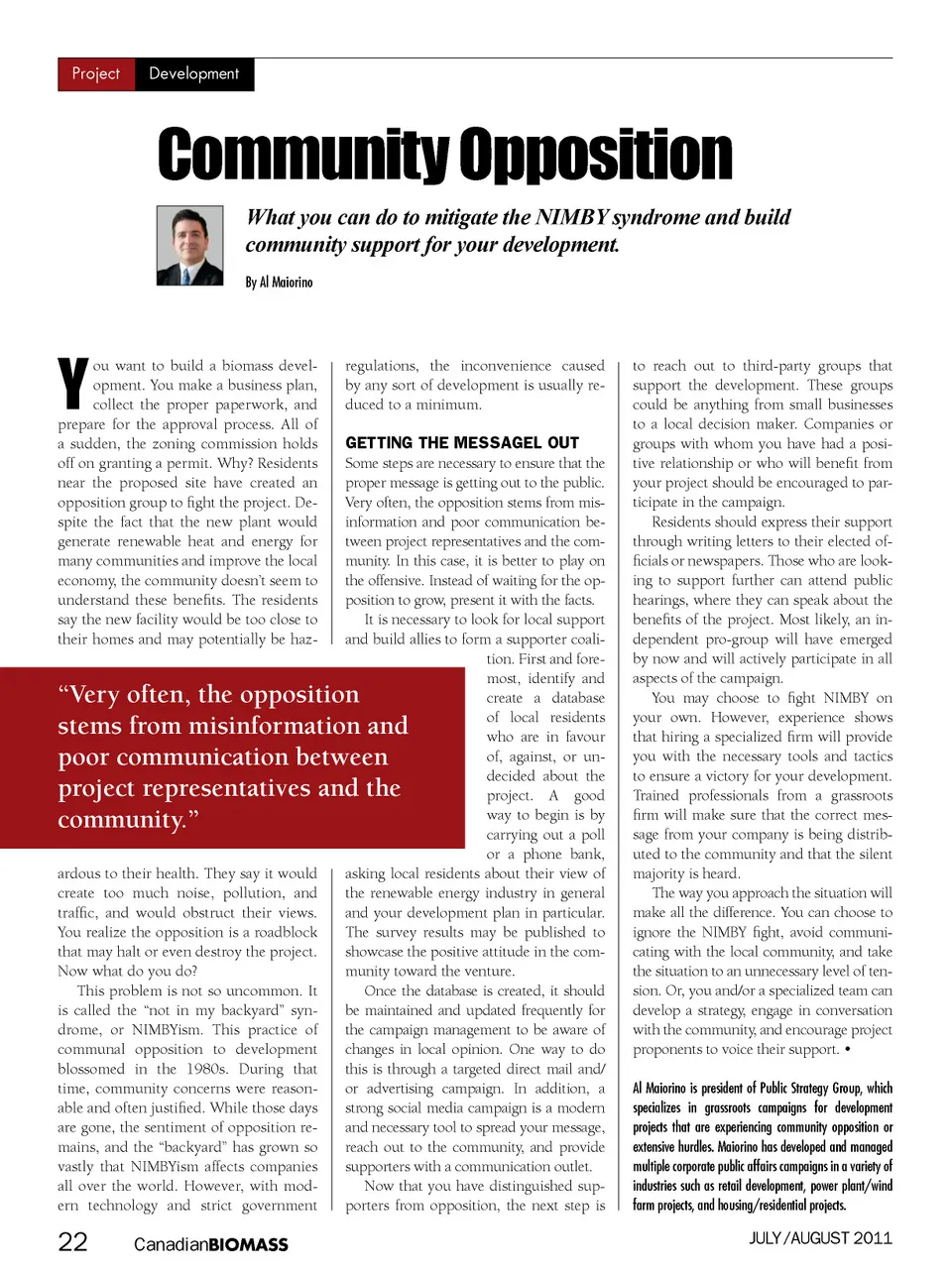
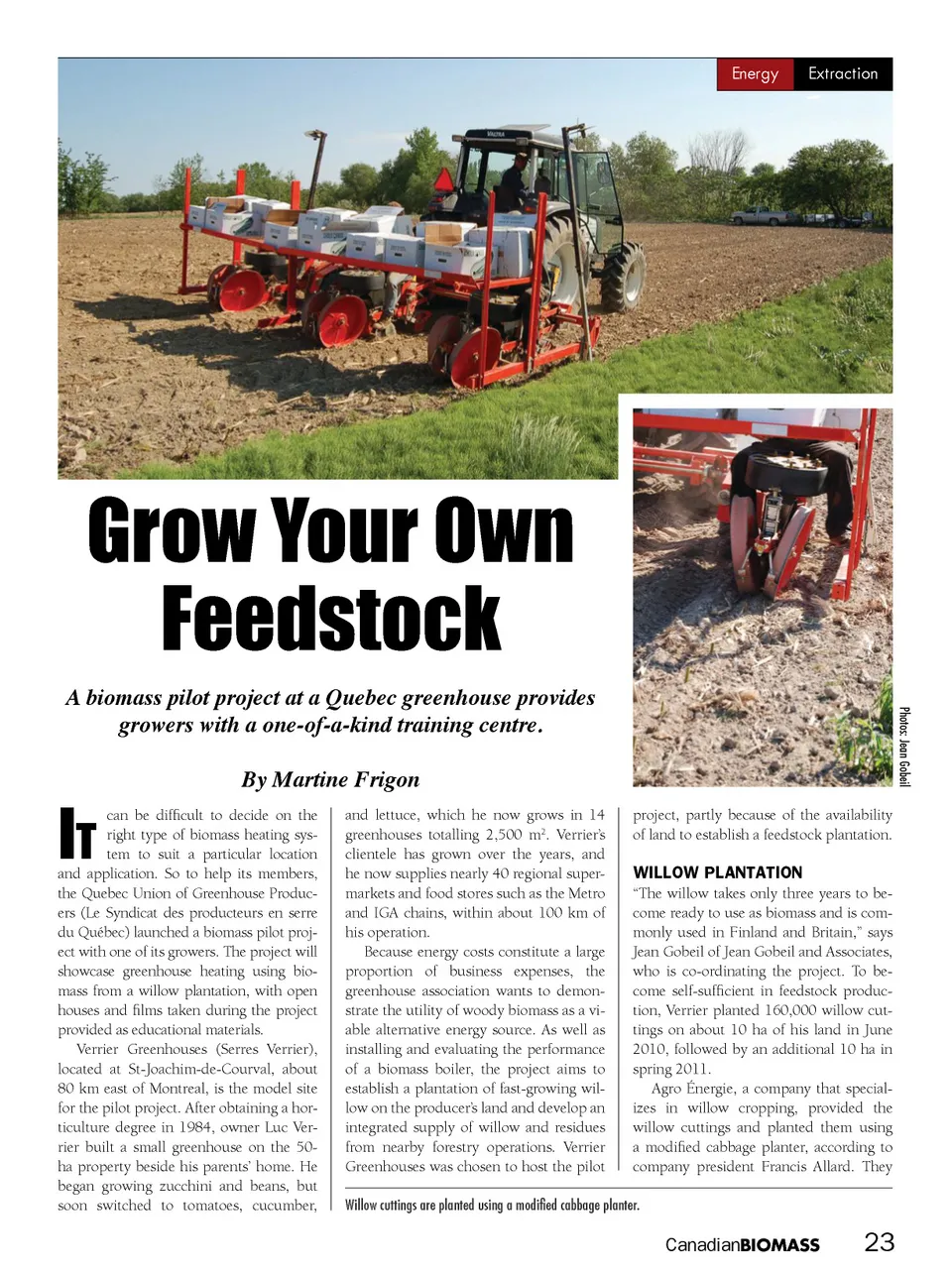
energy extraction Grow Your Own Feedstock A biomass pilot project at a Quebec greenhouse provides growers with a one-of-a-kind training centre. Photos: Jean Gobeil i T By Martine Frigon and lettuce, which he now grows in 14 greenhouses totalling 2,500 m 2 . Verrier’s clientele has grown over the years, and he now supplies nearly 40 regional super-markets and food stores such as the Metro and IGA chains, within about 100 km of his operation. Because energy costs constitute a large proportion of business expenses, the greenhouse association wants to demon-strate the utility of woody biomass as a vi-able alternative energy source. As well as installing and evaluating the performance of a biomass boiler, the project aims to establish a plantation of fast-growing wil-low on the producer’s land and develop an integrated supply of willow and residues from nearby forestry operations. Verrier Greenhouses was chosen to host the pilot project, partly because of the availability of land to establish a feedstock plantation. WilloW plantation can be difficult to decide on the right type of biomass heating sys-tem to suit a particular location and application. So to help its members, the Quebec Union of Greenhouse Produc-ers (Le Syndicat des producteurs en serre du Québec) launched a biomass pilot proj-ect with one of its growers. The project will showcase greenhouse heating using bio-mass from a willow plantation, with open houses and films taken during the project provided as educational materials. Verrier Greenhouses (Serres Verrier), located at St-Joachim-de-Courval, about 80 km east of Montreal, is the model site for the pilot project. After obtaining a hor-ticulture degree in 1984, owner Luc Ver-rier built a small greenhouse on the 50-ha property beside his parents’ home. He began growing zucchini and beans, but soon switched to tomatoes, cucumber, “The willow takes only three years to be-come ready to use as biomass and is com-monly used in Finland and Britain,” says Jean Gobeil of Jean Gobeil and Associates, who is co-ordinating the project. To be-come self-sufficient in feedstock produc-tion, Verrier planted 160,000 willow cut-tings on about 10 ha of his land in June 2010, followed by an additional 10 ha in spring 2011. Agro Énergie, a company that special-izes in willow cropping, provided the willow cuttings and planted them using a modified cabbage planter, according to company president Francis Allard. They Willow cuttings are planted using a modified cabbage planter. Canadian BIOMASS 23
Canadian Biomass July/August 2011: Page 23