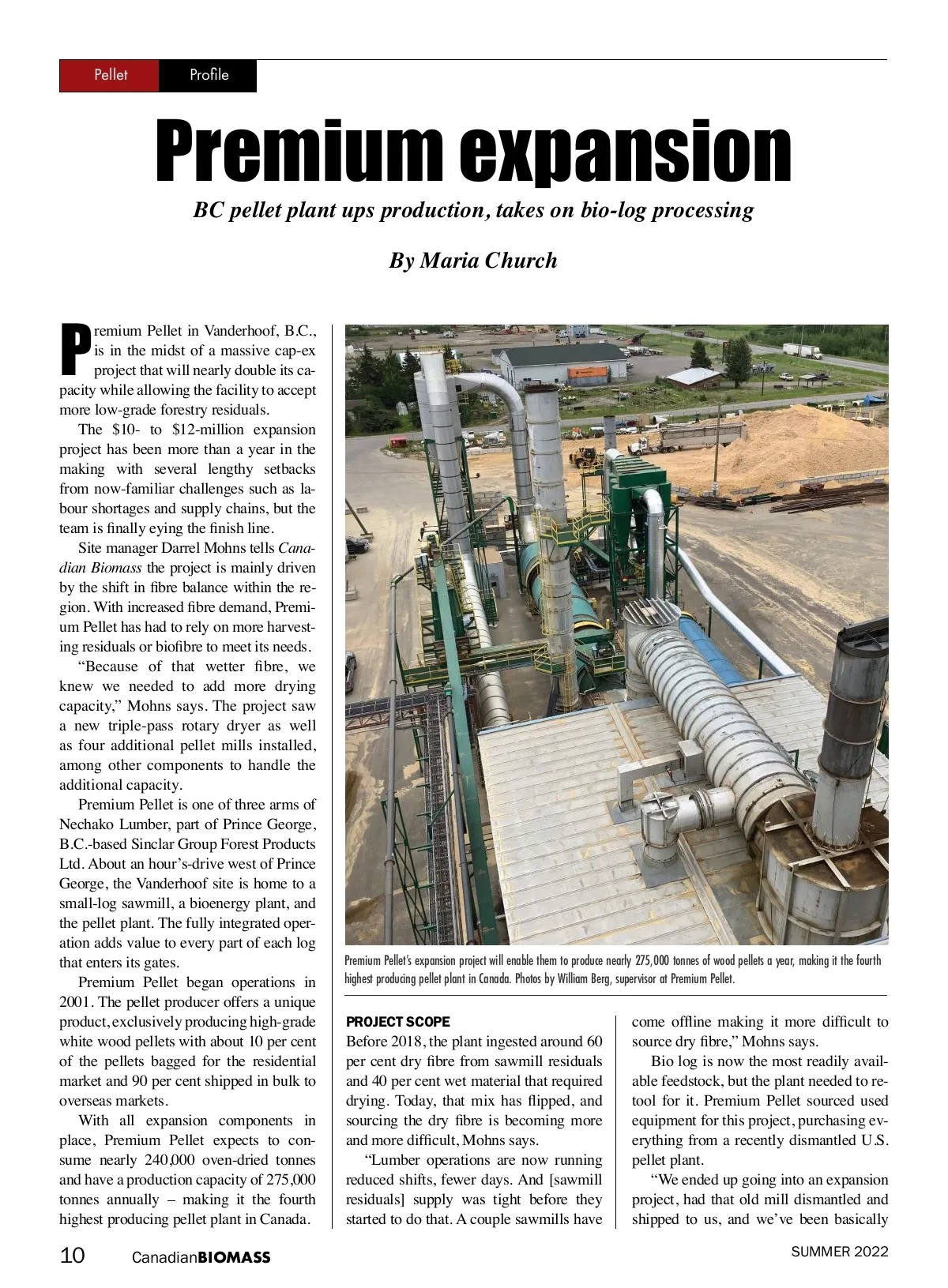
Pellet Profile Premium expansion BC pellet plant ups production, takes on bio-log processing By Maria Church remium Pellet in Vanderhoof, B.C., is in the midst of a massive cap-ex project that will nearly double its ca-pacity while allowing the facility to accept more low-grade forestry residuals. The $10-to $12-million expansion project has been more than a year in the making with several lengthy setbacks from now-familiar challenges such as la-bour shortages and supply chains, but the team is finally eying the finish line. Site manager Darrel Mohns tells Cana-dian Biomass the project is mainly driven by the shift in fibre balance within the re -gion. With increased fibre demand, Premi -um Pellet has had to rely on more harvest -ing residuals or biofibre to meet its needs. “Because of that wetter fibre, we knew we needed to add more drying capacity,” Mohns says. The project saw a new triple-pass rotary dryer as well as four additional pellet mills installed, among other components to handle the additional capacity. Premium Pellet is one of three arms of Nechako Lumber, part of Prince George, B.C.-based Sinclar Group Forest Products Ltd. About an hour’s-drive west of Prince George, the Vanderhoof site is home to a small-log sawmill, a bioenergy plant, and the pellet plant. The fully integrated oper-ation adds value to every part of each log that enters its gates. Premium Pellet began operations in 2001. The pellet producer offers a unique product, exclusively producing high-grade white wood pellets with about 10 per cent of the pellets bagged for the residential market and 90 per cent shipped in bulk to overseas markets. With all expansion components in place, Premium Pellet expects to con -sume nearly 240,000 oven-dried tonnes and have a production capacity of 275,000 tonnes annually – making it the fourth highest producing pellet plant in Canada. P Premium Pellet’s expansion project will enable them to produce nearly 275,000 tonnes of wood pellets a year, making it the fourth highest producing pellet plant in Canada. Photos by William Berg, supervisor at Premium Pellet. PROJECT SCOPE Before 2018, the plant ingested around 60 per cent dry fibre from sawmill residuals and 40 per cent wet material that required drying. Today, that mix has flipped, and sourcing the dry fibre is becoming more and more difficult, Mohns says. “Lumber operations are now running reduced shifts, fewer days. And [sawmill residuals] supply was tight before they started to do that. A couple sawmills have come offline making it more difficult to source dry fibre,” Mohns says. Bio log is now the most readily avail-able feedstock, but the plant needed to re-tool for it. Premium Pellet sourced used equipment for this project, purchasing ev-erything from a recently dismantled U.S. pellet plant. “We ended up going into an expansion project, had that old mill dismantled and shipped to us, and we’ve been basically SUMMER 2022 10 Canadian BIOMASS
Canadian Biomass Summer 2022: Page 10