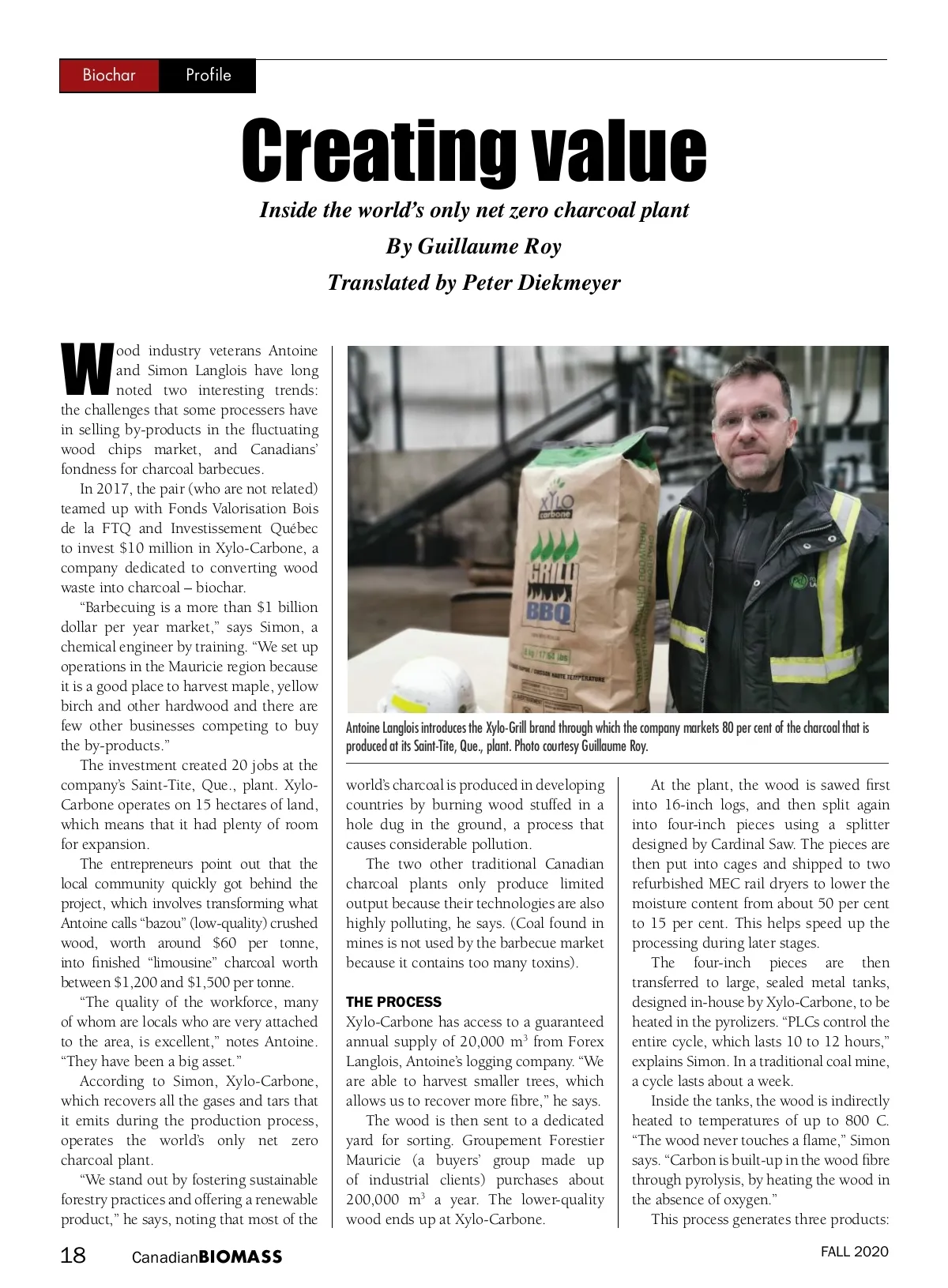
the biochar, gas, and pyrolytic oil. Xylo-Carbone only sells the biochar. The other by-products are used to generate the energy the plant consumes during the production process. At the end of the cycle, the sealed tanks are moved with the help of overhead cranes and the charcoal is cooled for three days before being stored. The material is then transferred to a conveyor before being bagged using a machine that was initially designed for packaging potatoes (a product of similar size). Xylo-Carbone can produce a tonne of biochar using just four to five tonnes of green wood, compared to the six to seven tonnes of wood traditional processes take. In addition, 90 per cent of the lumps of charcoal produced are of a suitable size for the more lucrative BBQ market, compared to less than 70 per cent in traditional charcoal plants. BARBECUE AND OTHER USES market (around 10 per cent of their product). For example, the company is currently carrying out tests with large car manufacturing subcontractors to produce a black pigment made from Quebec charcoal. Research projects are also underway to produce activated charcoal in order to develop water or air filters. Charcoal could also be used to fertilize agricultural soils. By increasing its volume 15-fold, Xylo-Carbone could one day even supply metal processors, Simon estimates. THE FUTURE The fact that Xylo-Carbone designed its own conversion units means that the company can control key parameters, including carbon levels. “Our charcoal lights up quickly and produces intense heat, without dust,” notes Antoine. “Our clients appreciate this.” About 80 per cent of Xylo-Carbone’s product is sold under the Xylo-Grill brand name to Costco, BMR and other major retailers. The company also produces charcoal for private label brands. While most of the output is sold in Canada, some is exported. Xylo-Carbone is also developing new markets for the charcoal pieces that are too small to be used in the barbecue At the time of writing in the spring, Xylo-Carbone intended to double production in the summer. Next year, the company will add two pyrolizers, which should enable it to double production again. The company is also considering better leveraging the technology it has developed. “Using our process, we produce all the energy we need and we still have surpluses,” notes Antoine, who believes that small factories could be set up next to sawmills using the bark and other by-products to produce charcoal. The excess energy that is produced could be used to power the dryers at the sawmills. Simon argues that the process could also power greenhouses or other energy-intensive business. The entrepreneurs are in the process of patenting the pyrolysis technology and plan to bring the product to market soon. “With a market this big, others could also benefit from the technology,” Simon says. “Our goal is to license the technology and to buy back and market the charcoal that is produced.” • FUEL | AIR | GAS | ASH www.processbarron.com | 205-663-5330 | 2770 Welborn Street Pelham, AL 35124 CB_Process Barron _Winter20_CSA.indd 1 Canadian BIOMASS 2020-01-28 2:34 PM 19
Canadian Biomass Fall 2020: Page 19