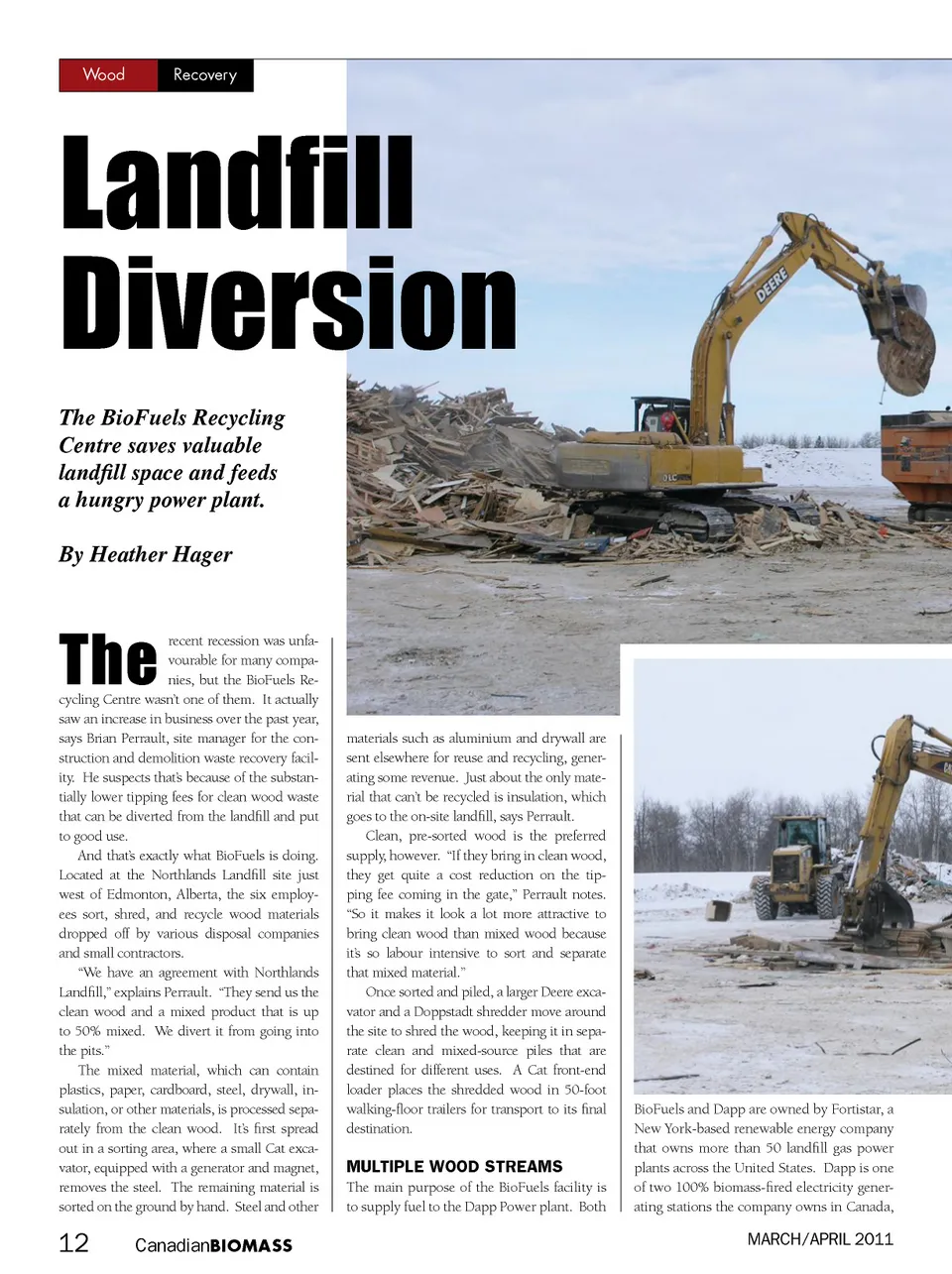
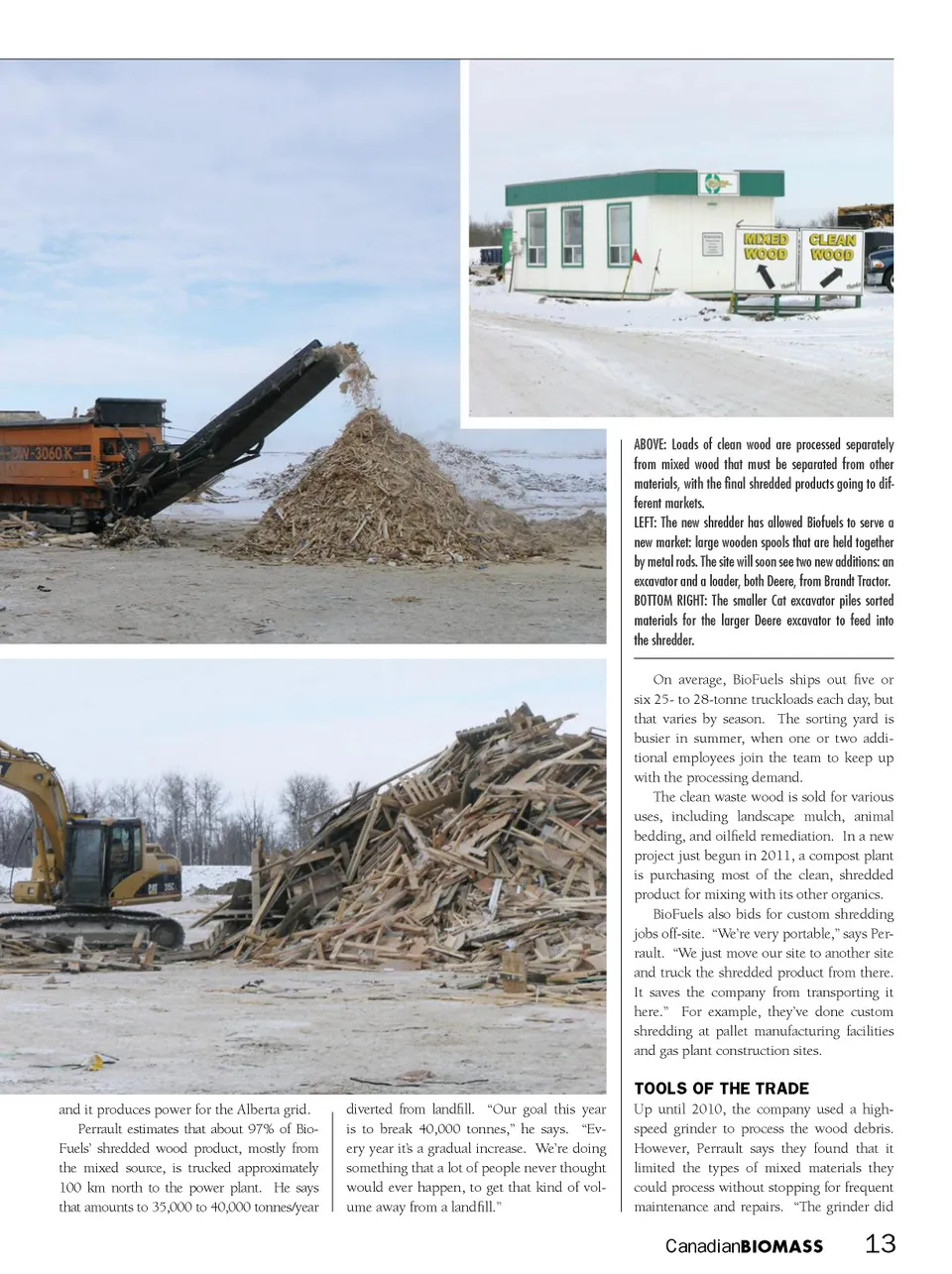
ABOVE: loads of clean wood are processed separately from mixed wood that must be separated from other materials, with the final shredded products going to dif-ferent markets. lEFT: The new shredder has allowed Biofuels to serve a new market: large wooden spools that are held together by metal rods. The site will soon see two new additions: an excavator and a loader, both deere, from Brandt Tractor. BOTTOM RIGHT: The smaller Cat excavator piles sorted materials for the larger deere excavator to feed into the shredder. On average, BioFuels ships out five or six 25-to 28-tonne truckloads each day, but that varies by season. The sorting yard is busier in summer, when one or two addi-tional employees join the team to keep up with the processing demand. The clean waste wood is sold for various uses, including landscape mulch, animal bedding, and oilfield remediation. In a new project just begun in 2011, a compost plant is purchasing most of the clean, shredded product for mixing with its other organics. BioFuels also bids for custom shredding jobs off-site. “We’re very portable,” says Per-rault. “We just move our site to another site and truck the shredded product from there. It saves the company from transporting it here.” For example, they’ve done custom shredding at pallet manufacturing facilities and gas plant construction sites. tOOls OF the trade Up until 2010, the company used a high-speed grinder to process the wood debris. However, Perrault says they found that it limited the types of mixed materials they could process without stopping for frequent maintenance and repairs. “The grinder did and it produces power for the Alberta grid. Perrault estimates that about 97% of Bio-Fuels’ shredded wood product, mostly from the mixed source, is trucked approximately 100 km north to the power plant. He says that amounts to 35,000 to 40,000 tonnes/year diverted from landfill. “Our goal this year is to break 40,000 tonnes,” he says. “Ev-ery year it’s a gradual increase. We’re doing something that a lot of people never thought would ever happen, to get that kind of vol-ume away from a landfill.” Canadian BIOMASS 13
Canadian Biomass April 2011: Page 13