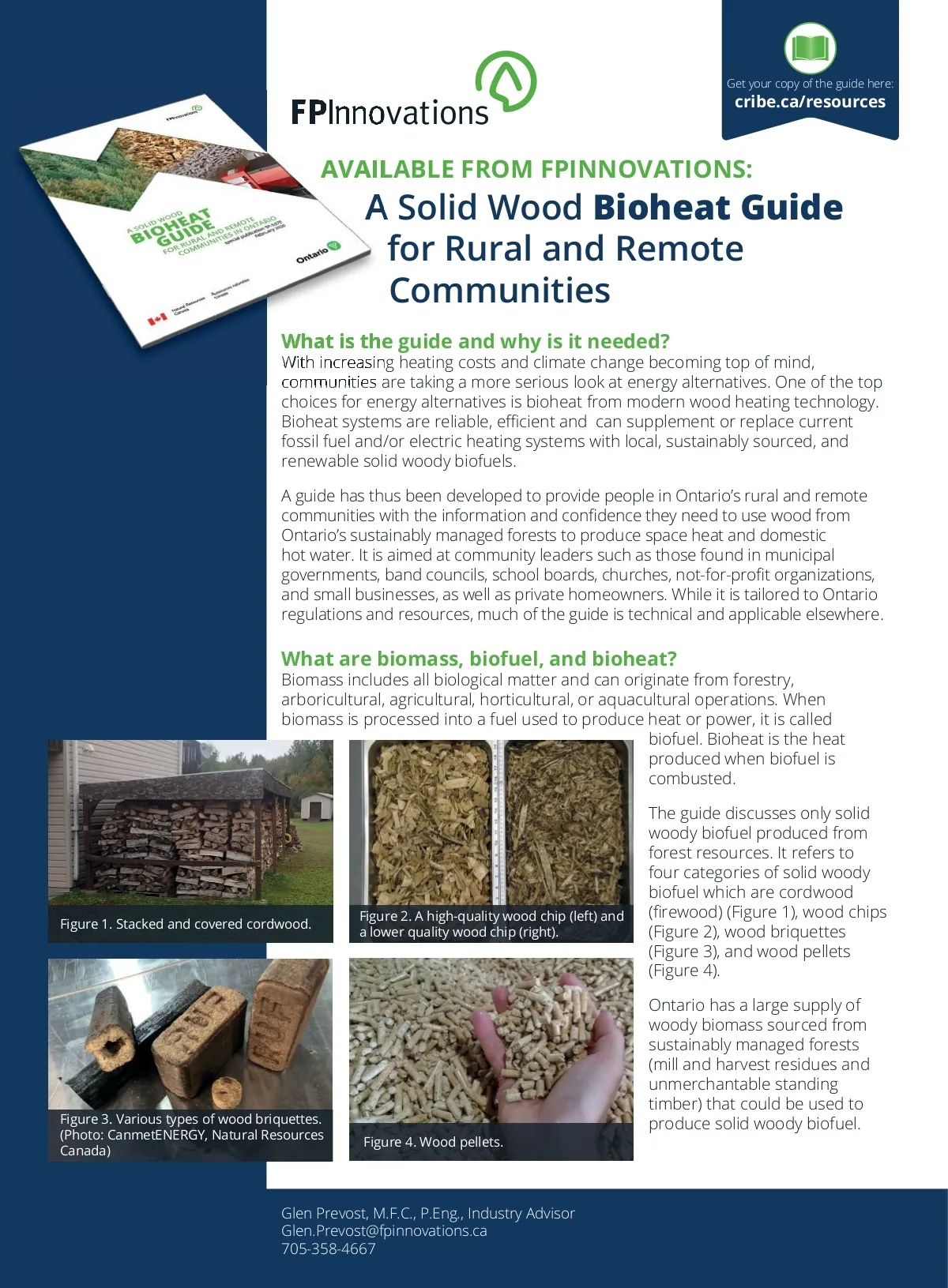
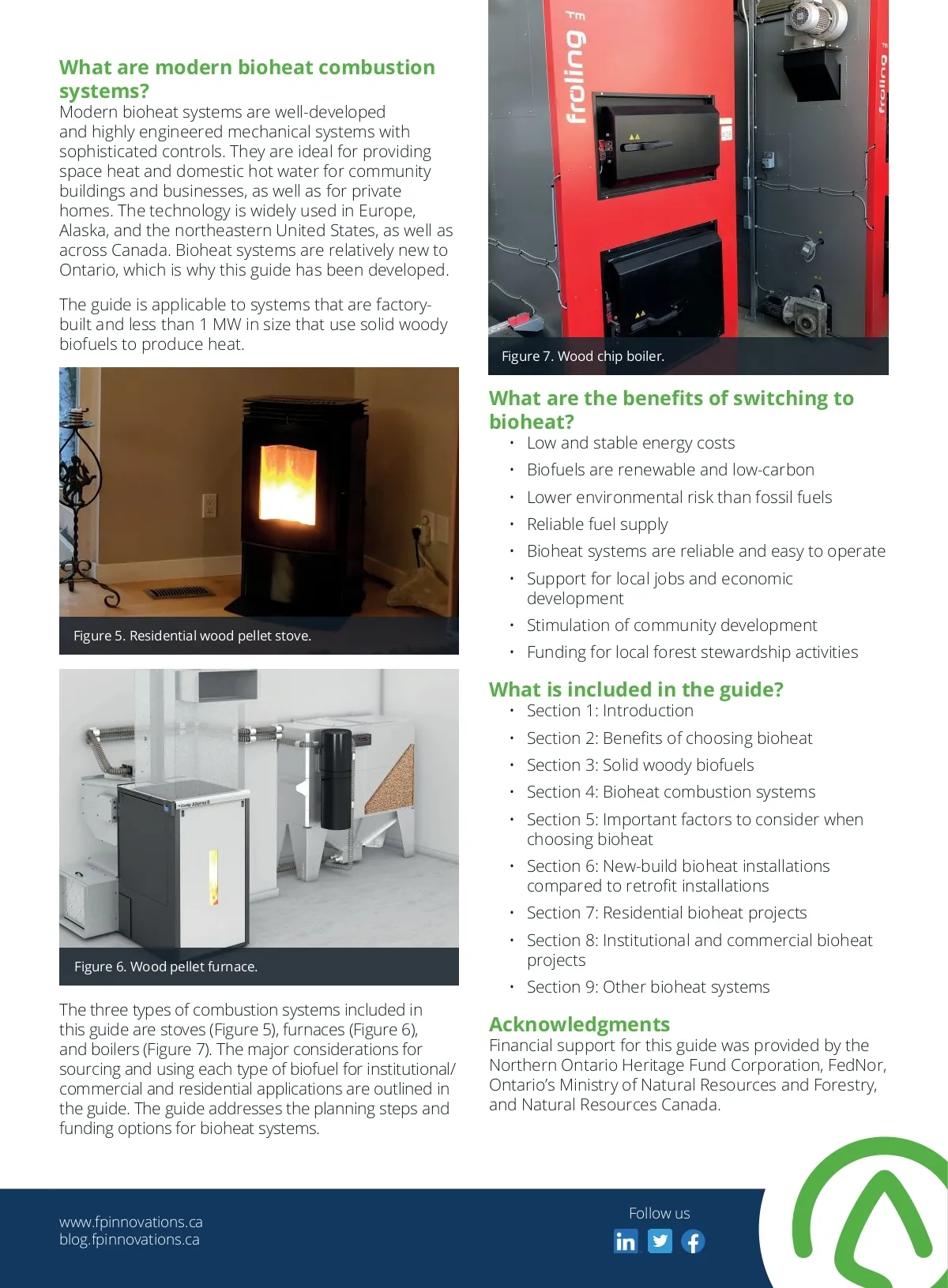
What are modern bioheat combustion systems? Modern bioheat systems are well-developed and highly engineered mechanical systems with sophisticated controls. They are ideal for providing space heat and domestic hot water for community buildings and businesses, as well as for private homes. The technology is widely used in Europe, Alaska, and the northeastern United States, as well as across Canada. Bioheat systems are relatively new to Ontario, which is why this guide has been developed. The guide is applicable to systems that are factory-built and less than 1 MW in size that use solid woody biofuels to produce heat. Figure 7. Wood chip boiler. What are the benefi ts of switching to bioheat? • Low and stable energy costs • Biofuels are renewable and low-carbon • Lower environmental risk than fossil fuels • Reliable fuel supply • Bioheat systems are reliable and easy to operate • Support for local jobs and economic development Figure 5. Residential wood pellet stove. • Stimulation of community development • Funding for local forest stewardship activities What is included in the guide? • Section 1: Introduction • Section 2: Benefi ts of choosing bioheat • Section 3: Solid woody biofuels • Section 4: Bioheat combustion systems • Section 5: Important factors to consider when choosing bioheat • Section 6: New-build bioheat installations compared to retrofi t installations • Section 7: Residential bioheat projects Figure 6. Wood pellet furnace. • Section 8: Institutional and commercial bioheat projects • Section 9: Other bioheat systems The three types of combustion systems included in this guide are stoves (Figure 5), furnaces (Figure 6), and boilers (Figure 7). The major considerations for sourcing and using each type of biofuel for institutional/ commercial and residential applications are outlined in the guide. The guide addresses the planning steps and funding options for bioheat systems. Acknowledgments Financial support for this guide was provided by the Northern Ontario Heritage Fund Corporation, FedNor, Ontario’s Ministry of Natural Resources and Forestry, and Natural Resources Canada. www.fpinnovations.ca blog.fpinnovations.ca Follow us
Canadian Biomass Spring 2020: Page 17