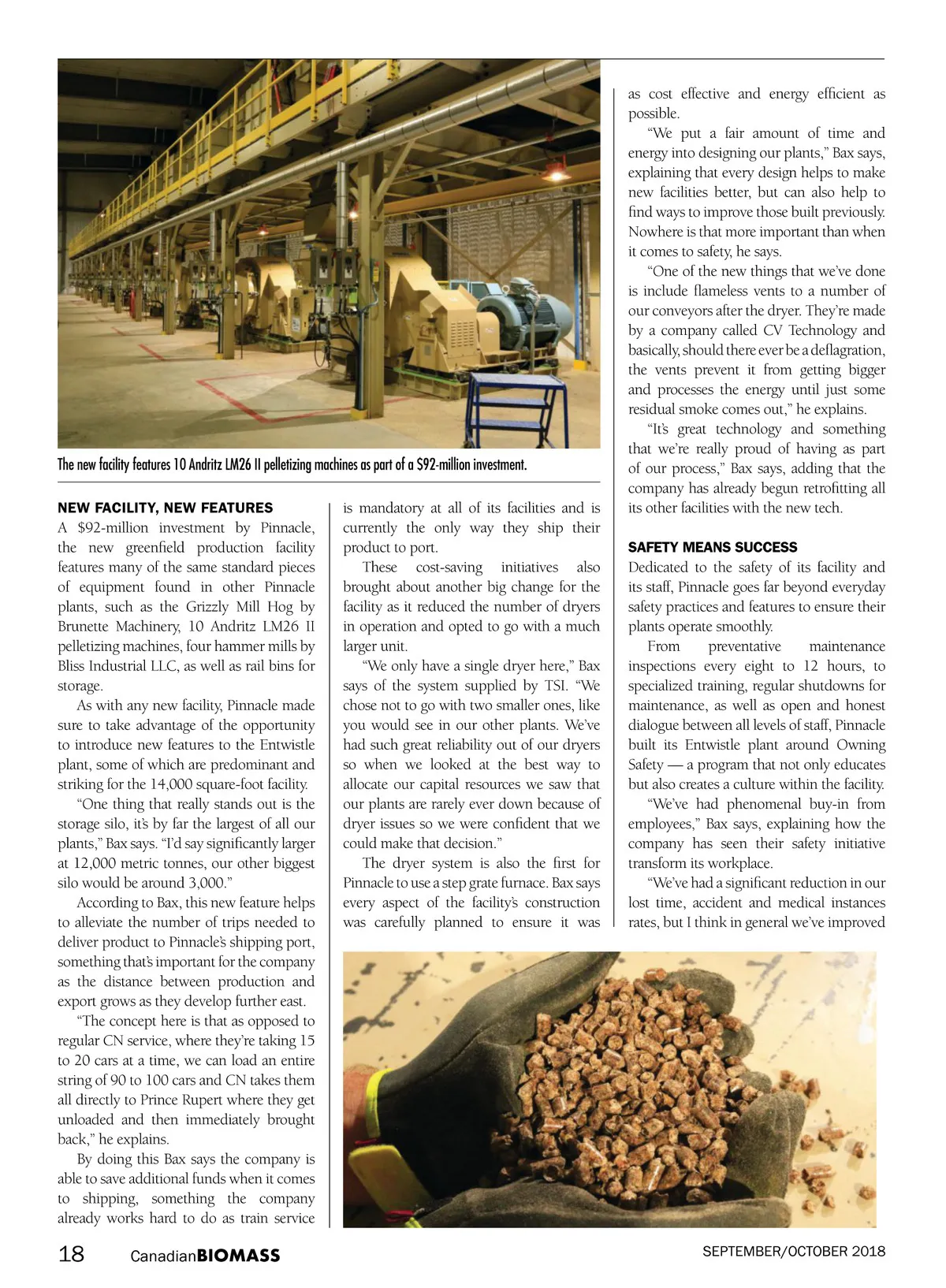
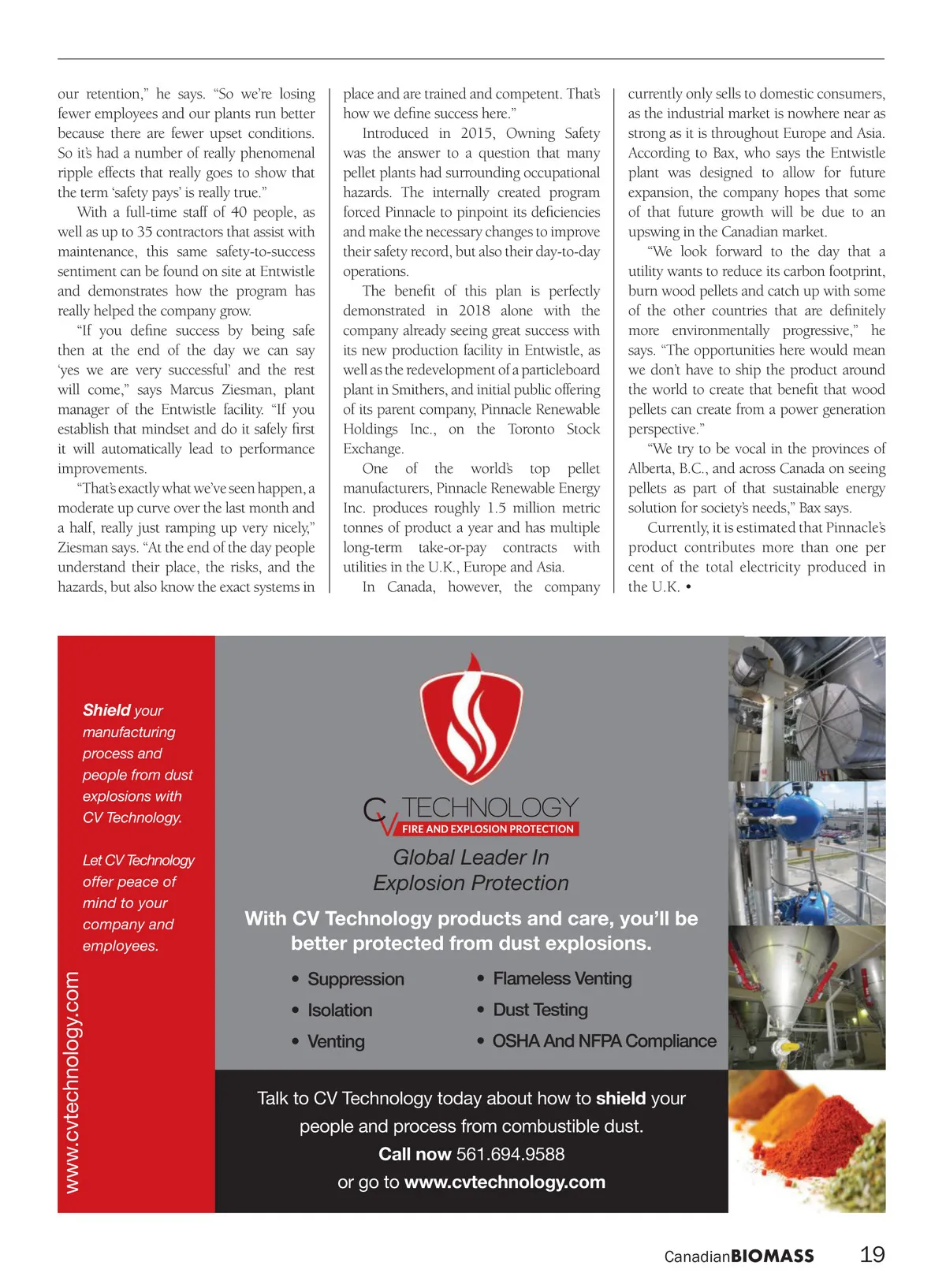
The new facility features 10 Andritz LM26 II pelletizing machines as part of a $92-million investment. NEW FACILITY, NEW FEATURES A $92-million investment by Pinnacle, the new greenfield production facility features many of the same standard pieces of equipment found in other Pinnacle plants, such as the Grizzly Mill Hog by Brunette Machinery, 10 Andritz LM26 II pelletizing machines, four hammer mills by Bliss Industrial LLC, as well as rail bins for storage. As with any new facility, Pinnacle made sure to take advantage of the opportunity to introduce new features to the Entwistle plant, some of which are predominant and striking for the 14,000 square-foot facility. “One thing that really stands out is the storage silo, it’s by far the largest of all our plants,” Bax says. “I’d say significantly larger at 12,000 metric tonnes, our other biggest silo would be around 3,000.” According to Bax, this new feature helps to alleviate the number of trips needed to deliver product to Pinnacle’s shipping port, something that’s important for the company as the distance between production and export grows as they develop further east. “The concept here is that as opposed to regular CN service, where they’re taking 15 to 20 cars at a time, we can load an entire string of 90 to 100 cars and CN takes them all directly to Prince Rupert where they get unloaded and then immediately brought back,” he explains. By doing this Bax says the company is able to save additional funds when it comes to shipping, something the company already works hard to do as train service is mandatory at all of its facilities and is currently the only way they ship their product to port. These cost-saving initiatives also brought about another big change for the facility as it reduced the number of dryers in operation and opted to go with a much larger unit. “We only have a single dryer here,” Bax says of the system supplied by TSI. “We chose not to go with two smaller ones, like you would see in our other plants. We’ve had such great reliability out of our dryers so when we looked at the best way to allocate our capital resources we saw that our plants are rarely ever down because of dryer issues so we were confident that we could make that decision.” The dryer system is also the first for Pinnacle to use a step grate furnace. Bax says every aspect of the facility’s construction was carefully planned to ensure it was as cost effective and energy efficient as possible. “We put a fair amount of time and energy into designing our plants,” Bax says, explaining that every design helps to make new facilities better, but can also help to find ways to improve those built previously. Nowhere is that more important than when it comes to safety, he says. “One of the new things that we’ve done is include flameless vents to a number of our conveyors after the dryer. They’re made by a company called CV Technology and basically, should there ever be a deflagration, the vents prevent it from getting bigger and processes the energy until just some residual smoke comes out,” he explains. “It’s great technology and something that we’re really proud of having as part of our process,” Bax says, adding that the company has already begun retrofitting all its other facilities with the new tech. SAFETY MEANS SUCCESS Dedicated to the safety of its facility and its staff, Pinnacle goes far beyond everyday safety practices and features to ensure their plants operate smoothly. From preventative maintenance inspections every eight to 12 hours, to specialized training, regular shutdowns for maintenance, as well as open and honest dialogue between all levels of staff, Pinnacle built its Entwistle plant around Owning Safety — a program that not only educates but also creates a culture within the facility. “We’ve had phenomenal buy-in from employees,” Bax says, explaining how the company has seen their safety initiative transform its workplace. “We’ve had a significant reduction in our lost time, accident and medical instances rates, but I think in general we’ve improved 18 Canadian BIOMASS SEPTEMBER/OCTOBER 2018
Canadian Biomass September-October 2018: Page 18