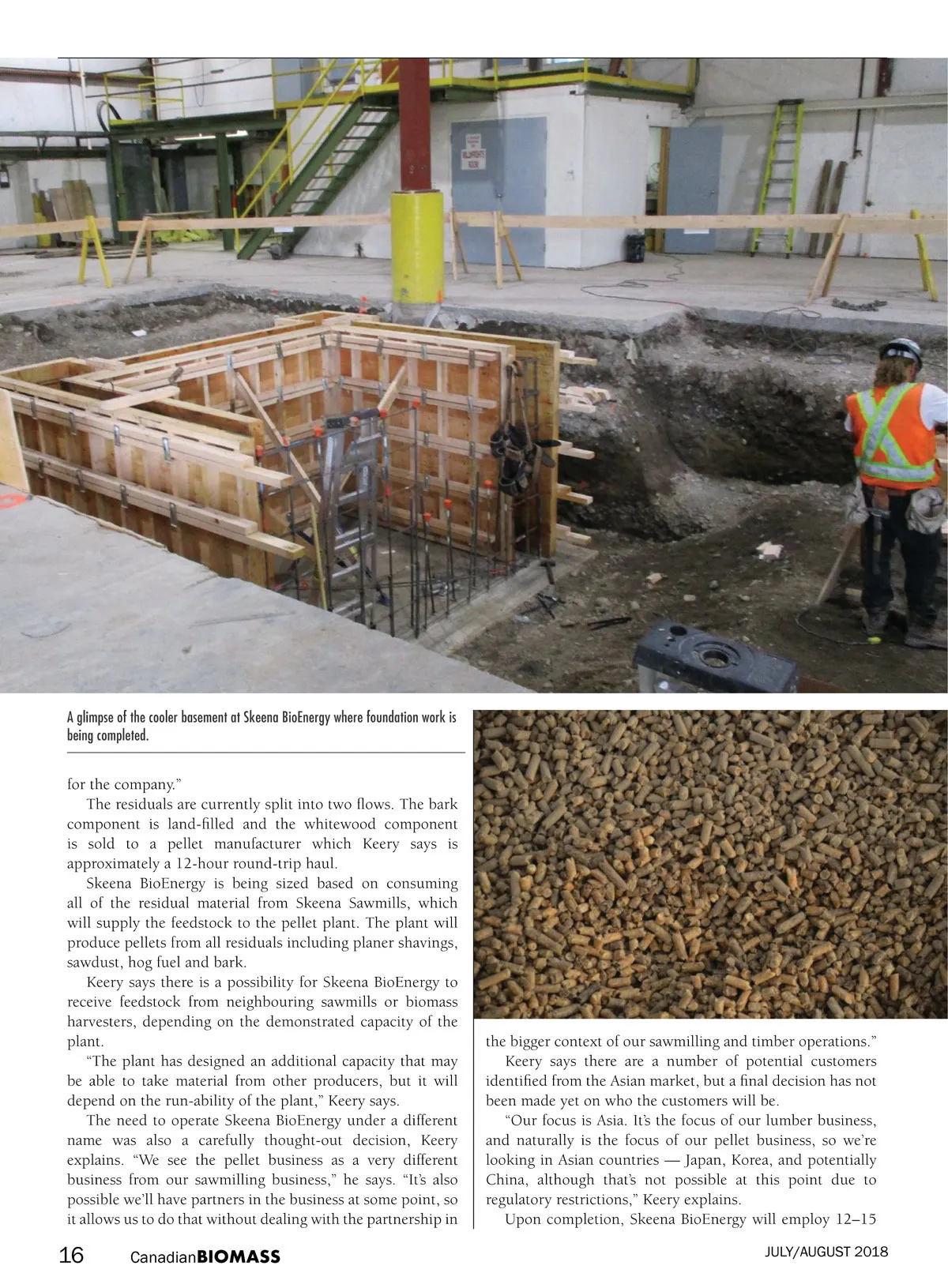
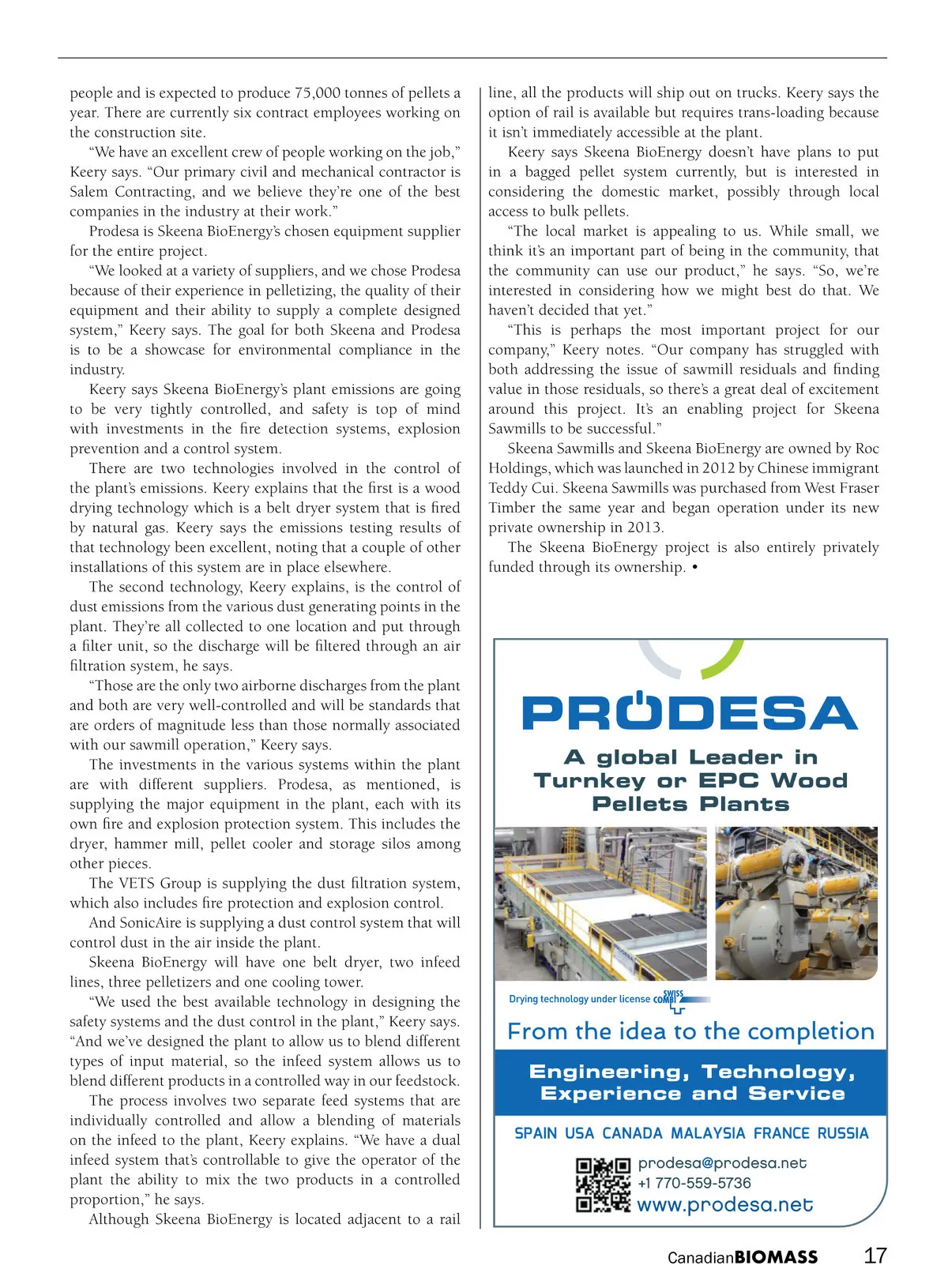
A glimpse of the cooler basement at Skeena BioEnergy where foundation work is being completed. for the company.” The residuals are currently split into two flows. The bark component is land-filled and the whitewood component is sold to a pellet manufacturer which Keery says is approximately a 12-hour round-trip haul. Skeena BioEnergy is being sized based on consuming all of the residual material from Skeena Sawmills, which will supply the feedstock to the pellet plant. The plant will produce pellets from all residuals including planer shavings, sawdust, hog fuel and bark. Keery says there is a possibility for Skeena BioEnergy to receive feedstock from neighbouring sawmills or biomass harvesters, depending on the demonstrated capacity of the plant. “The plant has designed an additional capacity that may be able to take material from other producers, but it will depend on the run-ability of the plant,” Keery says. The need to operate Skeena BioEnergy under a different name was also a carefully thought-out decision, Keery explains. “We see the pellet business as a very different business from our sawmilling business,” he says. “It’s also possible we’ll have partners in the business at some point, so it allows us to do that without dealing with the partnership in the bigger context of our sawmilling and timber operations.” Keery says there are a number of potential customers identified from the Asian market, but a final decision has not been made yet on who the customers will be. “Our focus is Asia. It’s the focus of our lumber business, and naturally is the focus of our pellet business, so we’re looking in Asian countries — Japan, Korea, and potentially China, although that’s not possible at this point due to regulatory restrictions,” Keery explains. Upon completion, Skeena BioEnergy will employ 12–15 JULY/AUGUST 2018 16 Canadian BIOMASS
Canadian Biomass JulyAugust 2018: Page 16