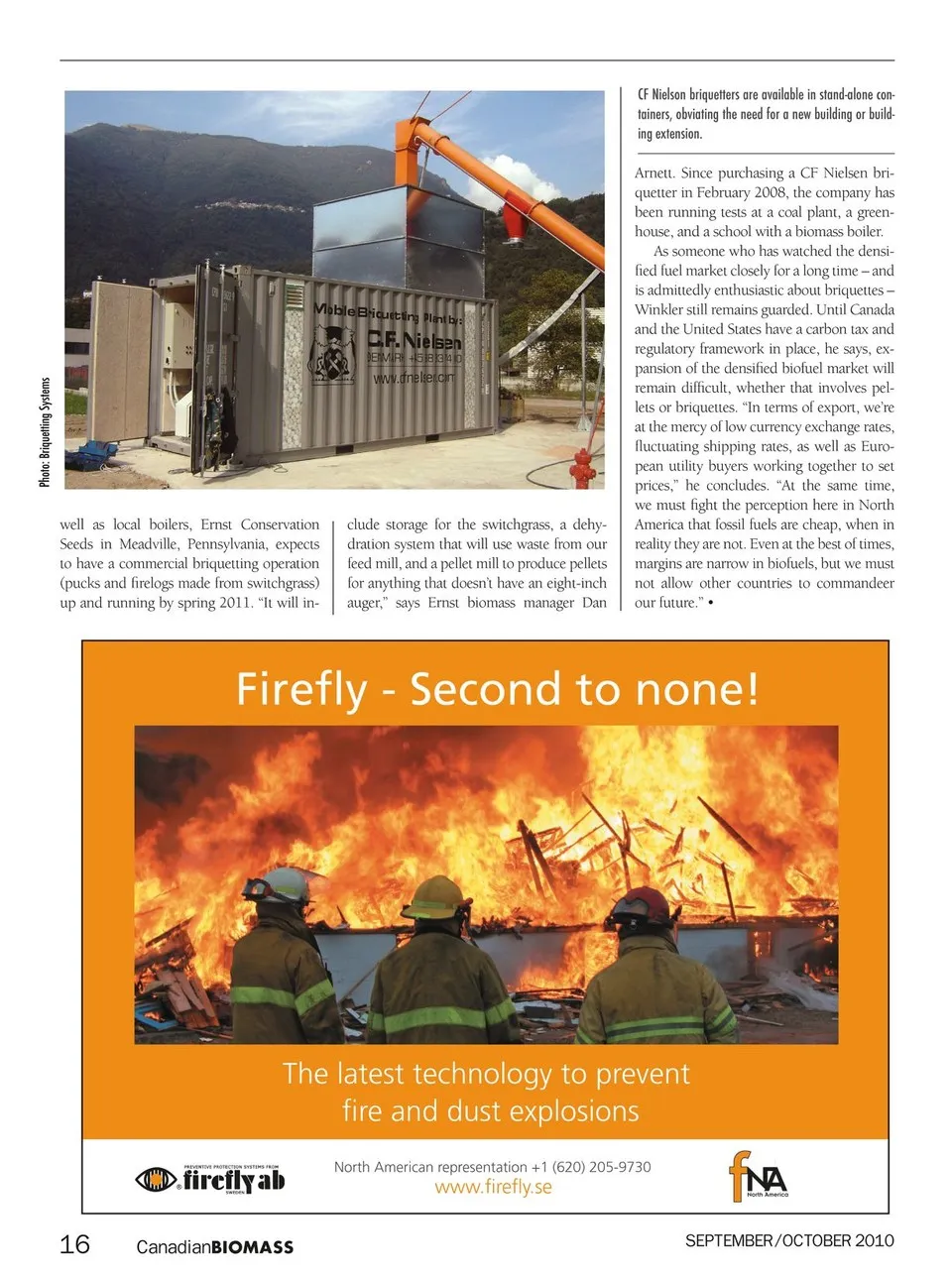
well as local boilers, Ernst Conservation Seeds in Meadville, Pennsylvania, expects to have a commercial briquetting operation (pucks and firelogs made from switchgrass) up and running by spring 2011. “It will in-clude storage for the switchgrass, a dehy-dration system that will use waste from our feed mill, and a pellet mill to produce pellets for anything that doesn’t have an eight-inch auger,” says Ernst biomass manager Dan Arnett. Since purchasing a CF Nielsen bri-quetter in February 2008, the company has been running tests at a coal plant, a green-house, and a school with a biomass boiler. As someone who has watched the densi-fied fuel market closely for a long time – and is admittedly enthusiastic about briquettes – Winkler still remains guarded. Until Canada and the United States have a carbon tax and regulatory framework in place, he says, ex-pansion of the densified biofuel market will remain difficult, whether that involves pel-lets or briquettes. “In terms of export, we’re at the mercy of low currency exchange rates, fluctuating shipping rates, as well as Euro-pean utility buyers working together to set prices,” he concludes. “At the same time, we must fight the perception here in North America that fossil fuels are cheap, when in reality they are not. Even at the best of times, margins are narrow in biofuels, but we must not allow other countries to commandeer our future.” • Firefly -Second to none! The latest technology to prevent fire and dust explosions North American representation +1 (620) 205-9730 www.firefly.se 16 CanadianBIOMASS SEPTEMBER/OCTOBER 2010
Canadian Biomass September/October 2010: Page 16