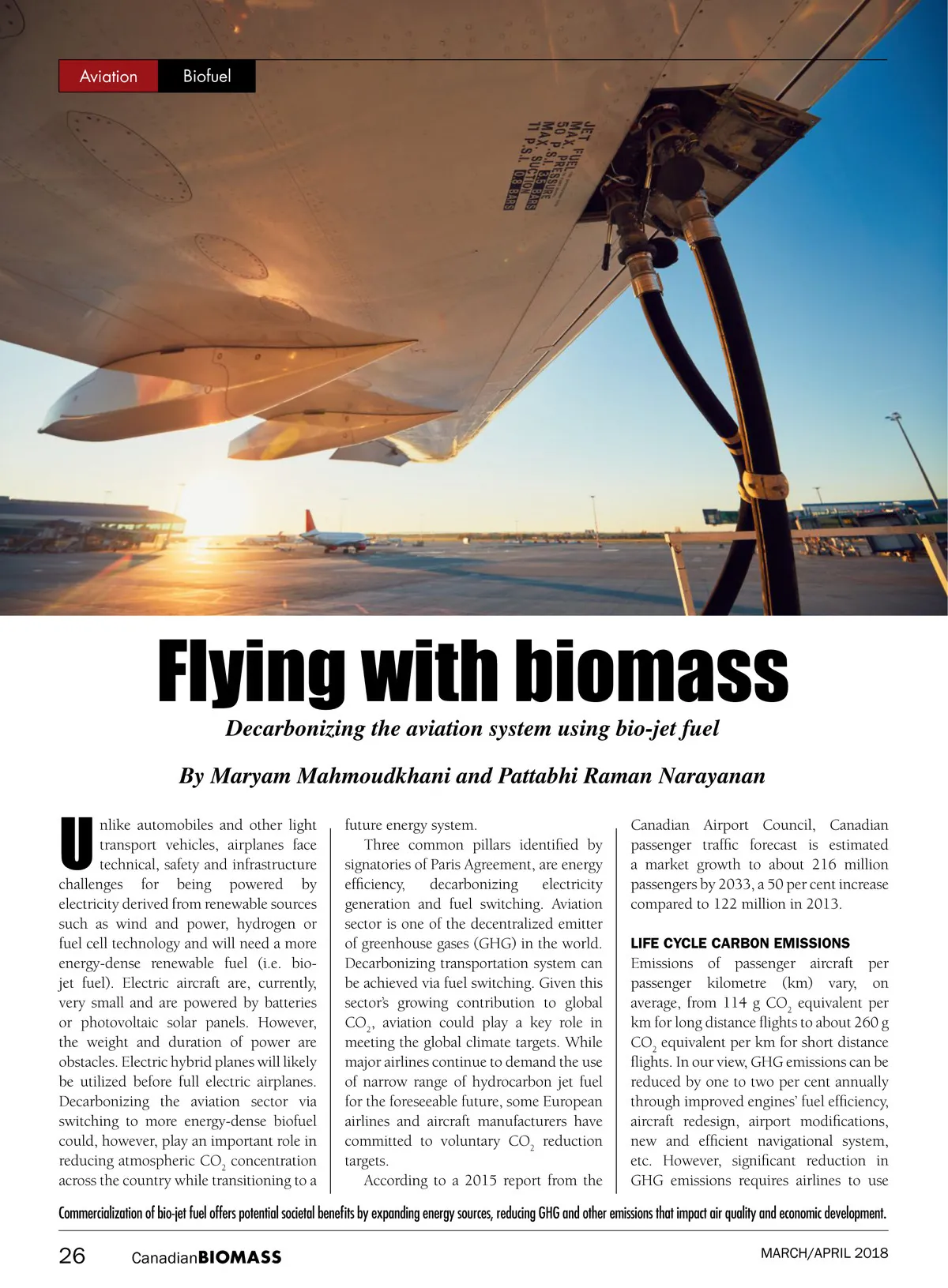
Aviation Biofuel Flying with biomass Decarbonizing the aviation system using bio-jet fuel By Maryam Mahmoudkhani and Pattabhi Raman Narayanan nlike automobiles and other light transport vehicles, airplanes face technical, safety and infrastructure challenges for being powered by electricity derived from renewable sources such as wind and power, hydrogen or fuel cell technology and will need a more energy-dense renewable fuel (i.e. bio-jet fuel). Electric aircraft are, currently, very small and are powered by batteries or photovoltaic solar panels. However, the weight and duration of power are obstacles. Electric hybrid planes will likely be utilized before full electric airplanes. Decarbonizing the aviation sector via switching to more energy-dense biofuel could, however, play an important role in reducing atmospheric CO 2 concentration across the country while transitioning to a U future energy system. Three common pillars identified by signatories of Paris Agreement, are energy efficiency, decarbonizing electricity generation and fuel switching. Aviation sector is one of the decentralized emitter of greenhouse gases (GHG) in the world. Decarbonizing transportation system can be achieved via fuel switching. Given this sector’s growing contribution to global CO 2 , aviation could play a key role in meeting the global climate targets. While major airlines continue to demand the use of narrow range of hydrocarbon jet fuel for the foreseeable future, some European airlines and aircraft manufacturers have committed to voluntary CO 2 reduction targets. According to a 2015 report from the Canadian Airport Council, Canadian passenger traffic forecast is estimated a market growth to about 216 million passengers by 2033, a 50 per cent increase compared to 122 million in 2013. LIFE CYCLE CARBON EMISSIONS Emissions of passenger aircraft per passenger kilometre (km) vary, on average, from 114 g CO 2 equivalent per km for long distance flights to about 260 g CO 2 equivalent per km for short distance flights. In our view, GHG emissions can be reduced by one to two per cent annually through improved engines’ fuel efficiency, aircraft redesign, airport modifications, new and efficient navigational system, etc. However, significant reduction in GHG emissions requires airlines to use Commercialization of bio-jet fuel offers potential societal benefits by expanding energy sources, reducing GHG and other emissions that impact air quality and economic development. 26 Canadian BIOMASS MARCH/APRIL 2018
Canadian Biomass March April 2018: Page 26