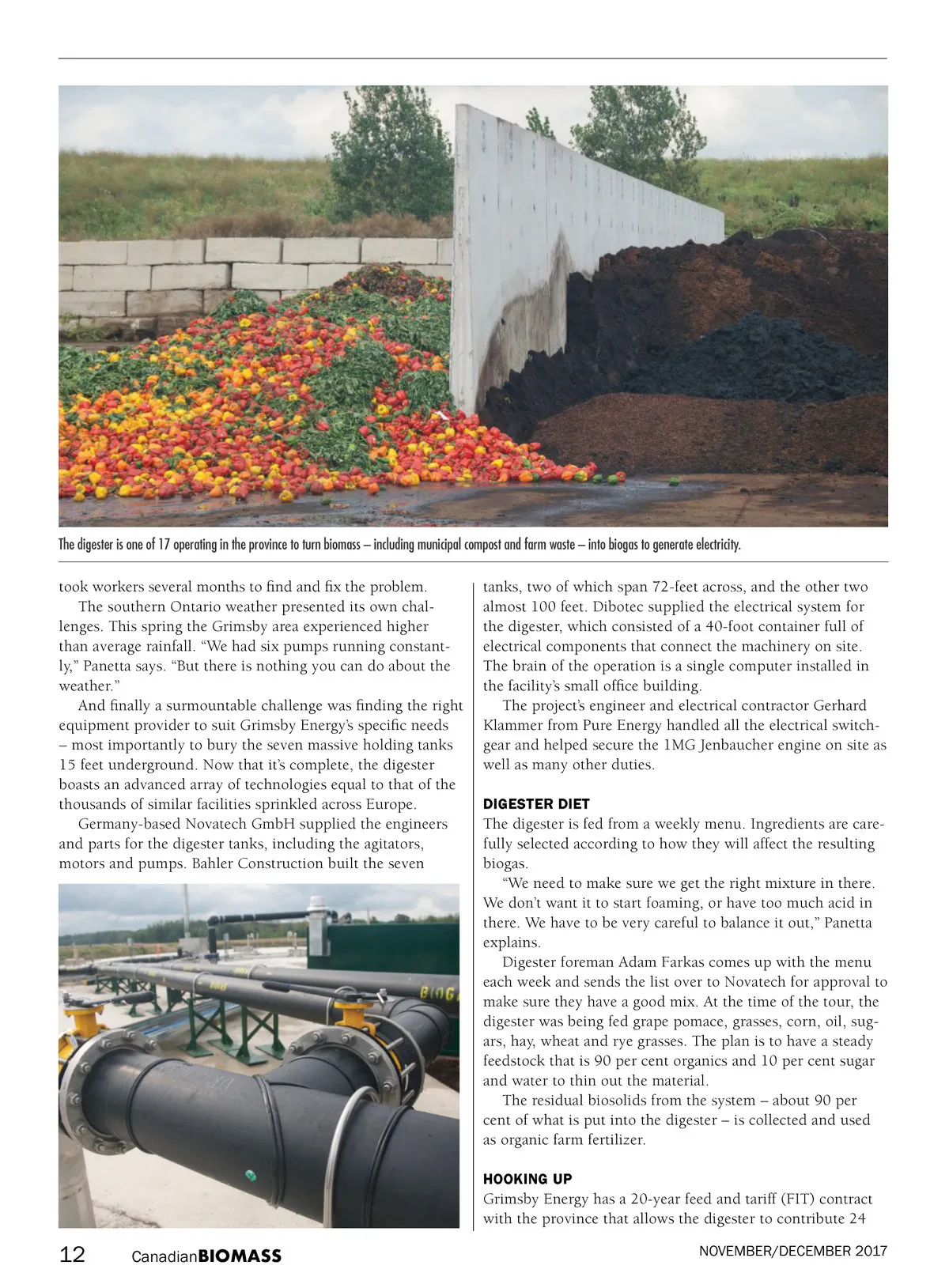
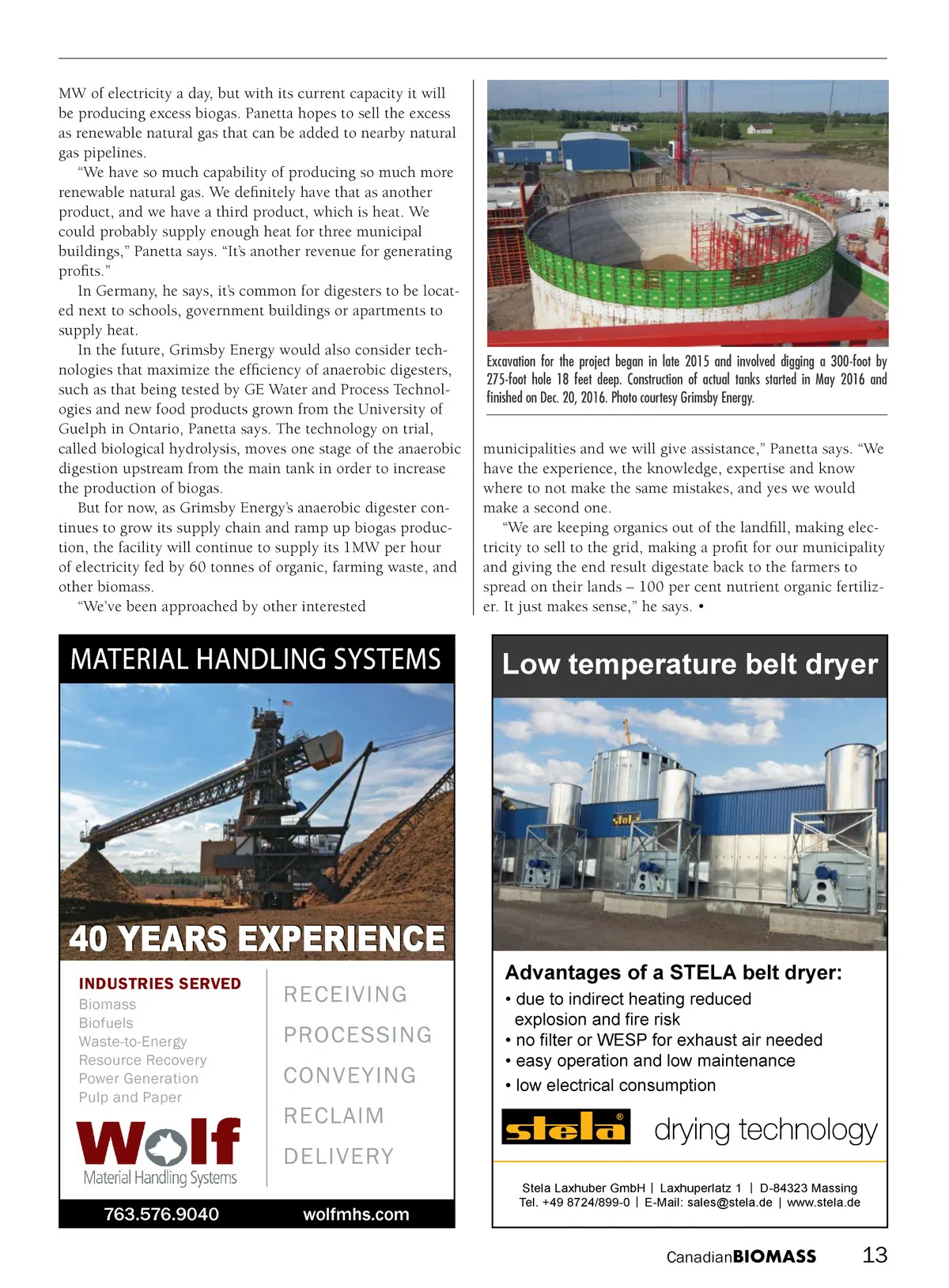
The digester is one of 17 operating in the province to turn biomass – including municipal compost and farm waste – into biogas to generate electricity. took workers several months to find and fix the problem. The southern Ontario weather presented its own chal-lenges. This spring the Grimsby area experienced higher than average rainfall. “We had six pumps running constant-ly,” Panetta says. “But there is nothing you can do about the weather.” And finally a surmountable challenge was finding the right equipment provider to suit Grimsby Energy’s specific needs – most importantly to bury the seven massive holding tanks 15 feet underground. Now that it’s complete, the digester boasts an advanced array of technologies equal to that of the thousands of similar facilities sprinkled across Europe. Germany-based Novatech GmbH supplied the engineers and parts for the digester tanks, including the agitators, motors and pumps. Bahler Construction built the seven tanks, two of which span 72-feet across, and the other two almost 100 feet. Dibotec supplied the electrical system for the digester, which consisted of a 40-foot container full of electrical components that connect the machinery on site. The brain of the operation is a single computer installed in the facility’s small office building. The project’s engineer and electrical contractor Gerhard Klammer from Pure Energy handled all the electrical switch-gear and helped secure the 1MG Jenbaucher engine on site as well as many other duties. DIGESTER DIET The digester is fed from a weekly menu. Ingredients are care-fully selected according to how they will affect the resulting biogas. “We need to make sure we get the right mixture in there. We don’t want it to start foaming, or have too much acid in there. We have to be very careful to balance it out,” Panetta explains. Digester foreman Adam Farkas comes up with the menu each week and sends the list over to Novatech for approval to make sure they have a good mix. At the time of the tour, the digester was being fed grape pomace, grasses, corn, oil, sug-ars, hay, wheat and rye grasses. The plan is to have a steady feedstock that is 90 per cent organics and 10 per cent sugar and water to thin out the material. The residual biosolids from the system – about 90 per cent of what is put into the digester – is collected and used as organic farm fertilizer. HOOKING UP Grimsby Energy has a 20-year feed and tariff (FIT) contract with the province that allows the digester to contribute 24 12 Canadian BIOMASS NOVEMBER/DECEMBER 2017
Canadian Biomass November/December 2017: Page 12