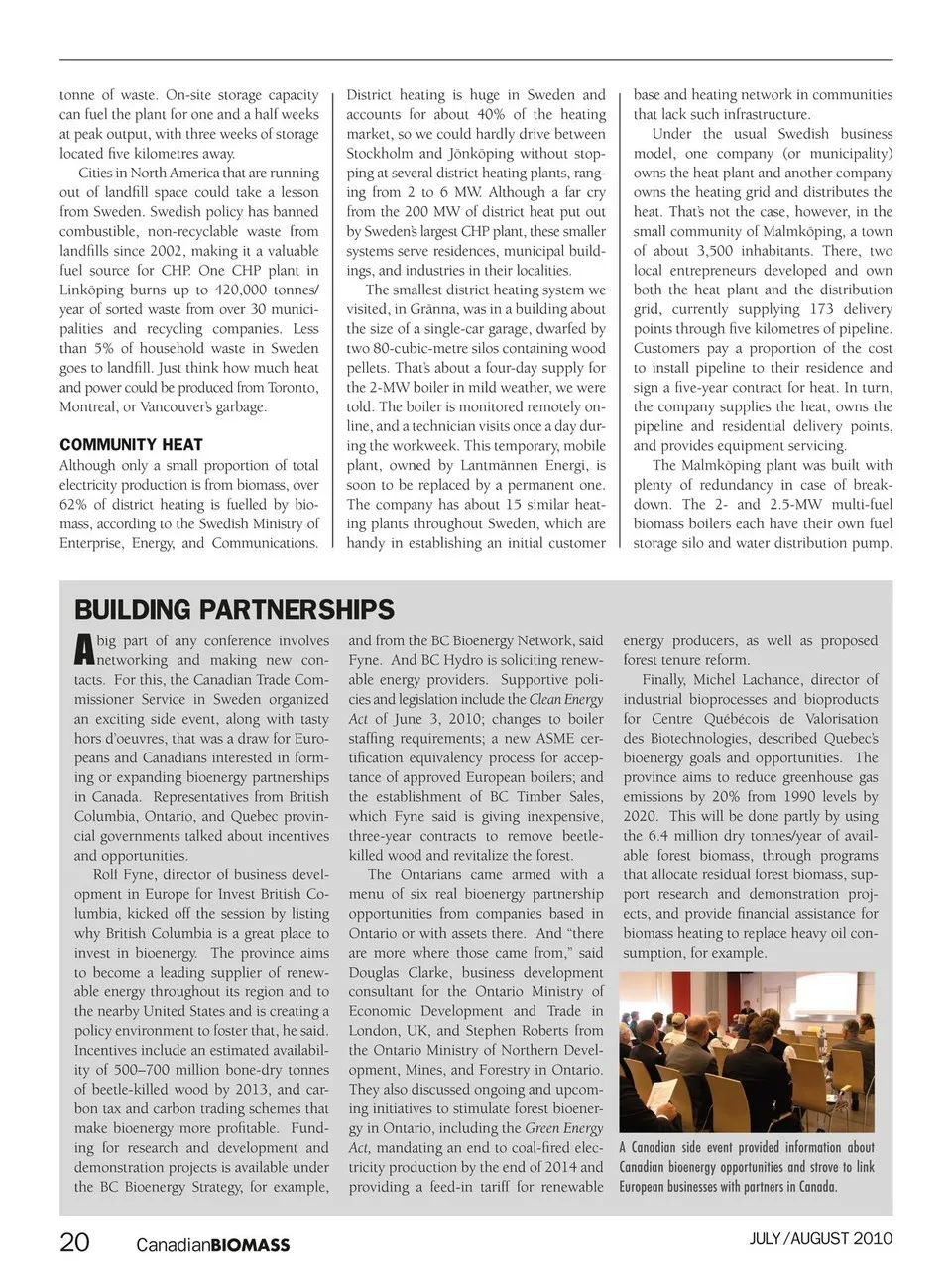
In backup is a 3.2-MW oil boiler, as well as an electrical generator to run the system in case of power outage. The main fuel is bri-quettes from a sawmill less than 50 kilo-metres away. The silos are filled three times/week at peak winter production, and the plant burns about 2,700 tonnes/ year of wood. The owners estimate that they could supply an additional 150 resi-dences with this plant and are expanding into a new housing development. The final district heat plant, at Skän-ninge, was actually shut down when we visited. One consequence of having CHP for electricity production is that there’s excess heat to get rid of in summer. Near-by communities that can tap into a CHP grid can take advantage of lower heating rates than they could produce themselves, which is what this community does. The Skänninge plant will fire up again in Au-gust, producing 6 MW of heat from wood chips, bark, and sawdust from local forests and sawmills within 100 kilometres. FORESTRY TECHNIQUES Once arrived at the World Bioenergy venue, participants had three mornings of informa-tive presentations from international speak-ers. Afternoons, participants stretched their legs at the exhibition or on one of the daily excursions to see real bioenergy operations at work. Excursions included heat and power, biogas, biodiesel, wood pellets, solar-biomass combined energy, a biomass train terminal, and forest operations. In Sweden, the forest harvesting slash isn’t considered waste—it’s a valuable product—so the forestry tour showcased some of the slash harvesting techniques used there. This demo took us to forest owned by Sveaskog, a state-owned com-pany that’s Sweden’s largest forest owner, with 3.3 million hectares or 15% of Swe-den’s productive forest. The company currently sells 1.4 million cubic metres of biomass and aims for 2 million cubic metres by 2013, according to biofuel coor-dinator Roger Johansson. Swedish forests are managed intensively throughout their lifespan. In a 20-year-old stand, a contractor was thinning the largest and smallest trees by multi-stem harvesting using a Log Max 4000 harvesting head on an Eco Log harvester. The roundwood was cut to length and sorted into pulpwood and energy wood for trucking to end-users, leaving the tops and branches to be col-lected and processed using methods such as chipping, bundling, or forwarding. In this case, a Ponsse 14-tonne forwarder with variable load space was collecting and transporting slash to small piles, to be covered by waterproof paper for six to nine months for drying. A Bruks mobile chipper completed the process, moving to the slash piles, chipping, and transporting the chips to a larger container at roadside, ready for delivery to a heat or CHP plant.• CanadianBIOMASS 21
Canadian Biomass July/August 2010: Page 21