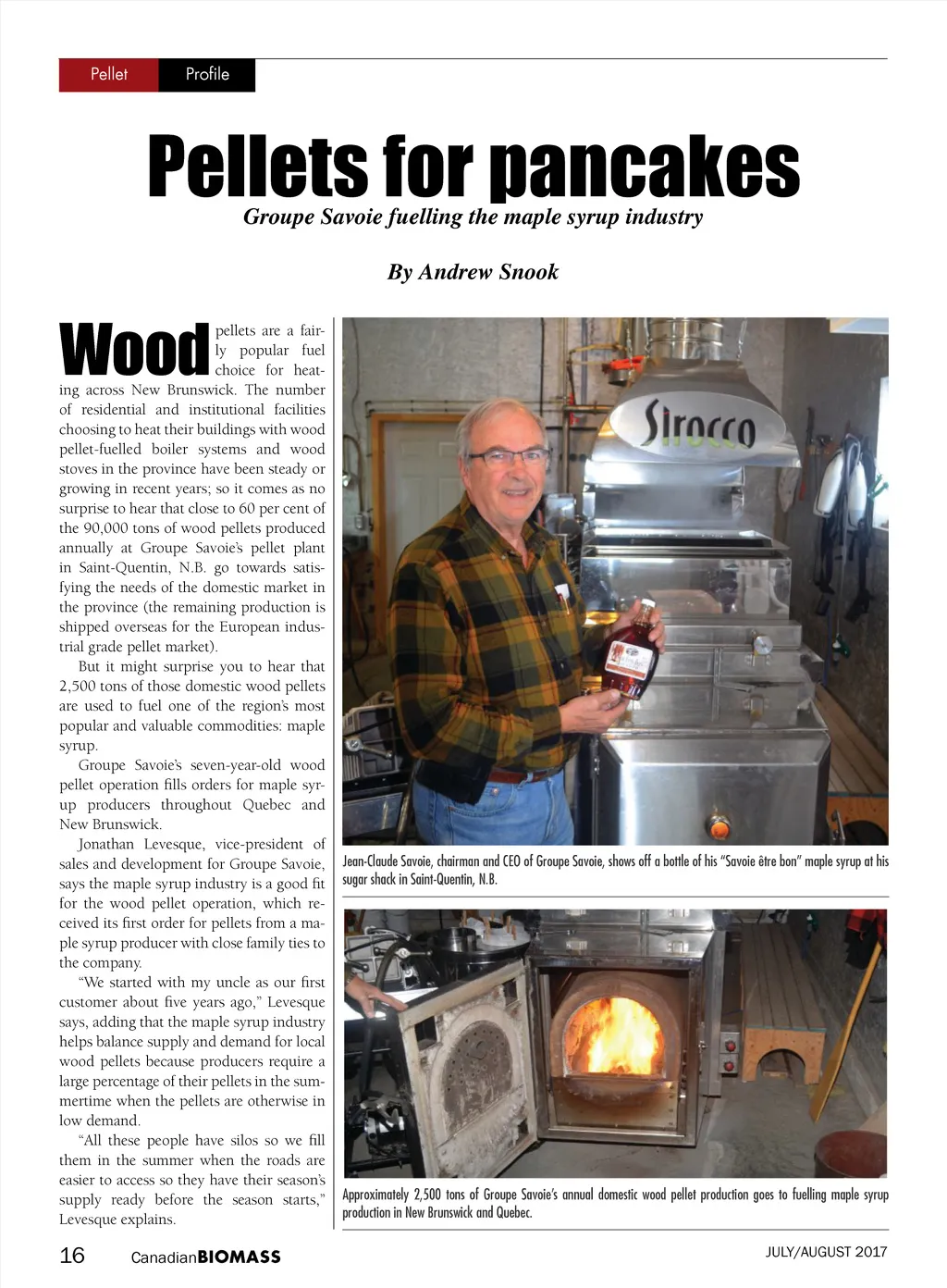
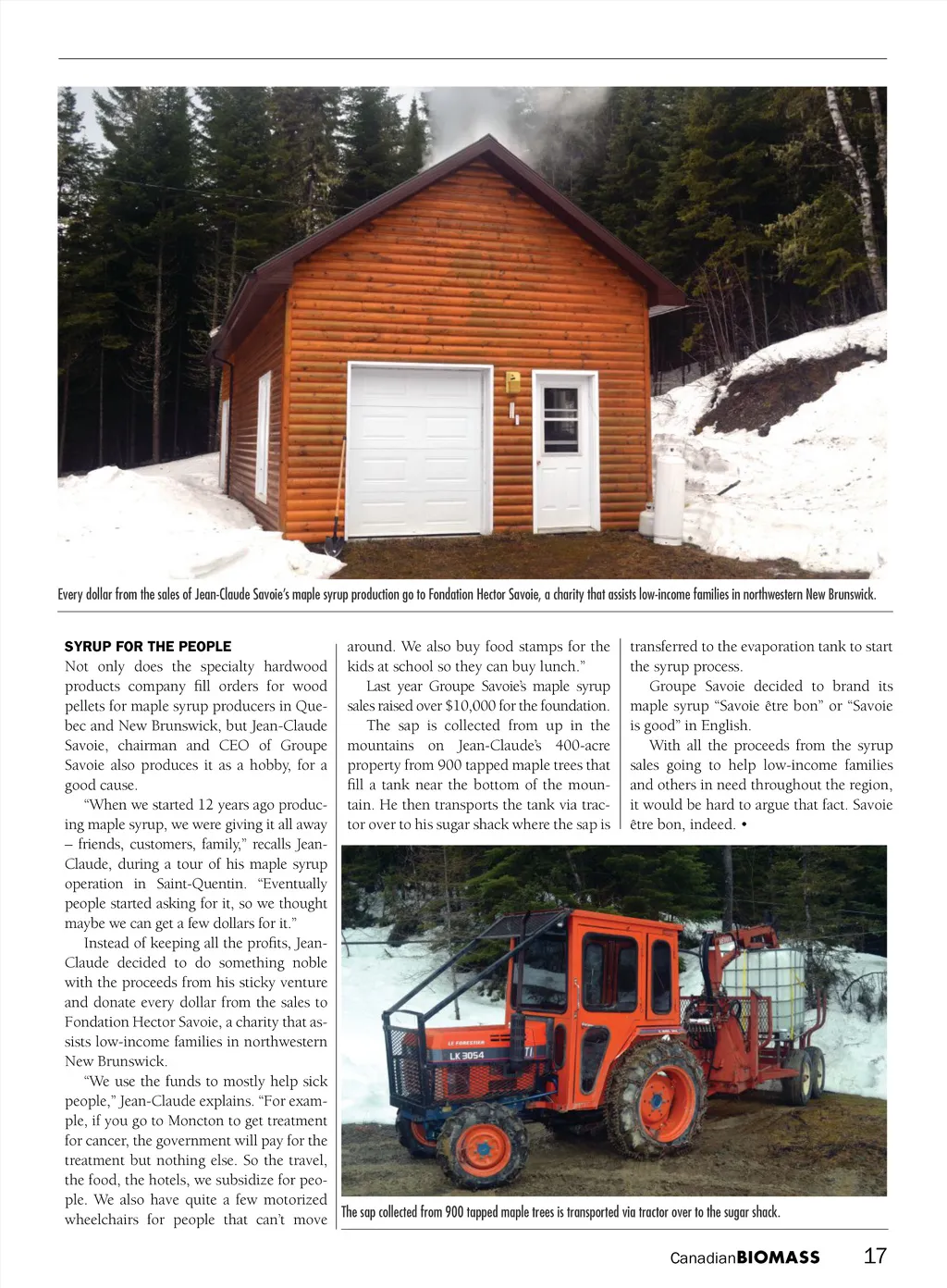
Pellet Profile Pellets for pancakes Groupe Savoie fuelling the maple syrup industry By Andrew Snook Wood pellets are a fair-ly popular fuel choice for heat-ing across New Brunswick. The number of residential and institutional facilities choosing to heat their buildings with wood pellet-fuelled boiler systems and wood stoves in the province have been steady or growing in recent years; so it comes as no surprise to hear that close to 60 per cent of the 90,000 tons of wood pellets produced annually at Groupe Savoie’s pellet plant in Saint-Quentin, N.B. go towards satis-fying the needs of the domestic market in the province (the remaining production is shipped overseas for the European indus-trial grade pellet market). But it might surprise you to hear that 2,500 tons of those domestic wood pellets are used to fuel one of the region’s most popular and valuable commodities: maple syrup. Groupe Savoie’s seven-year-old wood pellet operation fills orders for maple syr-up producers throughout Quebec and New Brunswick. Jonathan Levesque, vice-president of sales and development for Groupe Savoie, says the maple syrup industry is a good fit for the wood pellet operation, which re-ceived its first order for pellets from a ma-ple syrup producer with close family ties to the company. “We started with my uncle as our first customer about five years ago,” Levesque says, adding that the maple syrup industry helps balance supply and demand for local wood pellets because producers require a large percentage of their pellets in the sum-mertime when the pellets are otherwise in low demand. “All these people have silos so we fill them in the summer when the roads are easier to access so they have their season’s supply ready before the season starts,” Levesque explains. Jean-Claude Savoie, chairman and CEO of Groupe Savoie, shows off a bottle of his “Savoie être bon” maple syrup at his sugar shack in Saint-Quentin, N.B. Approximately 2,500 tons of Groupe Savoie’s annual domestic wood pellet production goes to fuelling maple syrup production in New Brunswick and Quebec. JULY/AUGUST 2017 16 Canadian BIOMASS
Canadian Biomass July/August 2017: Page 16