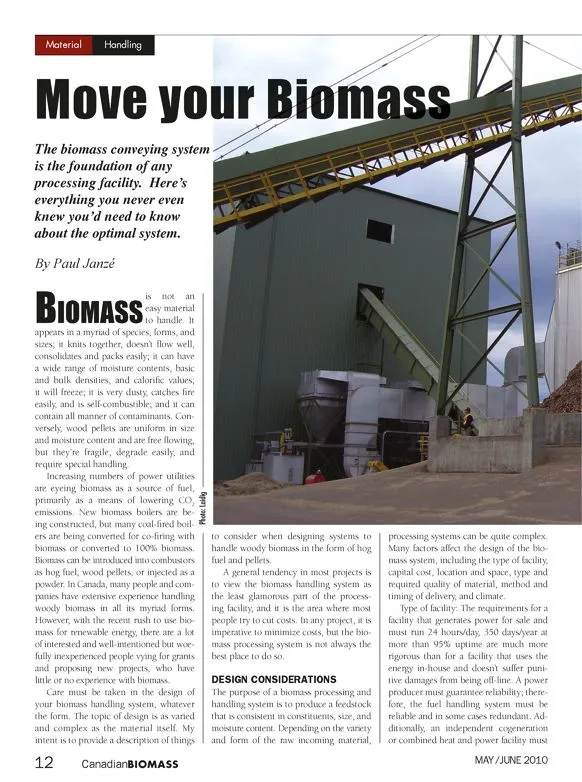
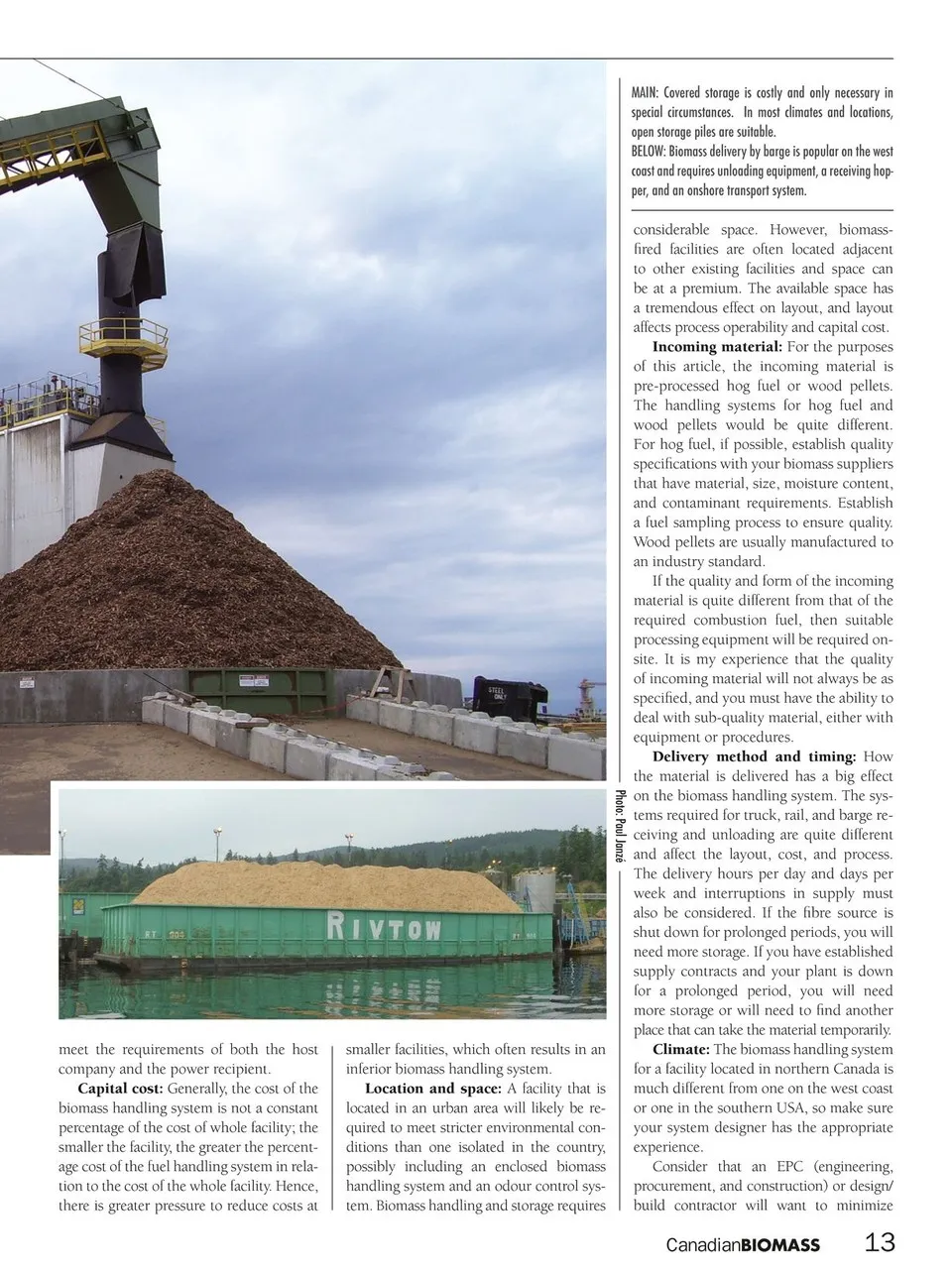
MAIN: Covered storage is costly and only necessary in special circumstances. In most climates and locations, open storage piles are suitable. BELOW: Biomass delivery by barge is popular on the west coast and requires unloading equipment, a receiving hop- per, and an onshore transport system. considerable space. However, biomass- fired facilities are often located adjacent to other existing facilities and space can be at a premium. The available space has a tremendous effect on layout, and layout affects process operability and capital cost. Incoming material: For the purposes of this article, the incoming material is pre-processed hog fuel or wood pellets. The handling systems for hog fuel and wood pellets would be quite different. For hog fuel, if possible, establish quality specifications with your biomass suppliers that have material, size, moisture content, and contaminant requirements. Establish a fuel sampling process to ensure quality. Wood pellets are usually manufactured to an industry standard. If the quality and form of the incoming material is quite different from that of the required combustion fuel, then suitable processing equipment will be required on- site. It is my experience that the quality of incoming material will not always be as specified, and you must have the ability to deal with sub-quality material, either with equipment or procedures. Delivery method and timing: How meet the requirements of both the host company and the power recipient. Capital cost: Generally, the cost of the biomass handling system is not a constant percentage of the cost of whole facility; the smaller the facility, the greater the percent- age cost of the fuel handling system in rela- tion to the cost of the whole facility. Hence, there is greater pressure to reduce costs at smaller facilities, which often results in an inferior biomass handling system. Location and space: A facility that is located in an urban area will likely be re- quired to meet stricter environmental con- ditions than one isolated in the country, possibly including an enclosed biomass handling system and an odour control sys- tem. Biomass handling and storage requires the material is delivered has a big effect on the biomass handling system. The sys- tems required for truck, rail, and barge re- ceiving and unloading are quite different and affect the layout, cost, and process. The delivery hours per day and days per week and interruptions in supply must also be considered. If the fibre source is shut down for prolonged periods, you will need more storage. If you have established supply contracts and your plant is down for a prolonged period, you will need more storage or will need to find another place that can take the material temporarily. Climate: The biomass handling system for a facility located in northern Canada is much different from one on the west coast or one in the southern USA, so make sure your system designer has the appropriate experience. Consider that an EPC (engineering, procurement, and construction) or design/ build contractor will want to minimize CanadianBIOMASS 13 Photo: Paul Janzé
Canadian Biomass May/June 2010: Page 13