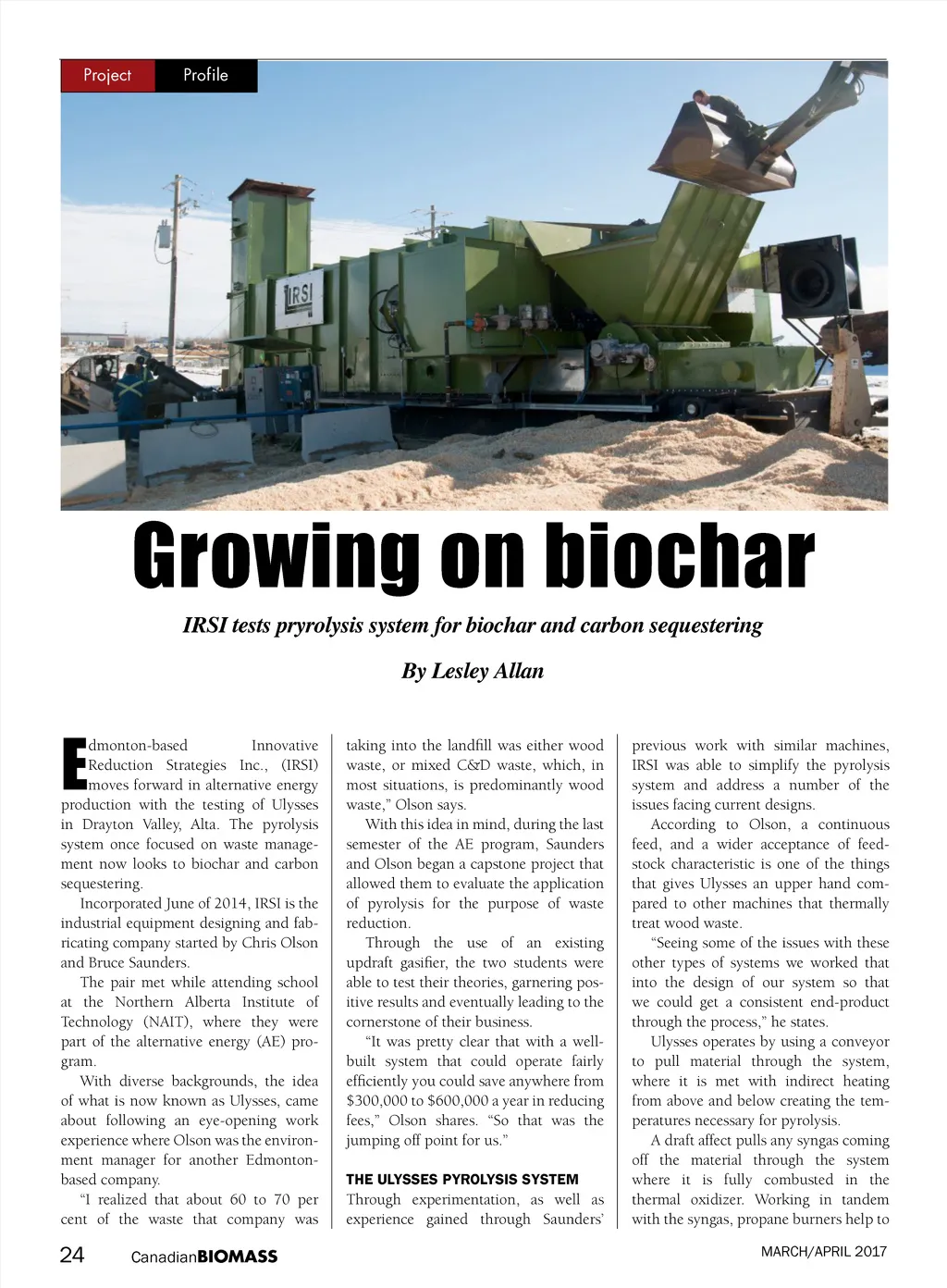
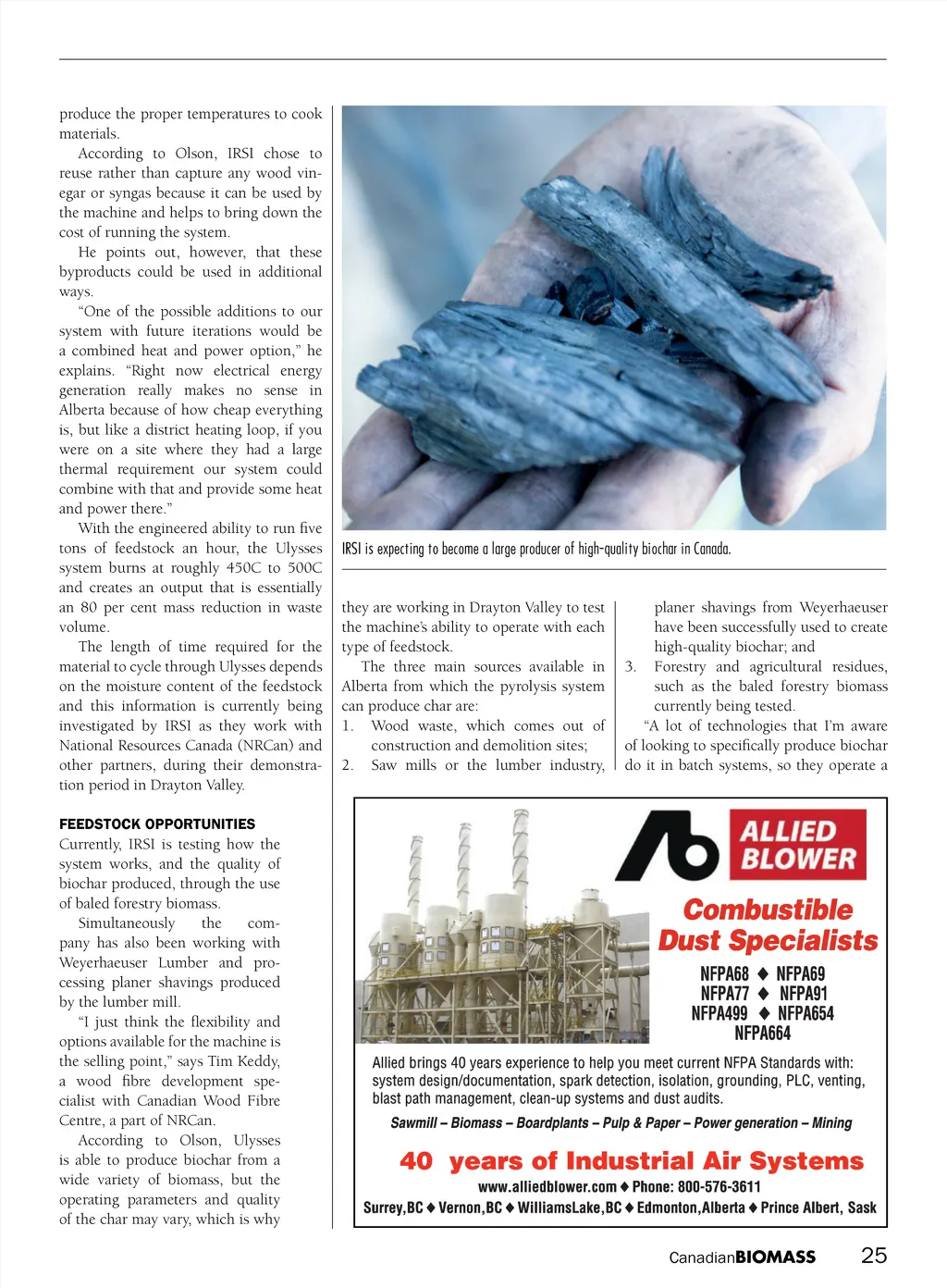
produce the proper temperatures to cook materials. According to Olson, IRSI chose to reuse rather than capture any wood vin-egar or syngas because it can be used by the machine and helps to bring down the cost of running the system. He points out, however, that these byproducts could be used in additional ways. “One of the possible additions to our system with future iterations would be a combined heat and power option,” he explains. “Right now electrical energy generation really makes no sense in Alberta because of how cheap everything is, but like a district heating loop, if you were on a site where they had a large thermal requirement our system could combine with that and provide some heat and power there.” With the engineered ability to run five tons of feedstock an hour, the Ulysses system burns at roughly 450C to 500C and creates an output that is essentially an 80 per cent mass reduction in waste volume. The length of time required for the material to cycle through Ulysses depends on the moisture content of the feedstock and this information is currently being investigated by IRSI as they work with National Resources Canada (NRCan) and other partners, during their demonstra-tion period in Drayton Valley. FEEDSTOCK OPPORTUNITIES IRSI is expecting to become a large producer of high-quality biochar in Canada. they are working in Drayton Valley to test the machine’s ability to operate with each type of feedstock. The three main sources available in Alberta from which the pyrolysis system can produce char are: 1. Wood waste, which comes out of construction and demolition sites; 2. Saw mills or the lumber industry, planer shavings from Weyerhaeuser have been successfully used to create high-quality biochar; and 3. Forestry and agricultural residues, such as the baled forestry biomass currently being tested. “A lot of technologies that I’m aware of looking to specifically produce biochar do it in batch systems, so they operate a Currently, IRSI is testing how the system works, and the quality of biochar produced, through the use of baled forestry biomass. Simultaneously the com-pany has also been working with Weyerhaeuser Lumber and pro-cessing planer shavings produced by the lumber mill. “I just think the flexibility and options available for the machine is the selling point,” says Tim Keddy, a wood fibre development spe-cialist with Canadian Wood Fibre Centre, a part of NRCan. According to Olson, Ulysses is able to produce biochar from a wide variety of biomass, but the operating parameters and quality of the char may vary, which is why Canadian BIOMASS allied blower biomass novdec14.indd 1 25 2014-11-18 2:22 PM
Canadian Biomass March-April 2017: Page 25