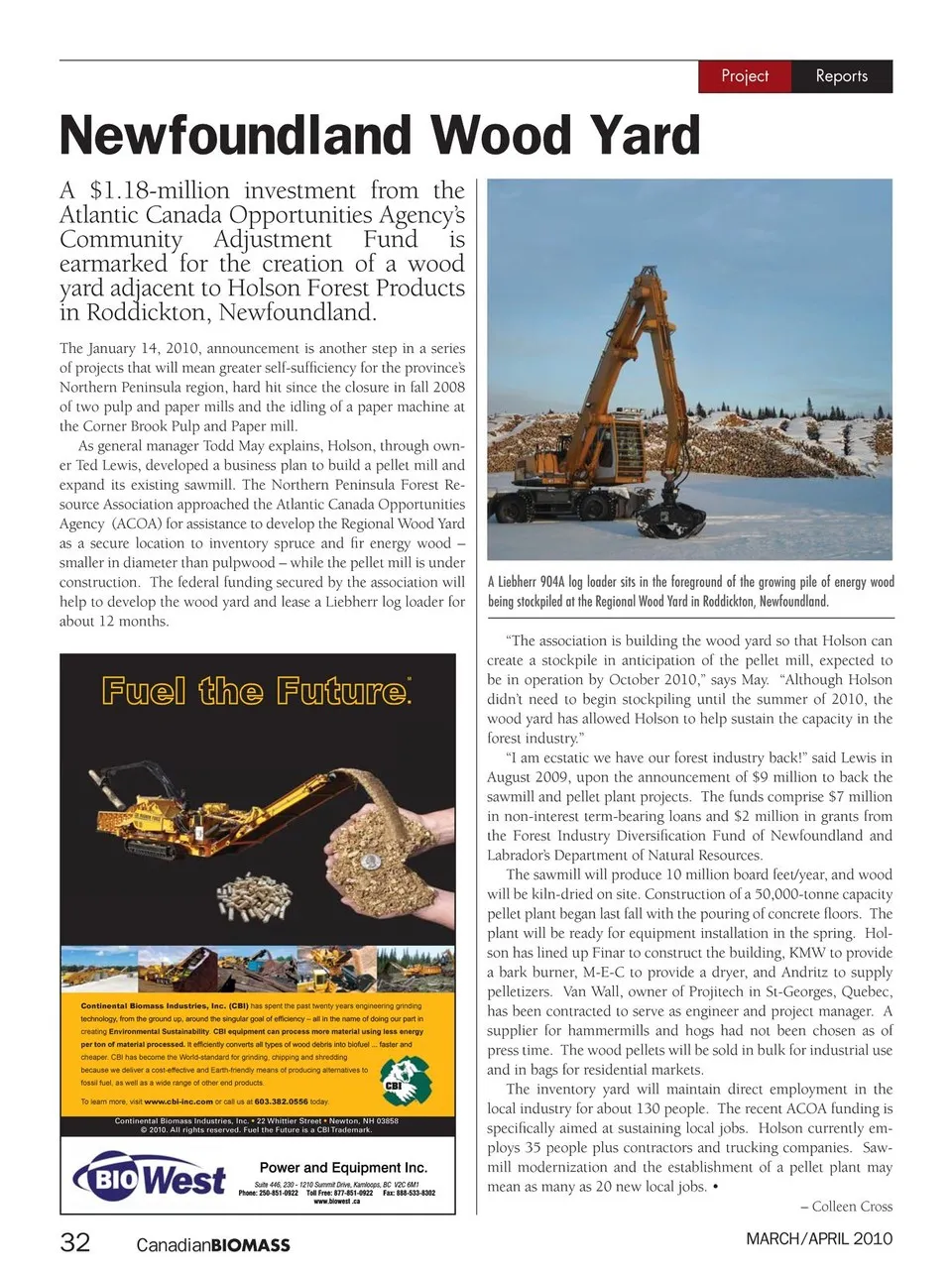
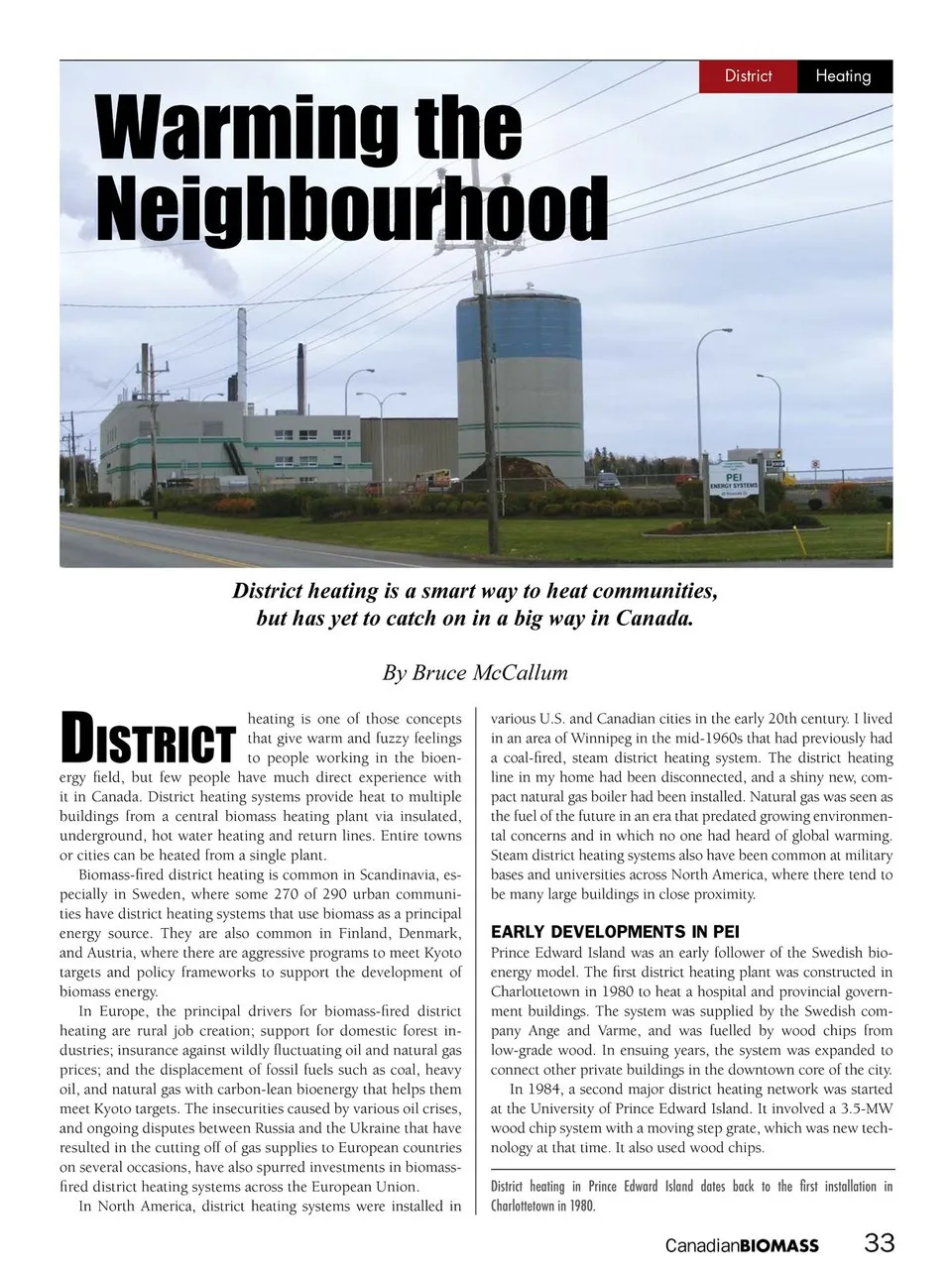
District Heating ergy field, but few people have much direct experience with it in Canada. District heating systems provide heat to multiple buildings from a central biomass heating plant via insulated, underground, hot water heating and return lines. Entire towns or cities can be heated from a single plant. Biomass-fired district heating is common in Scandinavia, es- pecially in Sweden, where some 270 of 290 urban communi- ties have district heating systems that use biomass as a principal energy source. They are also common in Finland, Denmark, and Austria, where there are aggressive programs to meet Kyoto targets and policy frameworks to support the development of biomass energy. In Europe, the principal drivers for biomass-fired district heating are rural job creation; support for domestic forest in- dustries; insurance against wildly fluctuating oil and natural gas prices; and the displacement of fossil fuels such as coal, heavy oil, and natural gas with carbon-lean bioenergy that helps them meet Kyoto targets. The insecurities caused by various oil crises, and ongoing disputes between Russia and the Ukraine that have resulted in the cutting off of gas supplies to European countries on several occasions, have also spurred investments in biomass- fired district heating systems across the European Union. In North America, district heating systems were installed in heating is one of those concepts that give warm and fuzzy feelings to people working in the bioen- various U.S. and Canadian cities in the early 20th century. I lived in an area of Winnipeg in the mid-1960s that had previously had a coal-fired, steam district heating system. The district heating line in my home had been disconnected, and a shiny new, com- pact natural gas boiler had been installed. Natural gas was seen as the fuel of the future in an era that predated growing environmen- tal concerns and in which no one had heard of global warming. Steam district heating systems also have been common at military bases and universities across North America, where there tend to be many large buildings in close proximity. EARLY DEVELOPMENTS IN PEI Prince Edward Island was an early follower of the Swedish bio- energy model. The first district heating plant was constructed in Charlottetown in 1980 to heat a hospital and provincial govern- ment buildings. The system was supplied by the Swedish com- pany Ange and Varme, and was fuelled by wood chips from low-grade wood. In ensuing years, the system was expanded to connect other private buildings in the downtown core of the city. In 1984, a second major district heating network was started at the University of Prince Edward Island. It involved a 3.5-MW wood chip system with a moving step grate, which was new tech- nology at that time. It also used wood chips. CanadianBIOMASS 33
Canadian Biomass March/April 2010: Page 33