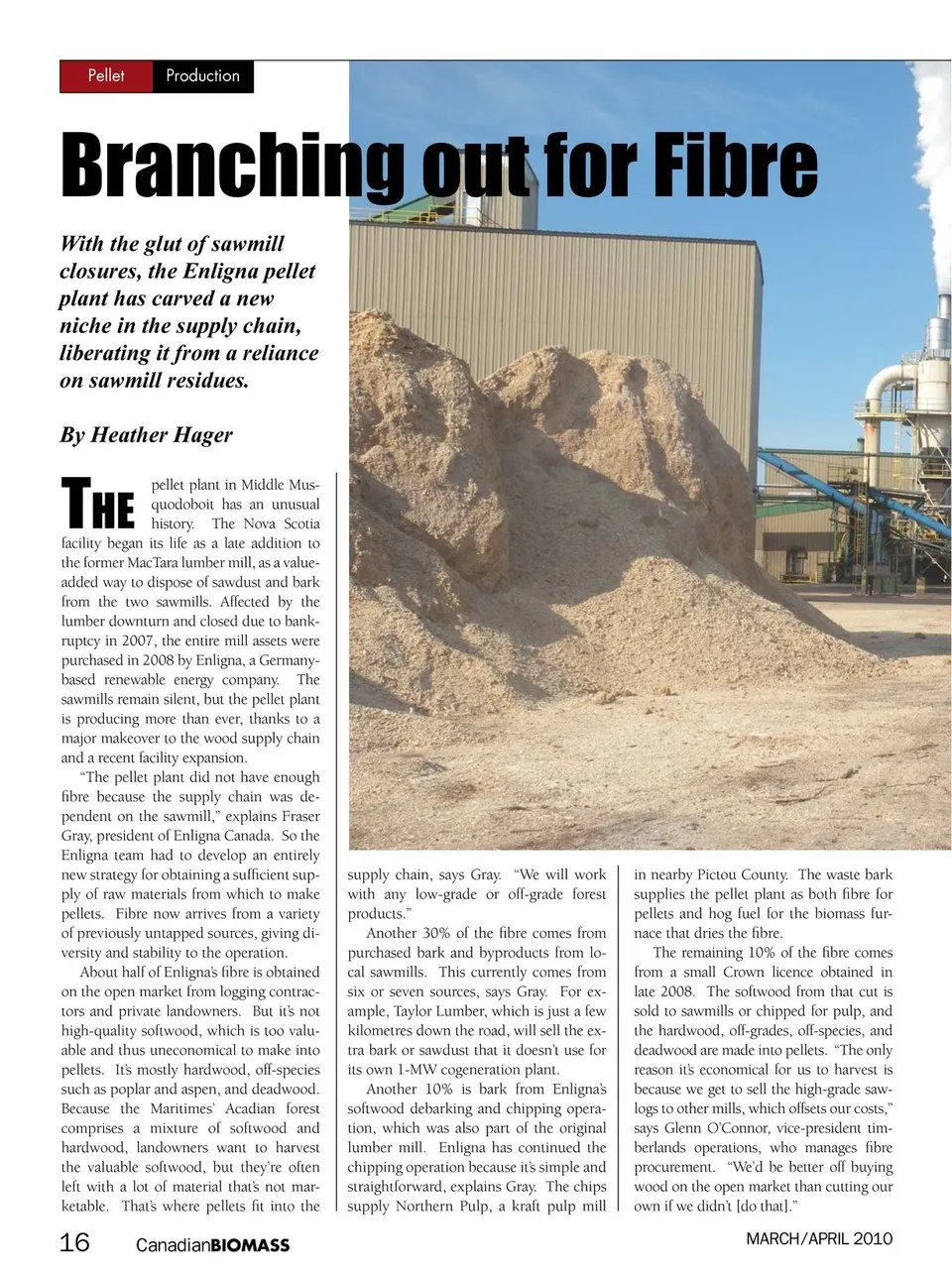
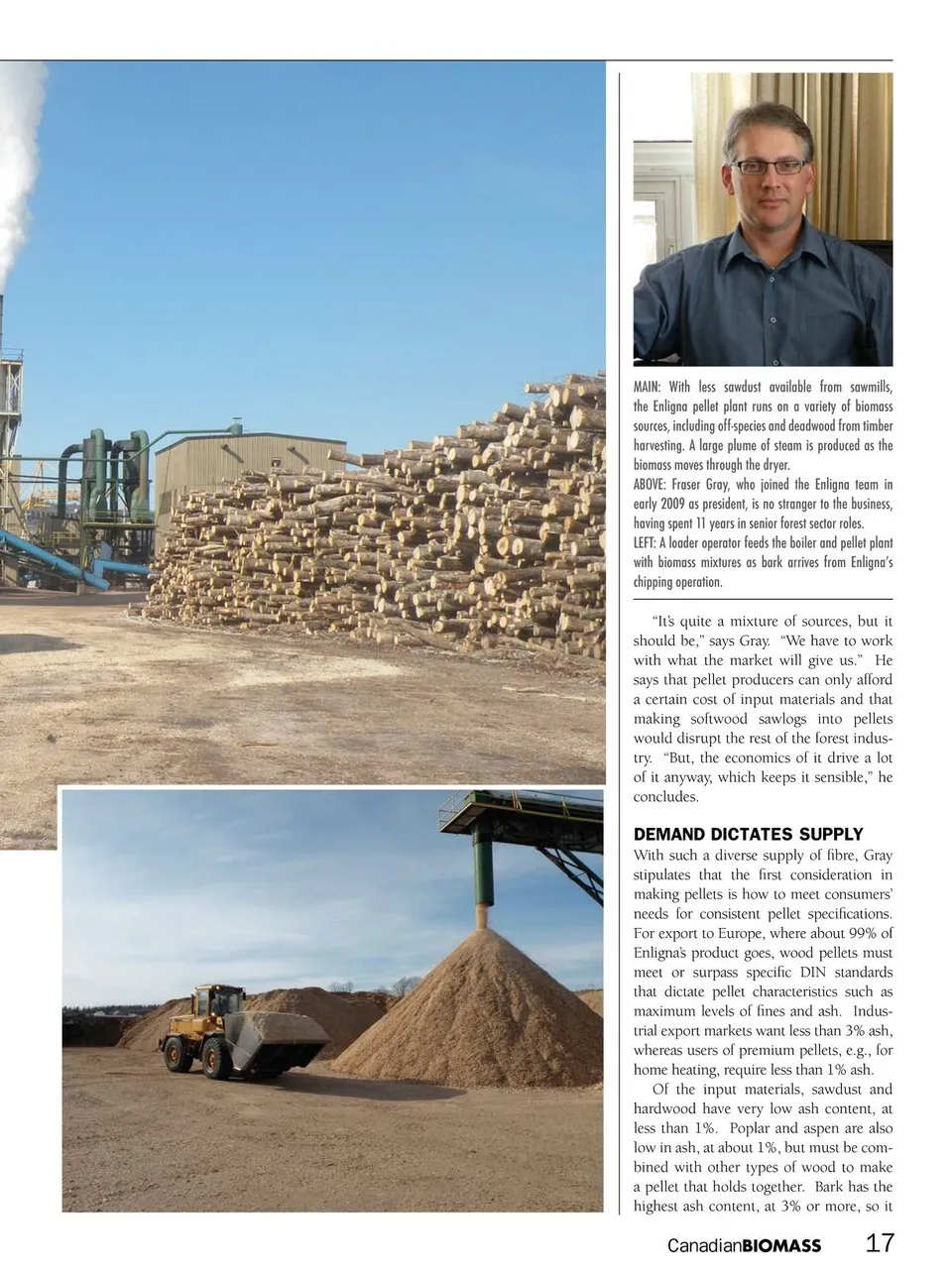
“It’s quite a mixture of sources, but it should be,” says Gray. “We have to work with what the market will give us.” He says that pellet producers can only afford a certain cost of input materials and that making softwood sawlogs into pellets would disrupt the rest of the forest indus- try. “But, the economics of it drive a lot of it anyway, which keeps it sensible,” he concludes. DEMAND DICTATES SUPPLY With such a diverse supply of fibre, Gray stipulates that the first consideration in making pellets is how to meet consumers’ needs for consistent pellet specifications. For export to Europe, where about 99% of Enligna’s product goes, wood pellets must meet or surpass specific DIN standards that dictate pellet characteristics such as maximum levels of fines and ash. Indus- trial export markets want less than 3% ash, whereas users of premium pellets, e.g., for home heating, require less than 1% ash. Of the input materials, sawdust and hardwood have very low ash content, at less than 1%. Poplar and aspen are also low in ash, at about 1%, but must be com- bined with other types of wood to make a pellet that holds together. Bark has the highest ash content, at 3% or more, so it CanadianBIOMASS 17
Canadian Biomass March/April 2010: Page 17