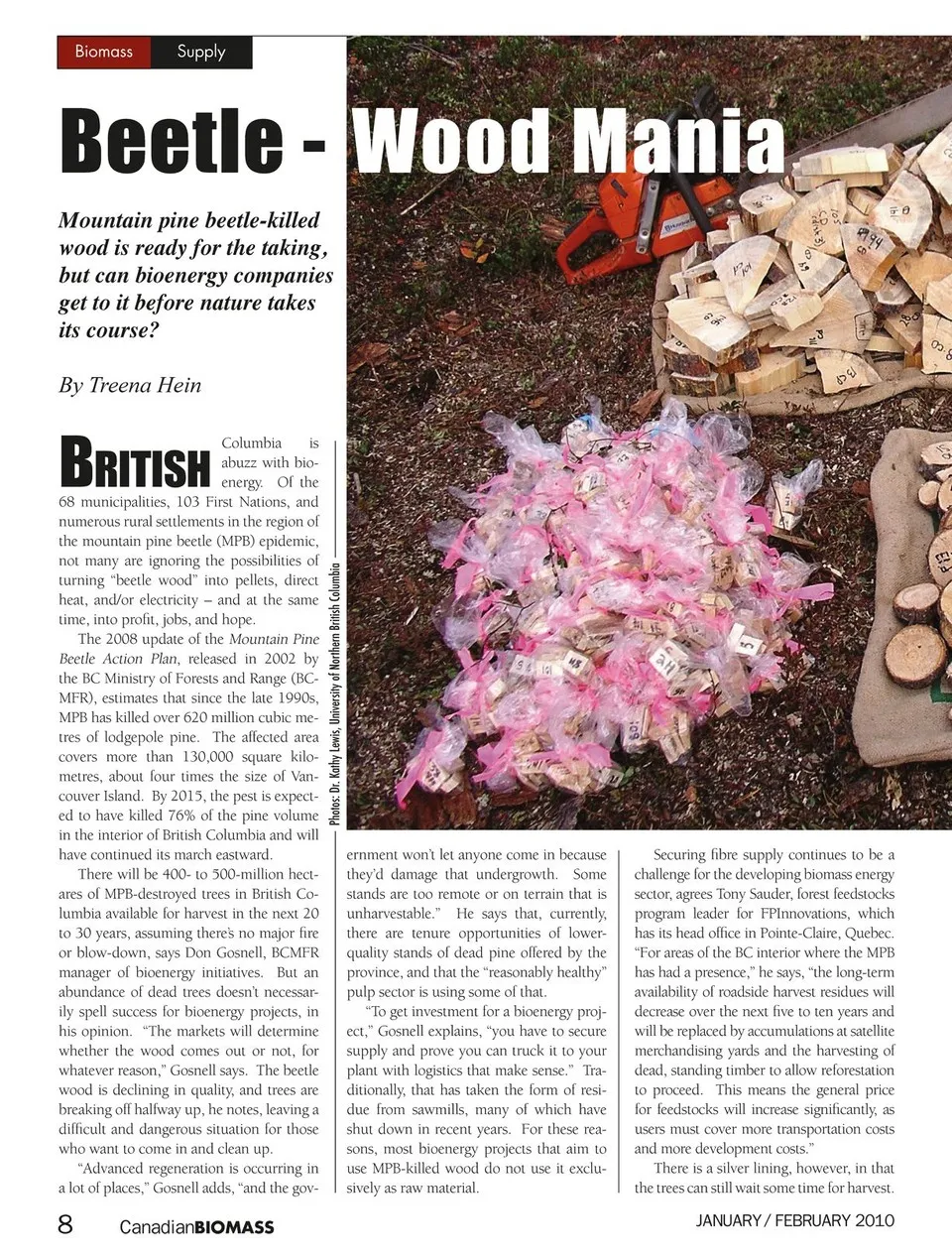
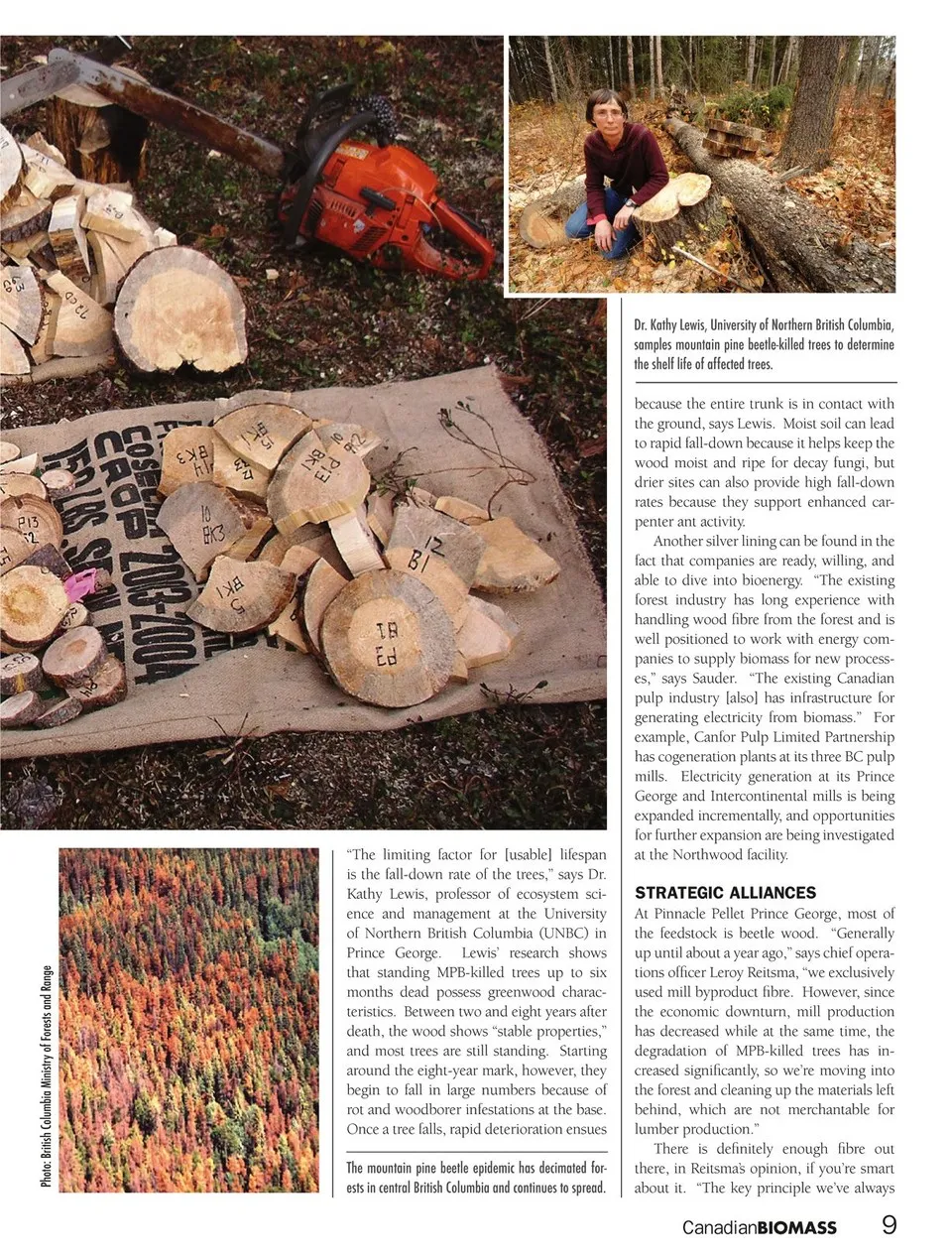
Dr. Kathy Lewis, University of Northern British Columbia, samples mountain pine beetle-killed trees to determine the shelf life of affected trees. because the entire trunk is in contact with the ground, says Lewis. Moist soil can lead to rapid fall-down because it helps keep the wood moist and ripe for decay fungi, but drier sites can also provide high fall-down rates because they support enhanced car- penter ant activity. Another silver lining can be found in the “The limiting factor for [usable] lifespan is the fall-down rate of the trees,” says Dr. Kathy Lewis, professor of ecosystem sci- ence and management at the University of Northern British Columbia (UNBC) in Prince George. Lewis’ research shows that standing MPB-killed trees up to six months dead possess greenwood charac- teristics. Between two and eight years after death, the wood shows “stable properties,” and most trees are still standing. Starting around the eight-year mark, however, they begin to fall in large numbers because of rot and woodborer infestations at the base. Once a tree falls, rapid deterioration ensues The mountain pine beetle epidemic has decimated for- ests in central British Columbia and continues to spread. fact that companies are ready, willing, and able to dive into bioenergy. “The existing forest industry has long experience with handling wood fibre from the forest and is well positioned to work with energy com- panies to supply biomass for new process- es,” says Sauder. “The existing Canadian pulp industry [also] has infrastructure for generating electricity from biomass.” For example, Canfor Pulp Limited Partnership has cogeneration plants at its three BC pulp mills. Electricity generation at its Prince George and Intercontinental mills is being expanded incrementally, and opportunities for further expansion are being investigated at the Northwood facility. strategic alliances At Pinnacle Pellet Prince George, most of the feedstock is beetle wood. “Generally up until about a year ago,” says chief opera- tions officer Leroy Reitsma, “we exclusively used mill byproduct fibre. However, since the economic downturn, mill production has decreased while at the same time, the degradation of MPB-killed trees has in- creased significantly, so we’re moving into the forest and cleaning up the materials left behind, which are not merchantable for lumber production.” There is definitely enough fibre out there, in Reitsma’s opinion, if you’re smart about it. “The key principle we’ve always CanadianBIOMASS 9 Photo: British Columbia Ministry of Forests and Range
Canadian Biomass January/February 2010: Page 9