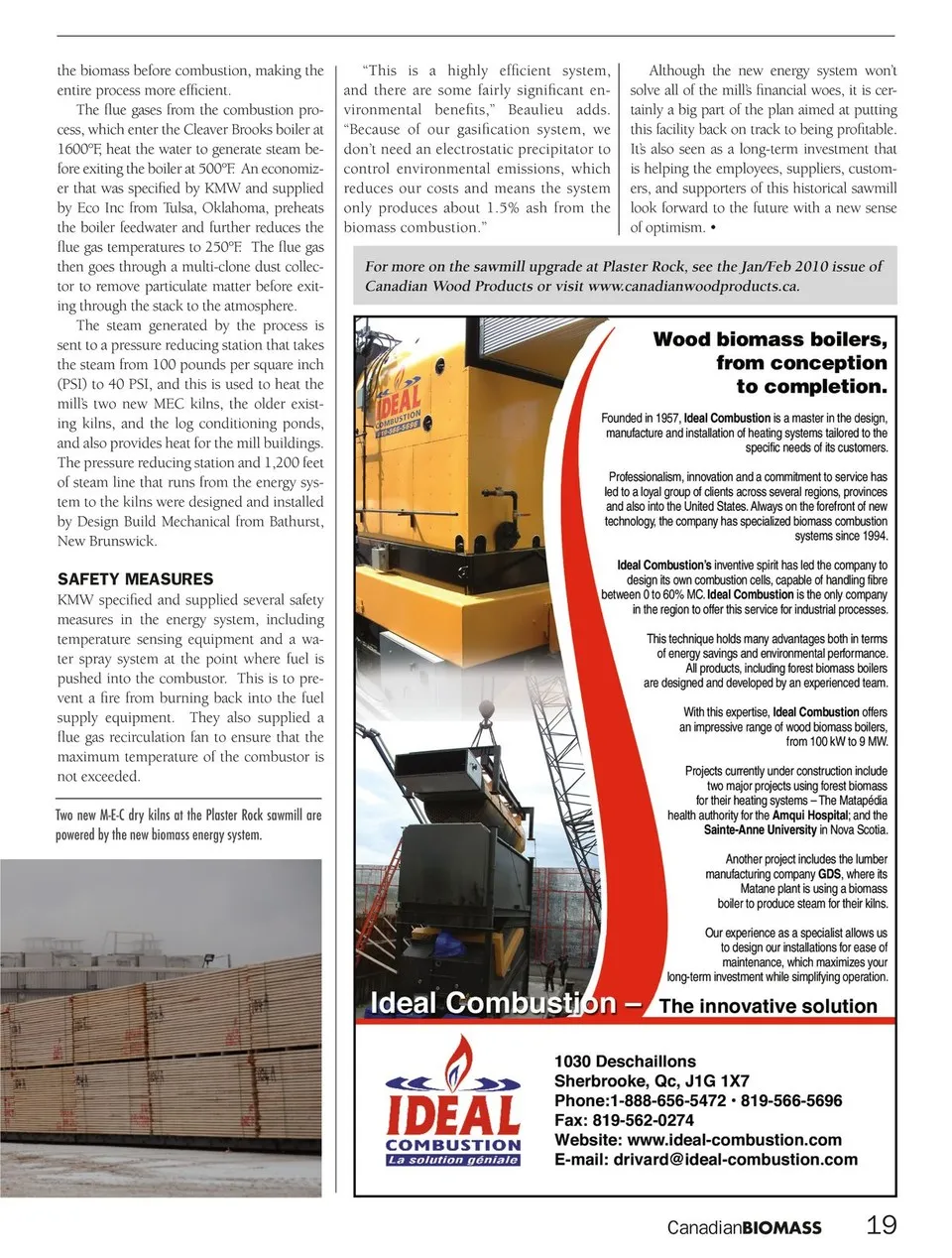
the biomass before combustion, making the entire process more efficient. The flue gases from the combustion pro- cess, which enter the Cleaver Brooks boiler at 1600°F, heat the water to generate steam be- fore exiting the boiler at 500°F. An economiz- er that was specified by KMW and supplied by Eco Inc from Tulsa, Oklahoma, preheats the boiler feedwater and further reduces the flue gas temperatures to 250°F. The flue gas then goes through a multi-clone dust collec- tor to remove particulate matter before exit- ing through the stack to the atmosphere. The steam generated by the process is sent to a pressure reducing station that takes the steam from 100 pounds per square inch (PSI) to 40 PSI, and this is used to heat the mill’s two new MEC kilns, the older exist- ing kilns, and the log conditioning ponds, and also provides heat for the mill buildings. The pressure reducing station and 1,200 feet of steam line that runs from the energy sys- tem to the kilns were designed and installed by Design Build Mechanical from Bathurst, New Brunswick. safety measures KMW specified and supplied several safety measures in the energy system, including temperature sensing equipment and a wa- ter spray system at the point where fuel is pushed into the combustor. This is to pre- vent a fire from burning back into the fuel supply equipment. They also supplied a flue gas recirculation fan to ensure that the maximum temperature of the combustor is not exceeded. Two new M-E-C dry kilns at the Plaster Rock sawmill are powered by the new biomass energy system. “This is a highly efficient system, and there are some fairly significant en- vironmental benefits,” Beaulieu adds. “Because of our gasification system, we don’t need an electrostatic precipitator to control environmental emissions, which reduces our costs and means the system only produces about 1.5% ash from the biomass combustion.” Although the new energy system won’t solve all of the mill’s financial woes, it is cer- tainly a big part of the plan aimed at putting this facility back on track to being profitable. It’s also seen as a long-term investment that is helping the employees, suppliers, custom- ers, and supporters of this historical sawmill look forward to the future with a new sense of optimism. • For more on the sawmill upgrade at Plaster Rock, see the Jan/Feb 2010 issue of Canadian Wood Products or visit www.canadianwoodproducts.ca. CanadianBIOMASS 19
Canadian Biomass January/February 2010: Page 19