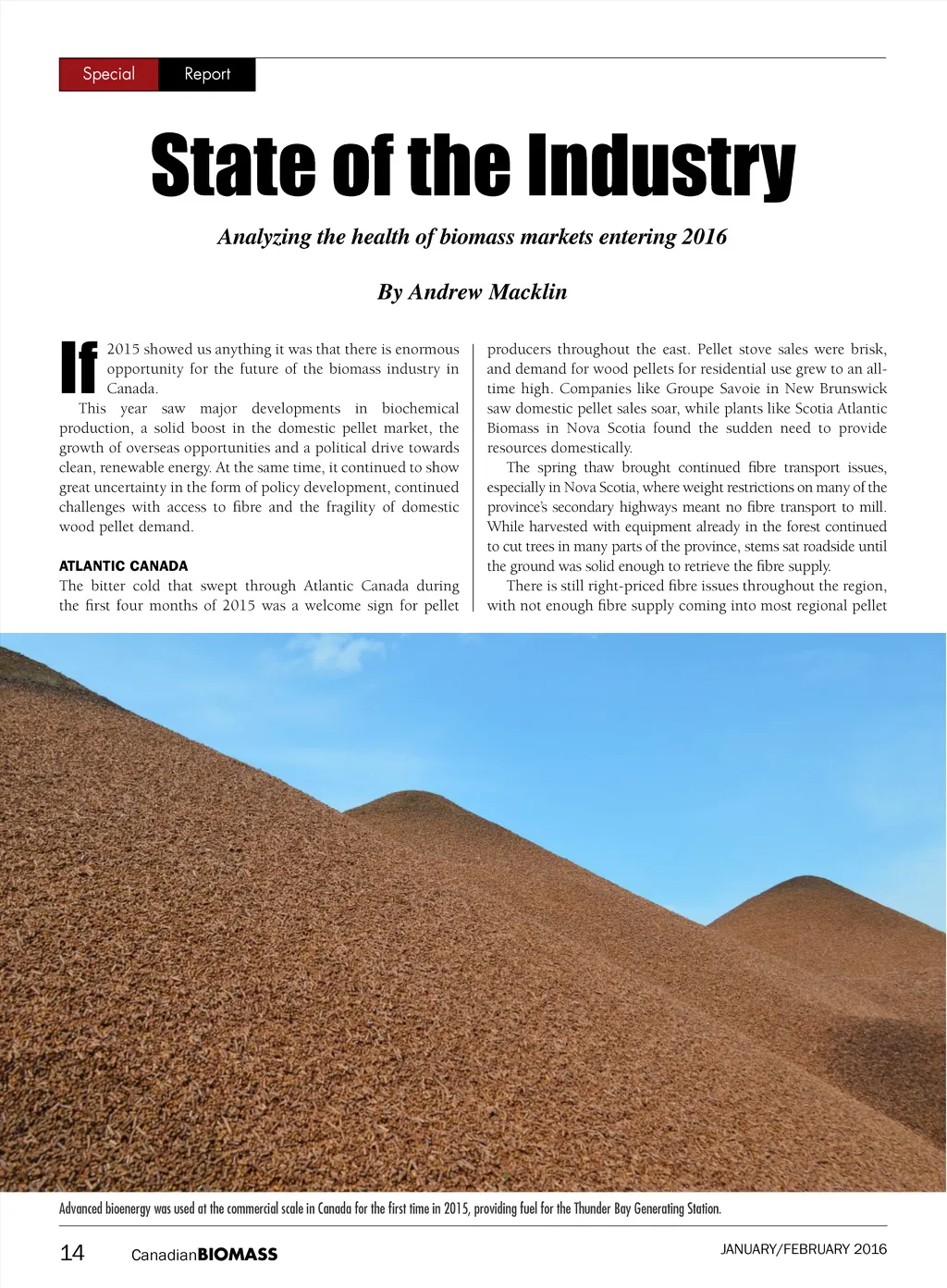
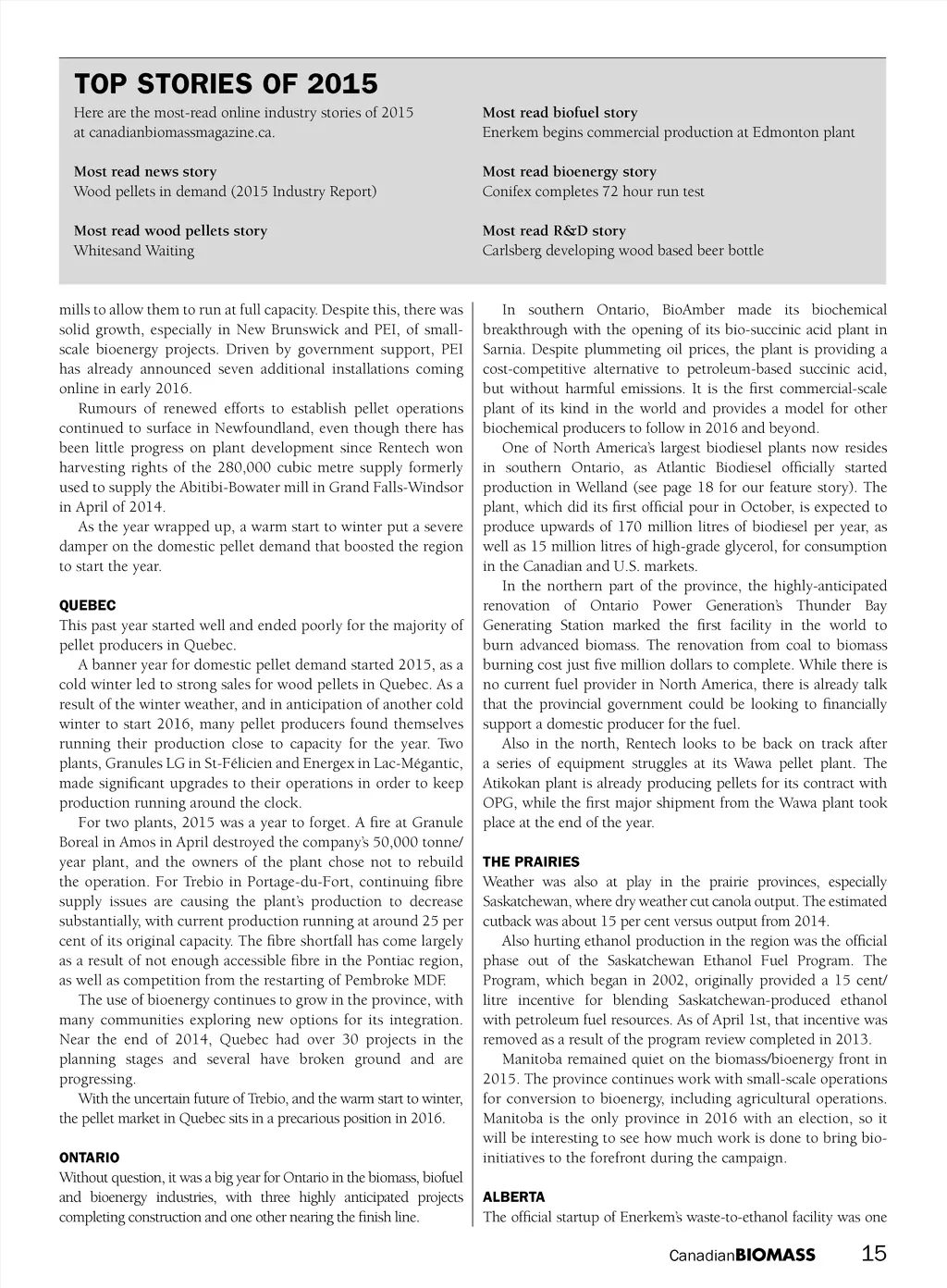
Special Report State of the Industry Analyzing the health of biomass markets entering 2016 By Andrew Macklin If 2015 showed us anything it was that there is enormous opportunity for the future of the biomass industry in Canada. This year saw major developments in biochemical production, a solid boost in the domestic pellet market, the growth of overseas opportunities and a political drive towards clean, renewable energy. At the same time, it continued to show great uncertainty in the form of policy development, continued challenges with access to fibre and the fragility of domestic wood pellet demand. ATLANTIC CANADA The bitter cold that swept through Atlantic Canada during the first four months of 2015 was a welcome sign for pellet producers throughout the east. Pellet stove sales were brisk, and demand for wood pellets for residential use grew to an all-time high. Companies like Groupe Savoie in New Brunswick saw domestic pellet sales soar, while plants like Scotia Atlantic Biomass in Nova Scotia found the sudden need to provide resources domestically. The spring thaw brought continued fibre transport issues, especially in Nova Scotia, where weight restrictions on many of the province’s secondary highways meant no fibre transport to mill. While harvested with equipment already in the forest continued to cut trees in many parts of the province, stems sat roadside until the ground was solid enough to retrieve the fibre supply. There is still right-priced fibre issues throughout the region, with not enough fibre supply coming into most regional pellet Advanced bioenergy was used at the commercial scale in Canada for the first time in 2015, providing fuel for the Thunder Bay Generating Station. 14 Canadian BIOMASS JANUARY/FEBRUARY 2016
Canadian Biomass January February 2016: Page 14