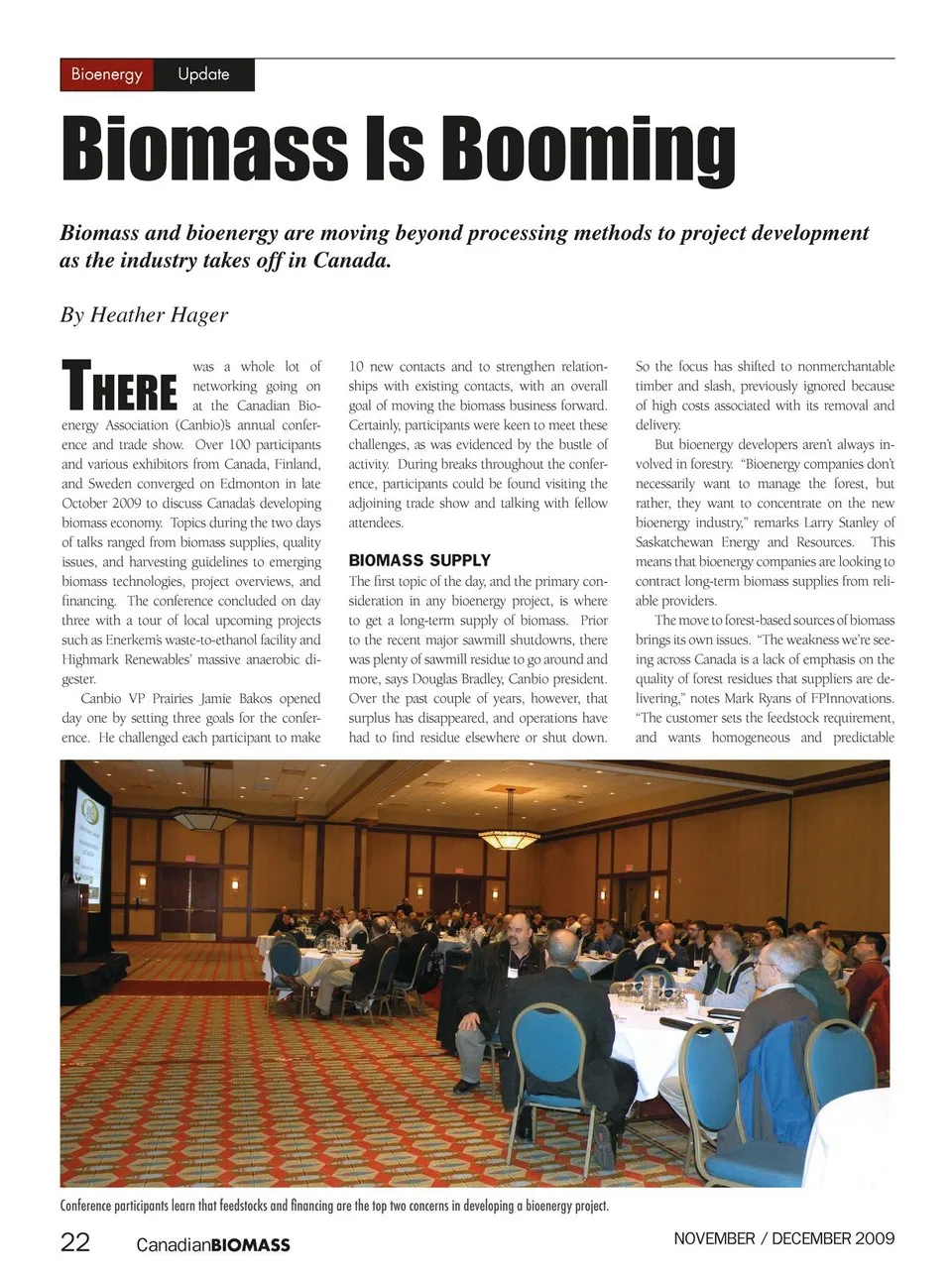
quality.” He says the top three quality factors are appropriate moisture content, consistent particle size, and clean material. The seasonal variability of the resource means that suppliers need to figure out how to deliver a year-round supply with appropriate moisture content. Methods such as pre-piling and covering with a tarp are being tested. A 10% reduction in moisture content can have a good return on investment because it means a supplier transports more energy content and less water per tonne of biomass, says Ryans. Of course, a discussion of the biomass sup- ply would not be complete without considering sustainability. These days, the public percep- tion is that bioenergy will cause the large-scale decimation of old- and second-growth forests. An overview of provincial forest residue har- vest policies and guidelines by experts such as Evelyne Thiffault of Natural Resources Canada, Don Gosnell of the British Columbia Ministry of Forests and Range, Pat Guidera of Alberta Sustainable Resource Development, and Larry Stanley of Saskatchewan Energy and Resources indicates otherwise. Rather than burning slash in the field or leaving it at the roadside, some provinces are now re-allocating leftover fibre to On day two, a panel of resource specialists discussed forest residue harvesting policies. Left to right: Don Gosnell, B.C. Ministry of Forests and Range; Pat Guidera, Alberta Sustainable Resource Development; Larry Stanley, Saskatchewan Energy and Resources; Evelyne Thiffault, Natural Resources Canada; JP Gladu, Aboriginal Strategy Group. other parties if the primary harvester does not want to use it. Other provinces are implement- ing guidelines for where and how much bio- mass can be removed with the timber harvest. from SlaSH to caSH Uses for the harvested and delivered forest- based biomass are expanding as new technolo- gies move forward. Gasification, cellulosic eth- anol, biorefining, pyrolysis, biocarbon—these are the potential future of biomass. Presenters from Enerkem, Lignol, Taylor Gasification, and Alterna Energy talked about the status of their technologies and projects and answered at- tendees’ questions about settings and specs. Participants also heard from individuals and CanadianBIOMASS 23
Canadian Biomass November/December 2009: Page 23