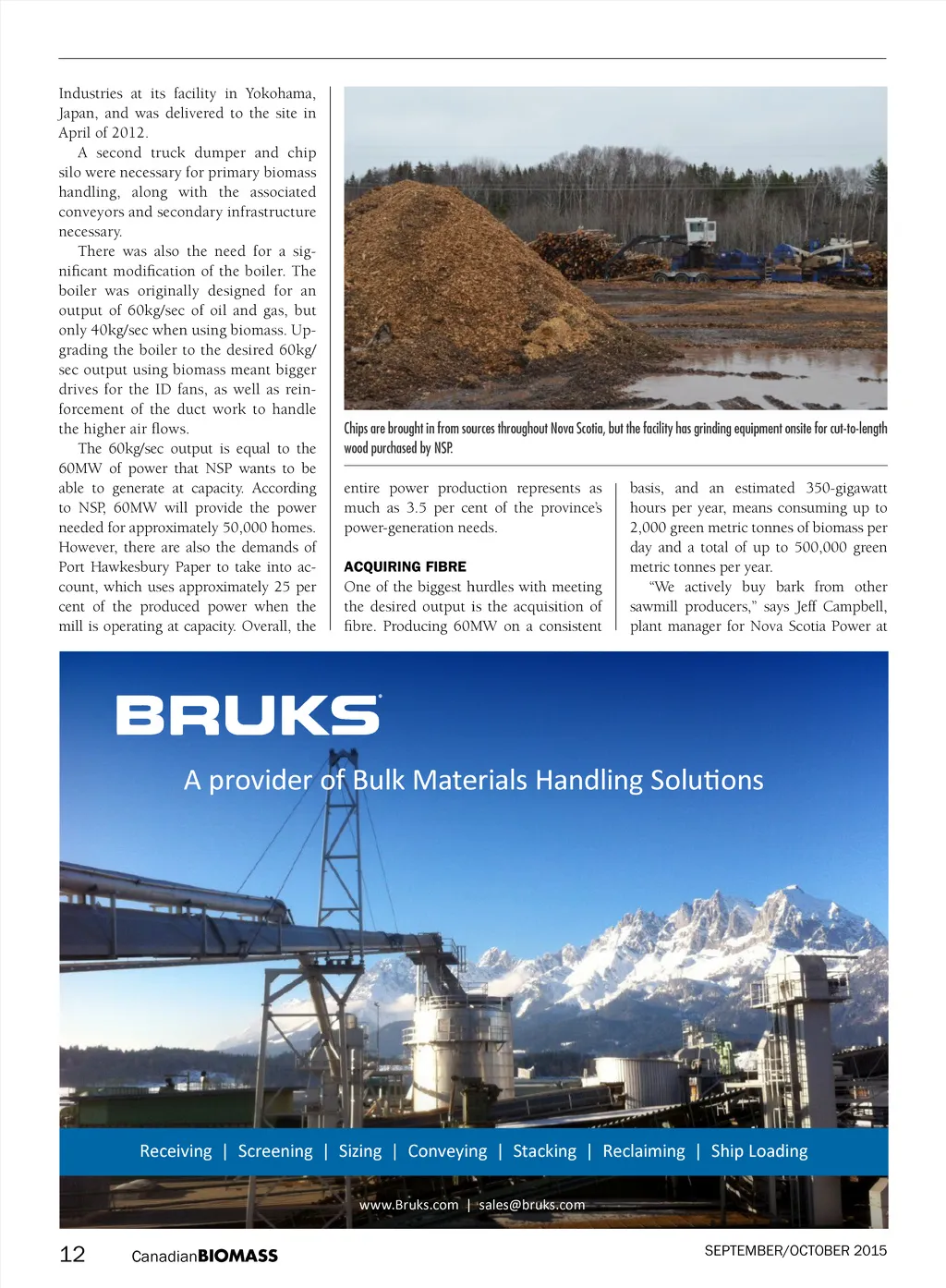
Industries at its facility in Yokohama, Japan, and was delivered to the site in April of 2012. A second truck dumper and chip silo were necessary for primary biomass handling, along with the associated conveyors and secondary infrastructure necessary. There was also the need for a sig-nificant modification of the boiler. The boiler was originally designed for an output of 60kg/sec of oil and gas, but only 40kg/sec when using biomass. Up-grading the boiler to the desired 60kg/ sec output using biomass meant bigger drives for the ID fans, as well as rein-forcement of the duct work to handle the higher air flows. The 60kg/sec output is equal to the 60MW of power that NSP wants to be able to generate at capacity. According to NSP, 60MW will provide the power needed for approximately 50,000 homes. However, there are also the demands of Port Hawkesbury Paper to take into ac-count, which uses approximately 25 per cent of the produced power when the mill is operating at capacity. Overall, the Chips are brought in from sources throughout Nova Scotia, but the facility has grinding equipment onsite for cut-to-length wood purchased by NSP. entire power production represents as much as 3.5 per cent of the province’s power-generation needs. ACQUIRING FIBRE One of the biggest hurdles with meeting the desired output is the acquisition of fibre. Producing 60MW on a consistent basis, and an estimated 350-gigawatt hours per year, means consuming up to 2,000 green metric tonnes of biomass per day and a total of up to 500,000 green metric tonnes per year. “We actively buy bark from other sawmill producers,” says Jeff Campbell, plant manager for Nova Scotia Power at A provider of Bulk Materials Handling Solutions Receiving | Screening | Sizing | Conveying | Stacking | Reclaiming | Ship Loading www.Bruks.com | [email protected] 12 Canadian BIOMASS SEPTEMBER/OCTOBER 2015 2015-09-28 10:10 AM Bruks biomass septoct15.indd 1
Canadian Biomass September/October 2015: Page 12