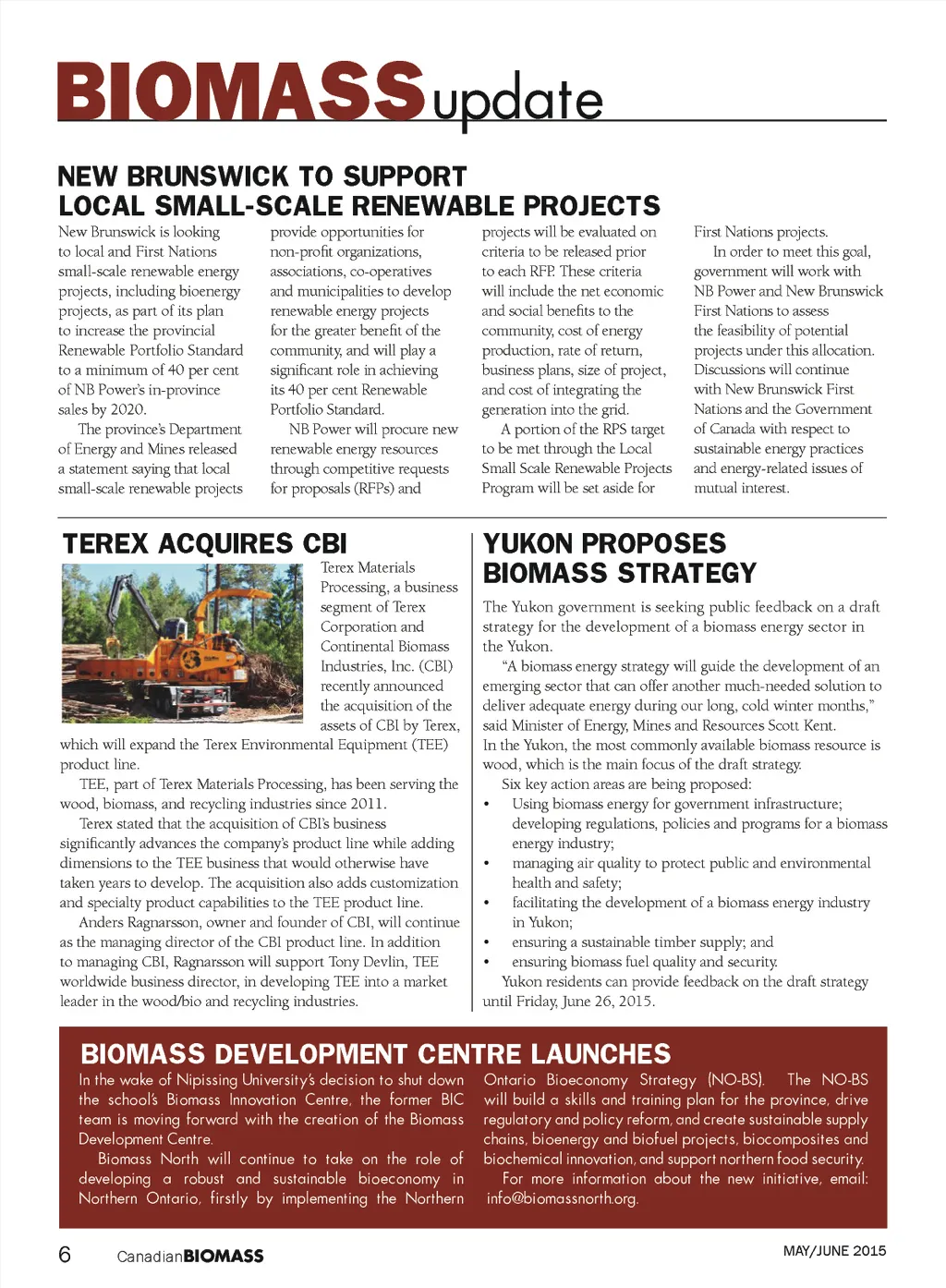
SCHLUMBERGER CASCADES INVESTS IN CELLULOSIC SUGAR TECHNOLOGY AT CABANO INVESTS IN natural polymer found in de la Faune et des Parcs. Cascades Inc. will replace CELLUFORCE D omtar Corporation recently announced an investment by Schlumberger in CelluForce, a joint venture between Domtar and FPInnovations that manufactures wood-derived nanocrystalline cellulose (NCC). The investment is a collab-oration to explore the use of NCC to enhance the productivi-ty of oil and gas wells. Schlumberger is the world’s leading supplier of technology, integrated project management and information solutions to the oil and gas industry. NCC is manufactured using a patented process in Domtar’s pulp mill in Windsor, Que. NCC (also referred to as Cel-lulose Nanocrystals, or CNC) is the primary component that provides structural strength to trees. NCC is a renewable, bio-degradable, nontoxic material. Details of Schlumberger’s in-vestment in CelluForce remain confidential. This investment follows a $4-million grant announced by CelluForce in February 2015 from the government of Canada’s sustainable development technology program (Sustainable Development Technology Canada, or SDTC) for similar research and development work. the pulping process at its Norampac Cabano facility with a hot water pulping process that will allow the plant to extract hemicellulose, a cellulosic sugar with high value-added potential, from wood chips. It will be the first time this innovative process is used in Canada. This $26-million project is a step forward for biorefin-ing in Canada. It is backed by a $10-million investment from Natural Resources Can-ada’s Investments in Forest Industry Transformation (IFIT) program and an addi-tional $4.4 million from the Québec Ministère des Forêts, The Cabano plant, located in Témiscouata-sur-le-Lac in eastern Quebec, manufactures corrugated medium from virgin and recycled fibres. Cascades will replace the plant’s current process – the production of sodium carbonate-based chemical pulp – with what it describes as a more environmentally friendly and economical process that was developed in conjunction with a U.S. partner. The hot water pulping process will be used to extract hemicellulose from deciduous woodchips. Hemicellulose is a plant cell walls. A fact sheet from the IFIT program explains that with this hot water pulping process, Cascades will be able to extract the hemicellulose from hardwood chips at the beginning of the pulping process (referred to as pre-extraction). This process will result in a new value-added product, a concentrated hemicellulose stream that can be sold as a concentrated form of wood-extracted sugars. This new product has various commercial applications, including bioenergy and a sweetening agent in food and beverages. SUSTANE TECHNOLOGIES TO BUILD WASTE TO BIOMASS FACILITY A clean technology startup company is building its first commercial demonstration plant in the Municipality of the District of Chester, N.S. Sustane Technologies Inc. is working to commer-cialize and globally market a new disruptive technol-ogy that diverts municipal waste from landfills and safely converts it into clean energy and other recyclable materials. The company’s proprietary technologies separate garbage into plastics, metals, glass, moisture and biomass. One of those assets is a biomass fuel pellet. Other value streams are in develop-ment. The process does not involve incineration, chemi-cals or pollutants and can be used on a small or large scale. The company’s commer-cial demonstration plant is expected to be up and running in mid-2016. The municipality will see all of its garbage removed from the landfill. The Government of Can-ada is providing a $500,000 repayable contribution, through Atlantic Canada Opportunities Agency’s Busi-ness Development Program (BDP), to Sustane Technolo-gies to acquire special equip-ment for the development of the plant. BIOAMBER ON TRACK FOR Q3 2015 OPENING BioAmber’s bio-succinic acid production plant remains on schedule for commercial operation in the third quarter of 2015. The announcement was made as part of the company’s first quarter financial results statement in early May. Project costs continued to track within the $125 million USD +/-10% estimate originally made by the company. Company officials also announced that BioAmber was chosen by Bayer MaterialScience as its supplier of bio-succinic acid for a new product line. “We have been able to execute effectively in Sarnia while reducing the risk associated with the next plant, and now we have the capital needed to undertake critical engineering and site related work on our next plant so that we don’t lose time,” said Jean-Fran-cois Huc, BioAmber’s CEO. “On the commercial front, the recent Bayer MaterialScience announcement is a strong endorsement of BioAmber’s leadership position in bio-succinic acid and a clear signal of the growing demand for more sustainable chemicals.” For more news on new biomass, bioenergy and biorpdocut projects in Canada, visit: www.canadianbiomassmagazine.ca Canadian BIOMASS 7
Canadian Biomass May-June 2015: Page 7