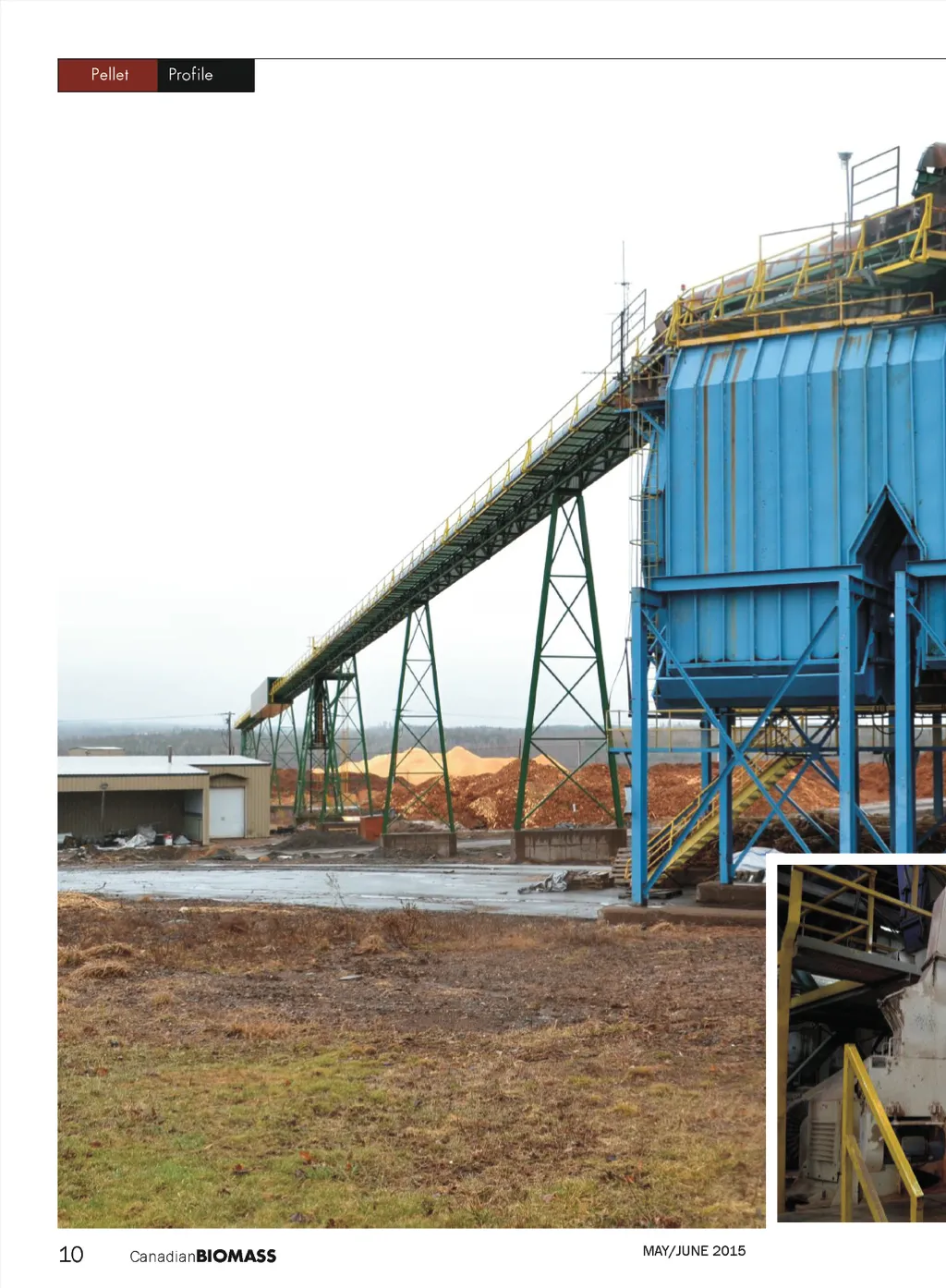
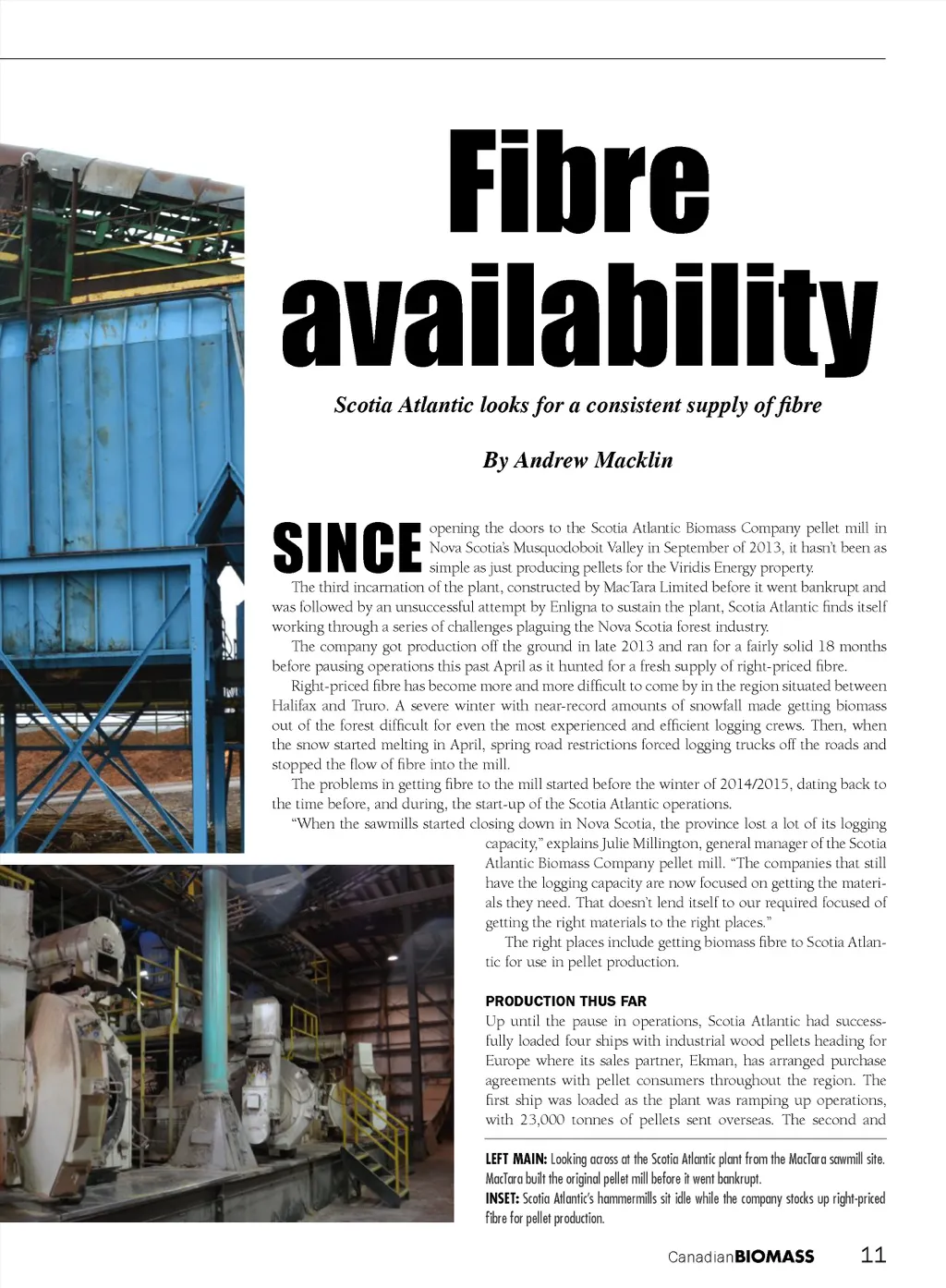
Fibre availability Scotia Atlantic looks for a consistent supply of fibre By Andrew Macklin opening the doors to the Scotia Atlantic Biomass Company pellet mill in Nova Scotia’s Musquodoboit Valley in September of 2013, it hasn’t been as simple as just producing pellets for the Viridis Energy property. The third incarnation of the plant, constructed by MacTara Limited before it went bankrupt and was followed by an unsuccessful attempt by Enligna to sustain the plant, Scotia Atlantic finds itself working through a series of challenges plaguing the Nova Scotia forest industry. The company got production off the ground in late 2013 and ran for a fairly solid 18 months before pausing operations this past April as it hunted for a fresh supply of right-priced fibre. Right-priced fibre has become more and more difficult to come by in the region situated between Halifax and Truro. A severe winter with near-record amounts of snowfall made getting biomass out of the forest difficult for even the most experienced and efficient logging crews. Then, when the snow started melting in April, spring road restrictions forced logging trucks off the roads and stopped the flow of fibre into the mill. The problems in getting fibre to the mill started before the winter of 2014/2015, dating back to the time before, and during, the start-up of the Scotia Atlantic operations. “When the sawmills started closing down in Nova Scotia, the province lost a lot of its logging capacity,” explains Julie Millington, general manager of the Scotia Atlantic Biomass Company pellet mill. “The companies that still have the logging capacity are now focused on getting the materi-als they need. That doesn’t lend itself to our required focused of getting the right materials to the right places.” The right places include getting biomass fibre to Scotia Atlan-tic for use in pellet production. PRODUCTION THUS FAR SINCE Up until the pause in operations, Scotia Atlantic had success-fully loaded four ships with industrial wood pellets heading for Europe where its sales partner, Ekman, has arranged purchase agreements with pellet consumers throughout the region. The first ship was loaded as the plant was ramping up operations, with 23,000 tonnes of pellets sent overseas. The second and LEFT MAIN: Looking across at the Scotia Atlantic plant from the MacTara sawmill site. MacTara built the original pellet mill before it went bankrupt. INSET: Scotia Atlantic’s hammermills sit idle while the company stocks up right-priced fibre for pellet production. Canadian BIOMASS 11
Canadian Biomass May-June 2015: Page 11