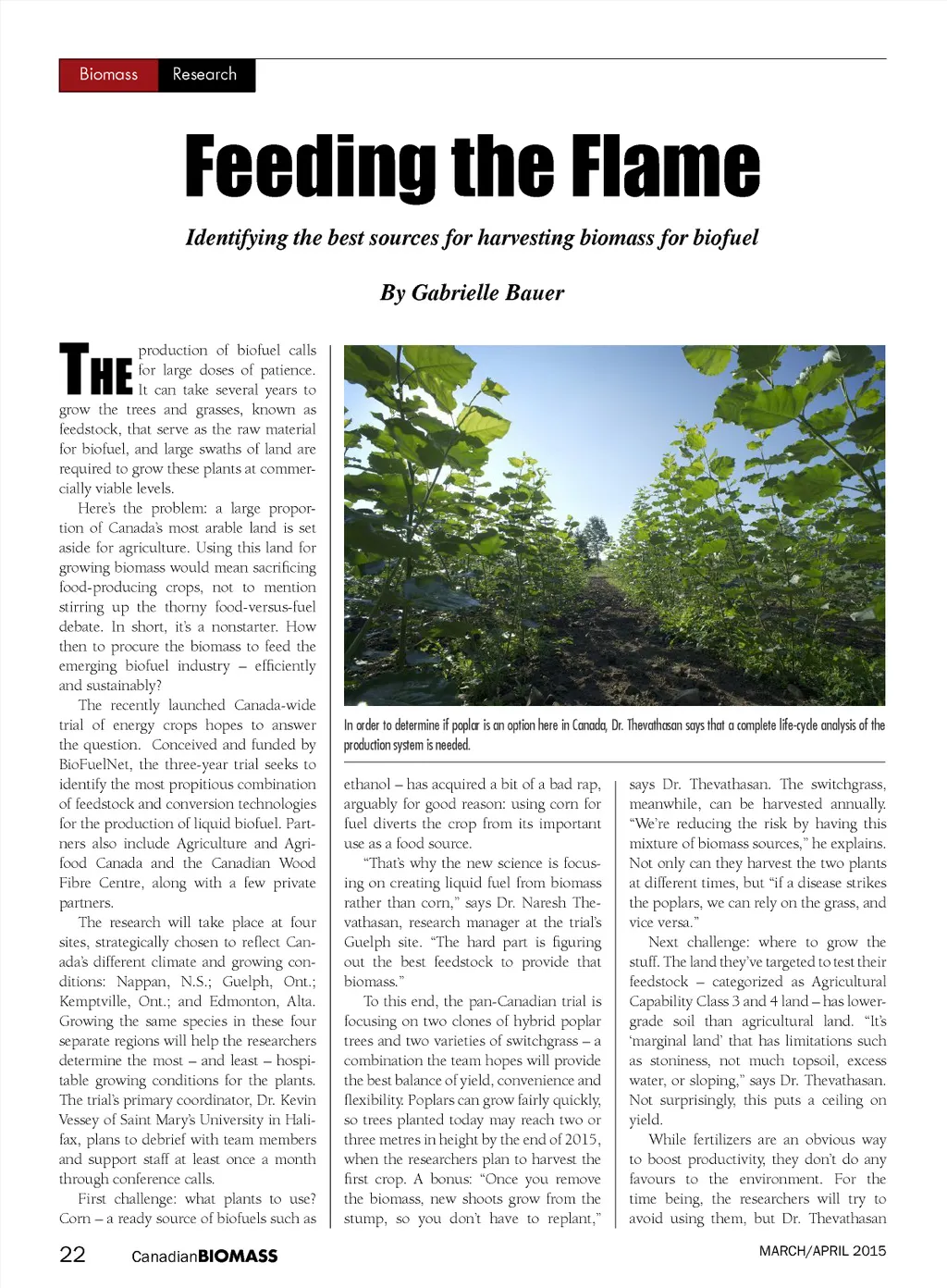
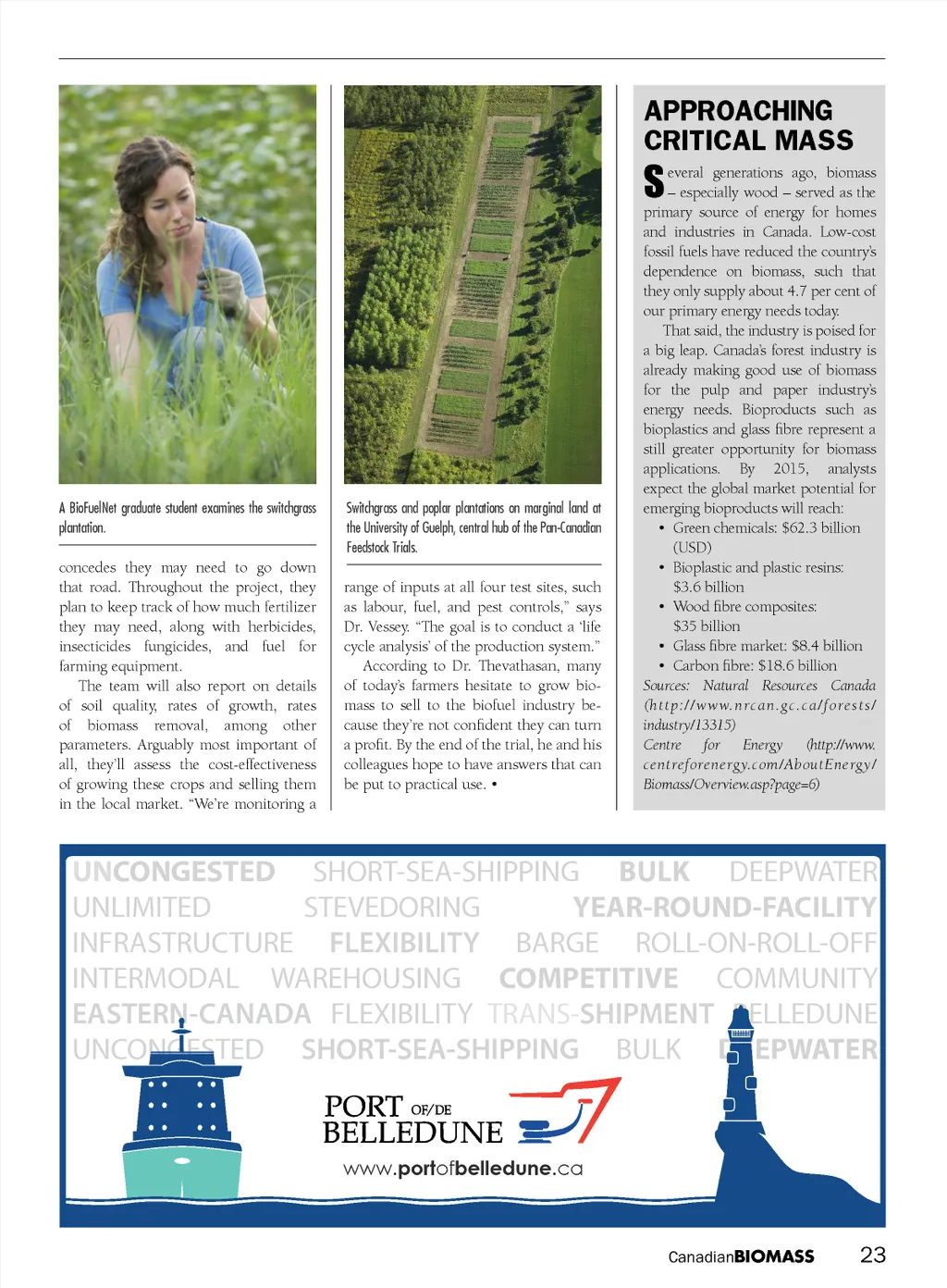
APPROACHING CRITICAL MASS everal generations ago, biomass – especially wood – served as the primary source of energy for homes and industries in Canada. Low-cost fossil fuels have reduced the country’s dependence on biomass, such that they only supply about 4.7 per cent of our primary energy needs today. That said, the industry is poised for a big leap. Canada’s forest industry is already making good use of biomass for the pulp and paper industry’s energy needs. Bioproducts such as bioplastics and glass fibre represent a still greater opportunity for biomass applications. By 2015, analysts expect the global market potential for emerging bioproducts will reach: • Green chemicals: $62.3 billion (USD) • Bioplastic and plastic resins: $3.6 billion • Wood fibre composites: $35 billion • Glass fibre market: $8.4 billion • Carbon fibre: $18.6 billion Sources: Natural Resources Canada (http://www.nrcan.gc.ca/forests/ industry/13315) Centre for Energy (http://www. centreforenergy.com/AboutEnergy/ Biomass/Overview.asp?page=6) S A BioFuelNet graduate student examines the switchgrass plantation. Switchgrass and poplar plantations on marginal land at the University of Guelph, central hub of the Pan-Canadian Feedstock Trials. concedes they may need to go down that road. Throughout the project, they plan to keep track of how much fertilizer they may need, along with herbicides, insecticides fungicides, and fuel for farming equipment. The team will also report on details of soil quality, rates of growth, rates of biomass removal, among other parameters. Arguably most important of all, they’ll assess the cost-effectiveness of growing these crops and selling them in the local market. “We’re monitoring a range of inputs at all four test sites, such as labour, fuel, and pest controls,” says Dr. Vessey. “The goal is to conduct a ‘life cycle analysis’ of the production system.” According to Dr. Thevathasan, many of today’s farmers hesitate to grow bio-mass to sell to the biofuel industry be-cause they’re not confident they can turn a profit. By the end of the trial, he and his colleagues hope to have answers that can be put to practical use. • UN CONGESTED SHORT-SEA-SHIPPING BULK DEEPWATER UNLIMITED STEVEDORING YEAR-ROUND-FACILITY INFRASTRUCTURE FLEXIBILITY BARGE ROLL-ON-ROLL-OFF INTERMODAL WAREHOUSING COMPETITIVE COMMUNITY EASTERN-CANADA FLEXIBILITY TRANS-SHIPMENT BELLEDUNE UNCONGESTED SHORT-SEA-SHIPPING BULK DEEPWATER www. port of belledune .ca Canadian BIOMASS 23
Canadian Biomass March-April 2015: Page 23