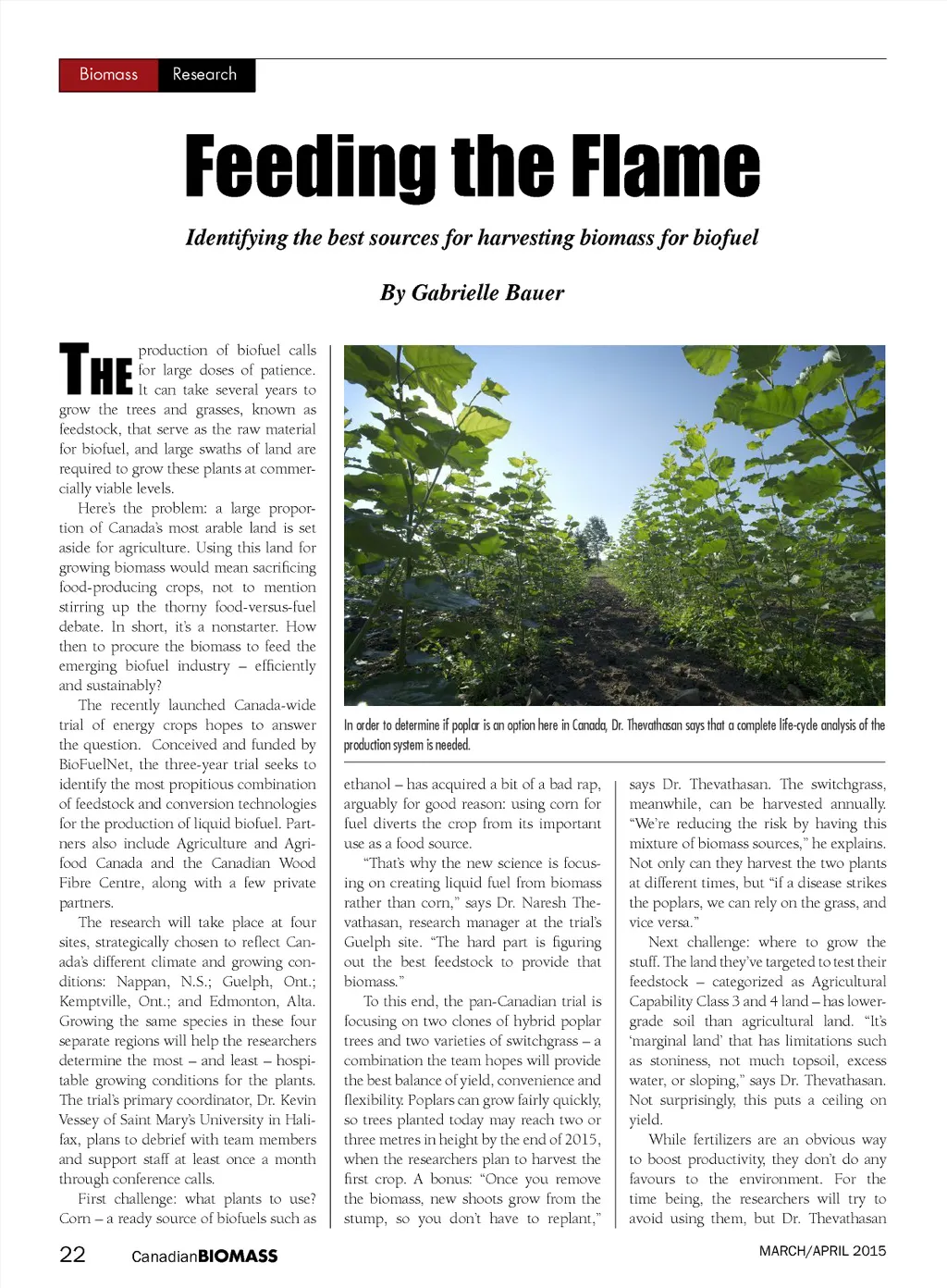
Biomass Research Feeding the Flame Identifying the best sources for harvesting biomass for biofuel By Gabrielle Bauer production of biofuel calls for large doses of patience. It can take several years to grow the trees and grasses, known as feedstock, that serve as the raw material for biofuel, and large swaths of land are required to grow these plants at commer-cially viable levels. Here’s the problem: a large propor-tion of Canada’s most arable land is set aside for agriculture. Using this land for growing biomass would mean sacrificing food-producing crops, not to mention stirring up the thorny food-versus-fuel debate. In short, it’s a nonstarter. How then to procure the biomass to feed the emerging biofuel industry – efficiently and sustainably? The recently launched Canada-wide trial of energy crops hopes to answer the question. Conceived and funded by BioFuelNet, the three-year trial seeks to identify the most propitious combination of feedstock and conversion technologies for the production of liquid biofuel. Part-ners also include Agriculture and Agri-food Canada and the Canadian Wood Fibre Centre, along with a few private partners. The research will take place at four sites, strategically chosen to reflect Can-ada’s different climate and growing con-ditions: Nappan, N.S.; Guelph, Ont.; Kemptville, Ont.; and Edmonton, Alta. Growing the same species in these four separate regions will help the researchers determine the most – and least – hospi-table growing conditions for the plants. The trial’s primary coordinator, Dr. Kevin Vessey of Saint Mary’s University in Hali-fax, plans to debrief with team members and support staff at least once a month through conference calls. First challenge: what plants to use? Corn – a ready source of biofuels such as T he In order to determine if poplar is an option here in Canada, Dr. Thevathasan says that a complete life-cycle analysis of the production system is needed. ethanol – has acquired a bit of a bad rap, arguably for good reason: using corn for fuel diverts the crop from its important use as a food source. “That’s why the new science is focus-ing on creating liquid fuel from biomass rather than corn,” says Dr. Naresh The-vathasan, research manager at the trial’s Guelph site. “The hard part is figuring out the best feedstock to provide that biomass.” To this end, the pan-Canadian trial is focusing on two clones of hybrid poplar trees and two varieties of switchgrass – a combination the team hopes will provide the best balance of yield, convenience and flexibility. Poplars can grow fairly quickly, so trees planted today may reach two or three metres in height by the end of 2015, when the researchers plan to harvest the first crop. A bonus: “Once you remove the biomass, new shoots grow from the stump, so you don’t have to replant,” says Dr. Thevathasan. The switchgrass, meanwhile, can be harvested annually. “We’re reducing the risk by having this mixture of biomass sources,” he explains. Not only can they harvest the two plants at different times, but “if a disease strikes the poplars, we can rely on the grass, and vice versa.” Next challenge: where to grow the stuff. The land they’ve targeted to test their feedstock – categorized as Agricultural Capability Class 3 and 4 land – has lower-grade soil than agricultural land. “It’s ‘marginal land’ that has limitations such as stoniness, not much topsoil, excess water, or sloping,” says Dr. Thevathasan. Not surprisingly, this puts a ceiling on yield. While fertilizers are an obvious way to boost productivity, they don’t do any favours to the environment. For the time being, the researchers will try to avoid using them, but Dr. Thevathasan MARCH/APRIL 2015 22 Canadian BIOMASS
Canadian Biomass March-April 2015: Page 22