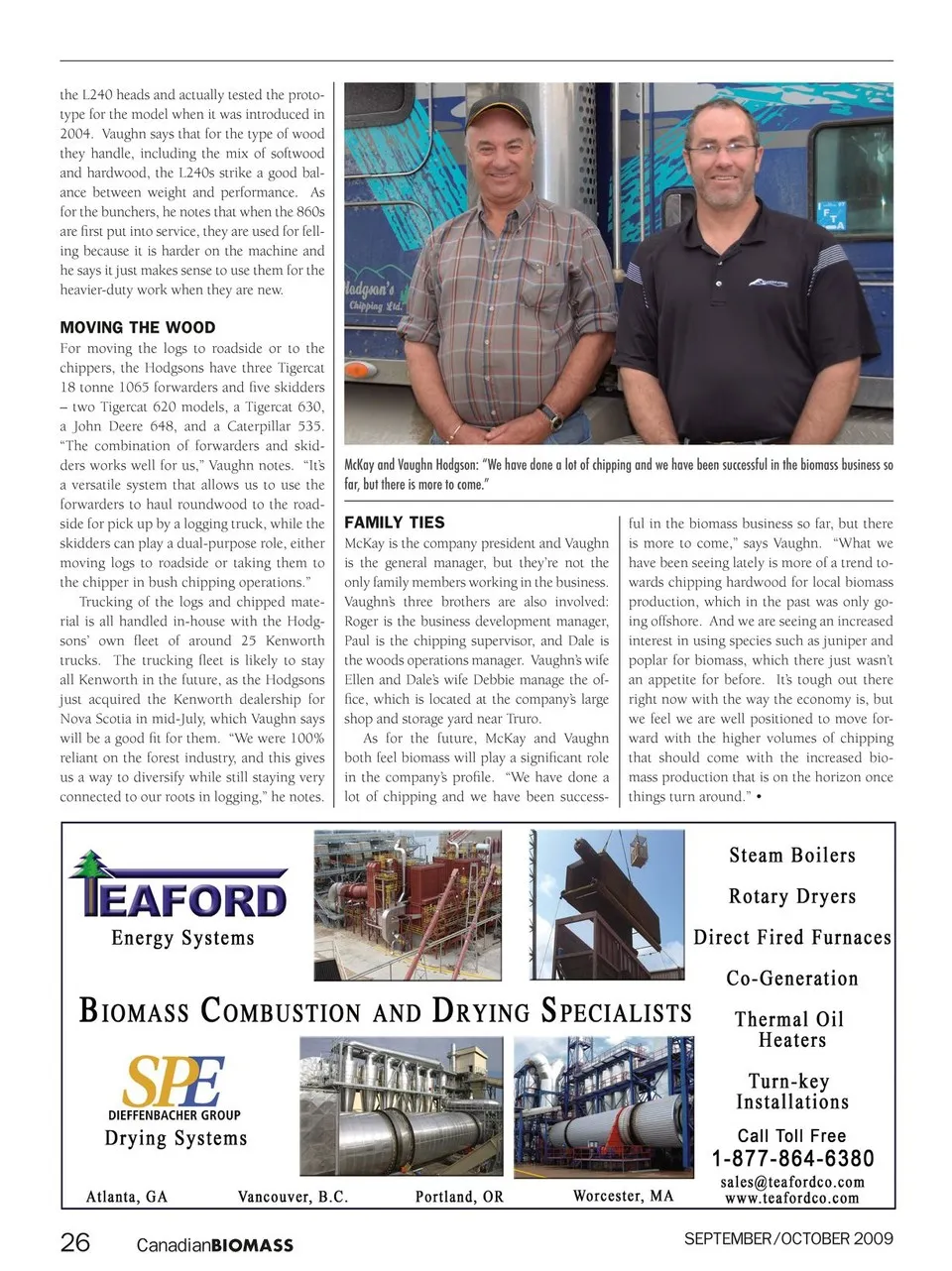
the L240 heads and actually tested the proto- type for the model when it was introduced in 2004. Vaughn says that for the type of wood they handle, including the mix of softwood and hardwood, the L240s strike a good bal- ance between weight and performance. As for the bunchers, he notes that when the 860s are first put into service, they are used for fell- ing because it is harder on the machine and he says it just makes sense to use them for the heavier-duty work when they are new. moviNg the wood For moving the logs to roadside or to the chippers, the Hodgsons have three Tigercat 18 tonne 1065 forwarders and five skidders – two Tigercat 620 models, a Tigercat 630, a John Deere 648, and a Caterpillar 535. “The combination of forwarders and skid- ders works well for us,” Vaughn notes. “It’s a versatile system that allows us to use the forwarders to haul roundwood to the road- side for pick up by a logging truck, while the skidders can play a dual-purpose role, either moving logs to roadside or taking them to the chipper in bush chipping operations.” Trucking of the logs and chipped mate- rial is all handled in-house with the Hodg- sons’ own fleet of around 25 Kenworth trucks. The trucking fleet is likely to stay all Kenworth in the future, as the Hodgsons just acquired the Kenworth dealership for Nova Scotia in mid-July, which Vaughn says will be a good fit for them. “We were 100% reliant on the forest industry, and this gives us a way to diversify while still staying very connected to our roots in logging,” he notes. McKay and Vaughn Hodgson: “We have done a lot of chipping and we have been successful in the biomass business so far, but there is more to come.” famiLy ties McKay is the company president and Vaughn is the general manager, but they’re not the only family members working in the business. Vaughn’s three brothers are also involved: Roger is the business development manager, Paul is the chipping supervisor, and Dale is the woods operations manager. Vaughn’s wife Ellen and Dale’s wife Debbie manage the of- fice, which is located at the company’s large shop and storage yard near Truro. As for the future, McKay and Vaughn both feel biomass will play a significant role in the company’s profile. “We have done a lot of chipping and we have been success- ful in the biomass business so far, but there is more to come,” says Vaughn. “What we have been seeing lately is more of a trend to- wards chipping hardwood for local biomass production, which in the past was only go- ing offshore. And we are seeing an increased interest in using species such as juniper and poplar for biomass, which there just wasn’t an appetite for before. It’s tough out there right now with the way the economy is, but we feel we are well positioned to move for- ward with the higher volumes of chipping that should come with the increased bio- mass production that is on the horizon once things turn around.” • 26 canadianBIOMASS SepteMBeR/OctOBeR 2009
Canadian Biomass September/October 2009: Page 26