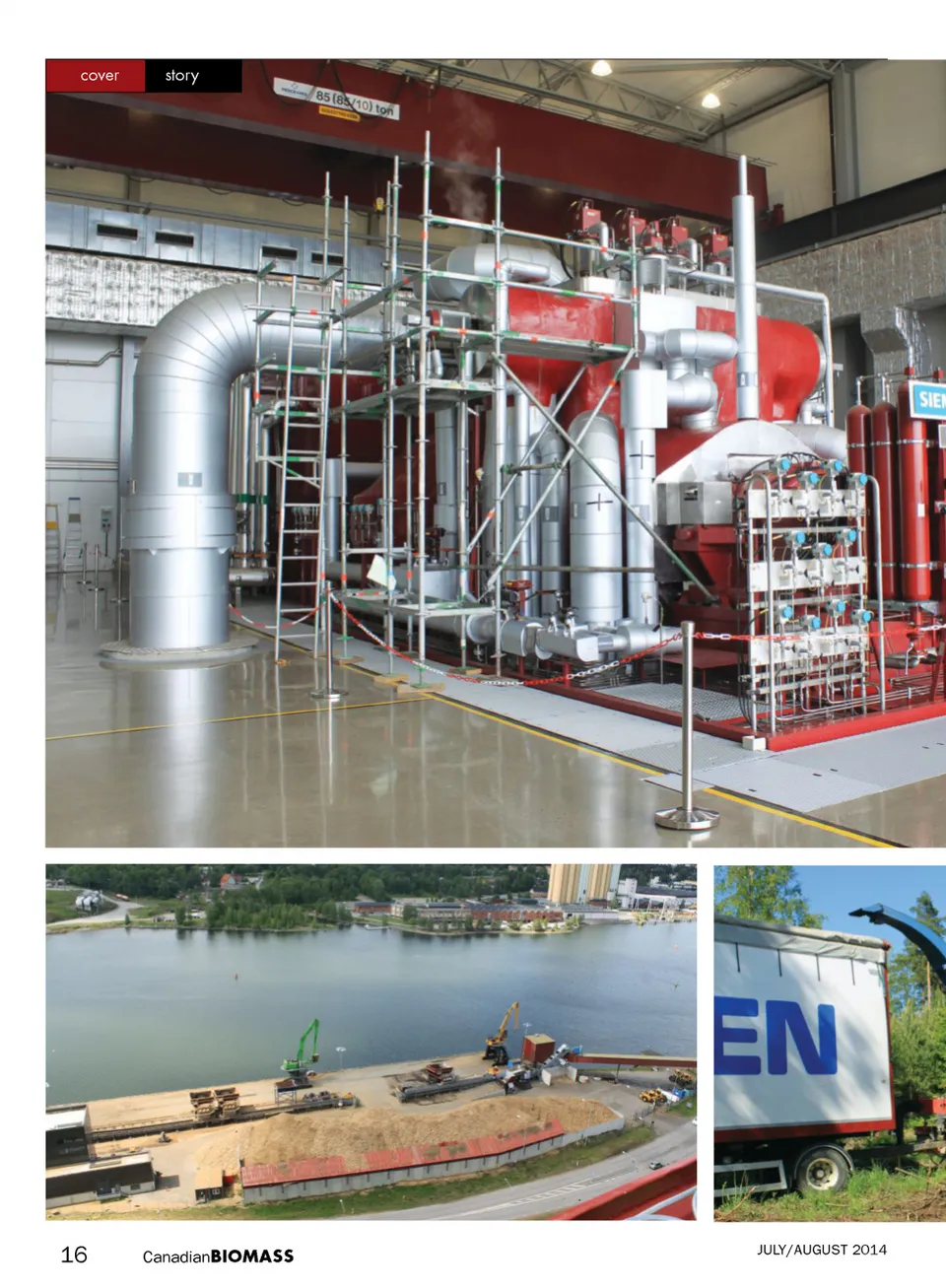
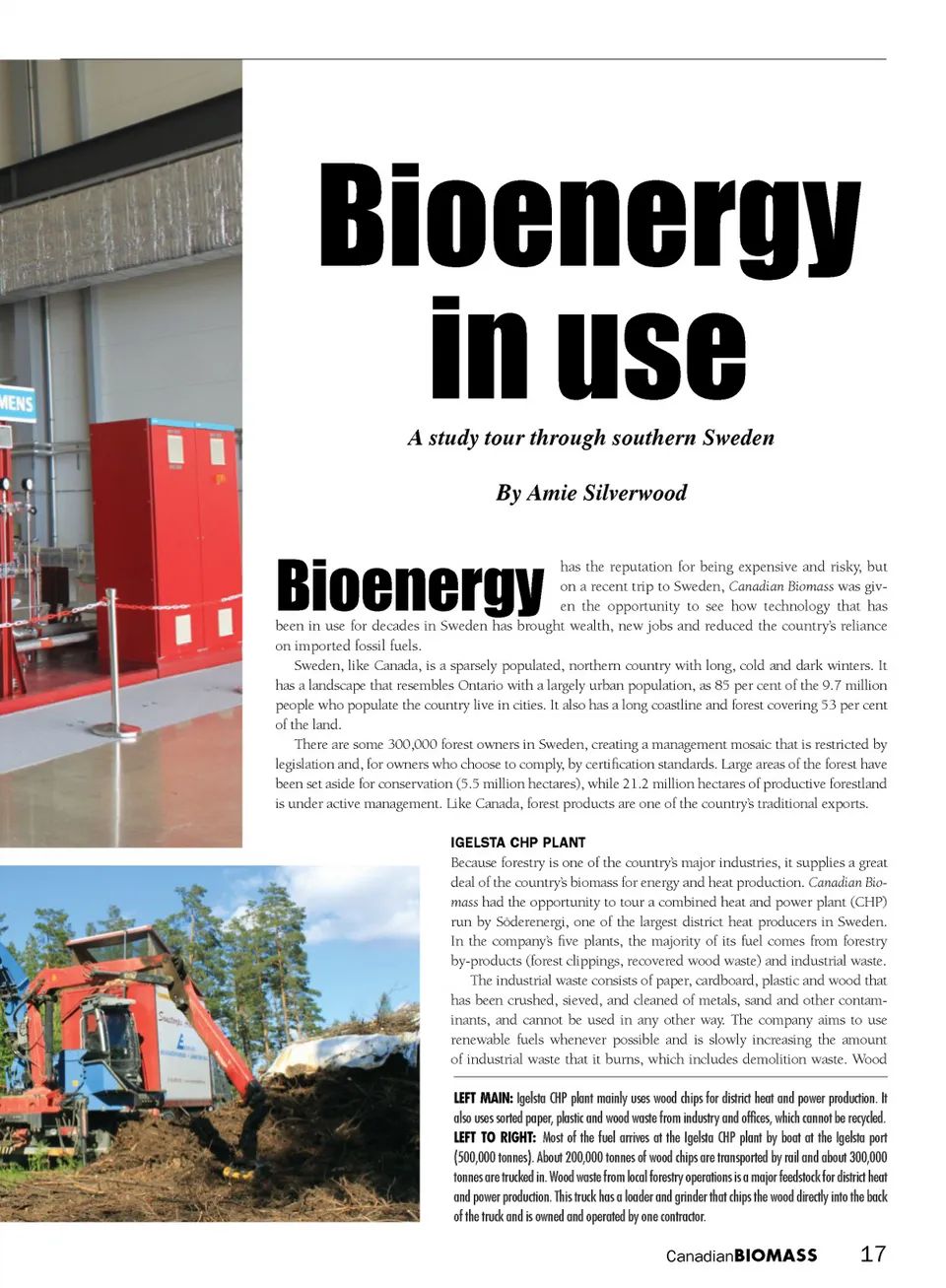
Bioenergy in use A study tour through southern Sweden By Amie Silverwood has the reputation for being expensive and risky, but on a recent trip to Sweden, Canadian Biomass was giv-en the opportunity to see how technology that has been in use for decades in Sweden has brought wealth, new jobs and reduced the country’s reliance on imported fossil fuels. Sweden, like Canada, is a sparsely populated, northern country with long, cold and dark winters. It has a landscape that resembles Ontario with a largely urban population, as 85 per cent of the 9.7 million people who populate the country live in cities. It also has a long coastline and forest covering 53 per cent of the land. There are some 300,000 forest owners in Sweden, creating a management mosaic that is restricted by legislation and, for owners who choose to comply, by certification standards. Large areas of the forest have been set aside for conservation (5.5 million hectares), while 21.2 million hectares of productive forestland is under active management. Like Canada, forest products are one of the country’s traditional exports. IGELSTA CHP PLANT Because forestry is one of the country’s major industries, it supplies a great deal of the country’s biomass for energy and heat production. Canadian Bio-mass had the opportunity to tour a combined heat and power plant (CHP) run by Söderenergi, one of the largest district heat producers in Sweden. In the company’s five plants, the majority of its fuel comes from forestry by-products (forest clippings, recovered wood waste) and industrial waste. The industrial waste consists of paper, cardboard, plastic and wood that has been crushed, sieved, and cleaned of metals, sand and other contam-inants, and cannot be used in any other way. The company aims to use renewable fuels whenever possible and is slowly increasing the amount of industrial waste that it burns, which includes demolition waste. Wood LEFT MAIN: Igelsta CHP plant mainly uses wood chips for district heat and power production. It also uses sorted paper, plastic and wood waste from industry and offices, which cannot be recycled. LEFT TO RIGHT: Most of the fuel arrives at the Igelsta CHP plant by boat at the Igelsta port (500,000 tonnes). About 200,000 tonnes of wood chips are transported by rail and about 300,000 tonnes are trucked in. Wood waste from local forestry operations is a major feedstock for district heat and power production. This truck has a loader and grinder that chips the wood directly into the back of the truck and is owned and operated by one contractor. Bioenergy Canadian BIOMASS 17
Canadian Biomass July August 2014: Page 17