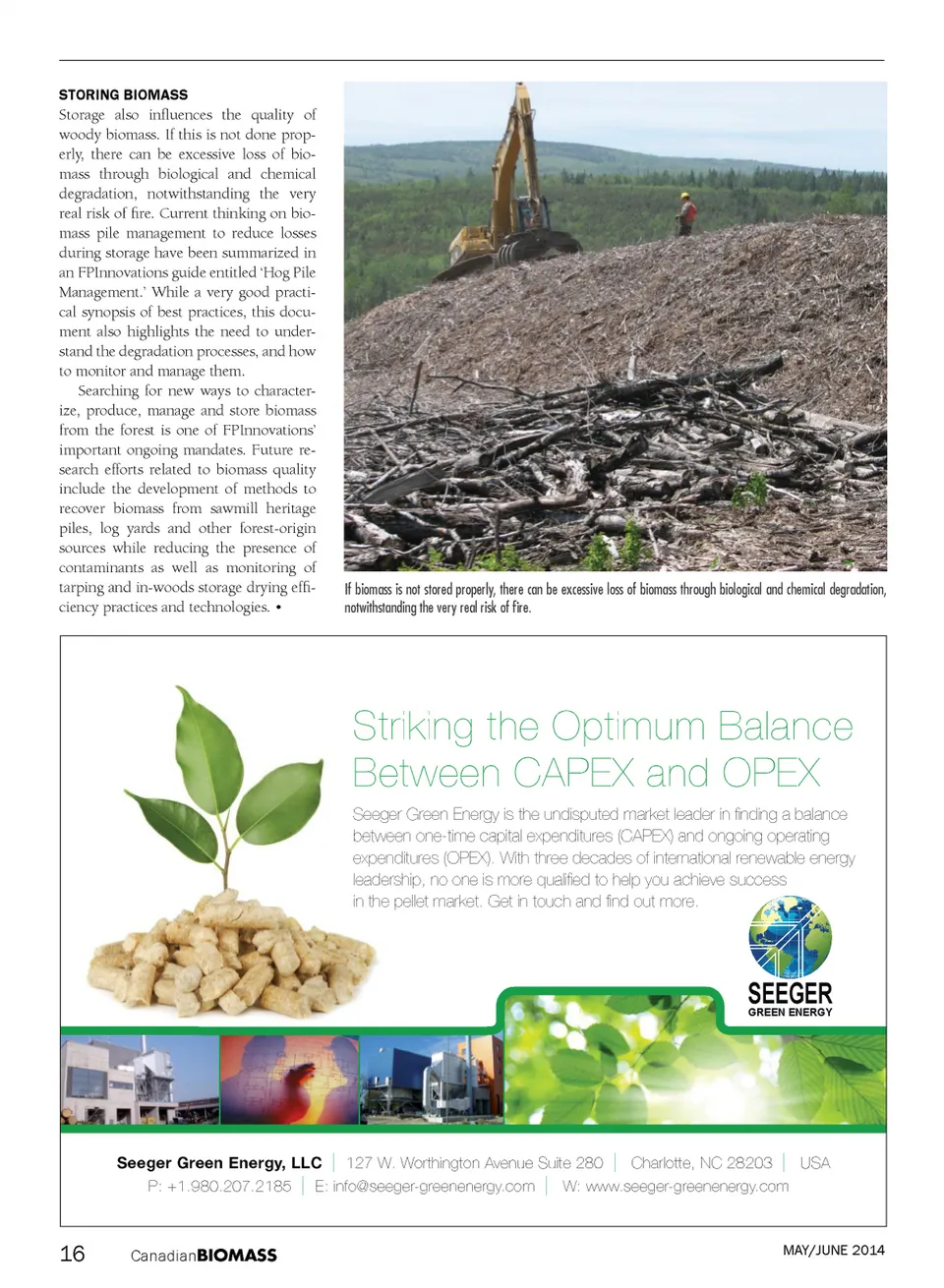
stoRing biomass Storage also influences the quality of woody biomass. If this is not done prop-erly, there can be excessive loss of bio-mass through biological and chemical degradation, notwithstanding the very real risk of fire. Current thinking on bio-mass pile management to reduce losses during storage have been summarized in an FPInnovations guide entitled ‘Hog Pile Management.’ While a very good practi-cal synopsis of best practices, this docu-ment also highlights the need to under-stand the degradation processes, and how to monitor and manage them. Searching for new ways to character-ize, produce, manage and store biomass from the forest is one of FPInnovations’ important ongoing mandates. Future re-search efforts related to biomass quality include the development of methods to recover biomass from sawmill heritage piles, log yards and other forest-origin sources while reducing the presence of contaminants as well as monitoring of tarping and in-woods storage drying effi-ciency practices and technologies. • If biomass is not stored properly, there can be excessive loss of biomass through biological and chemical degradation, notwithstanding the very real risk of fire. Striking the Optimum Balance Between CAPEX and OPEX Seeger Green Energy is the undisputed market leader in finding a balance between one-time capital expenditures (CAPEX) and ongoing operating expenditures (OPEX). With three decades of international renewable energy leadership, no one is more qualified to help you achieve success in the pellet market. Get in touch and find out more. GREEN ENERGY SEEGER Seeger Green Energy, LLC 127 W. Worthington Avenue Suite 280 Charlotte, NC 28203 USA E: [email protected] W: www.seeger-greenenergy.com P: +1.980.207.2185 I I I I I 16 Canadian BIOMASS MAY/JUNE 2014
Canadian Biomass May June 2014: Page 16