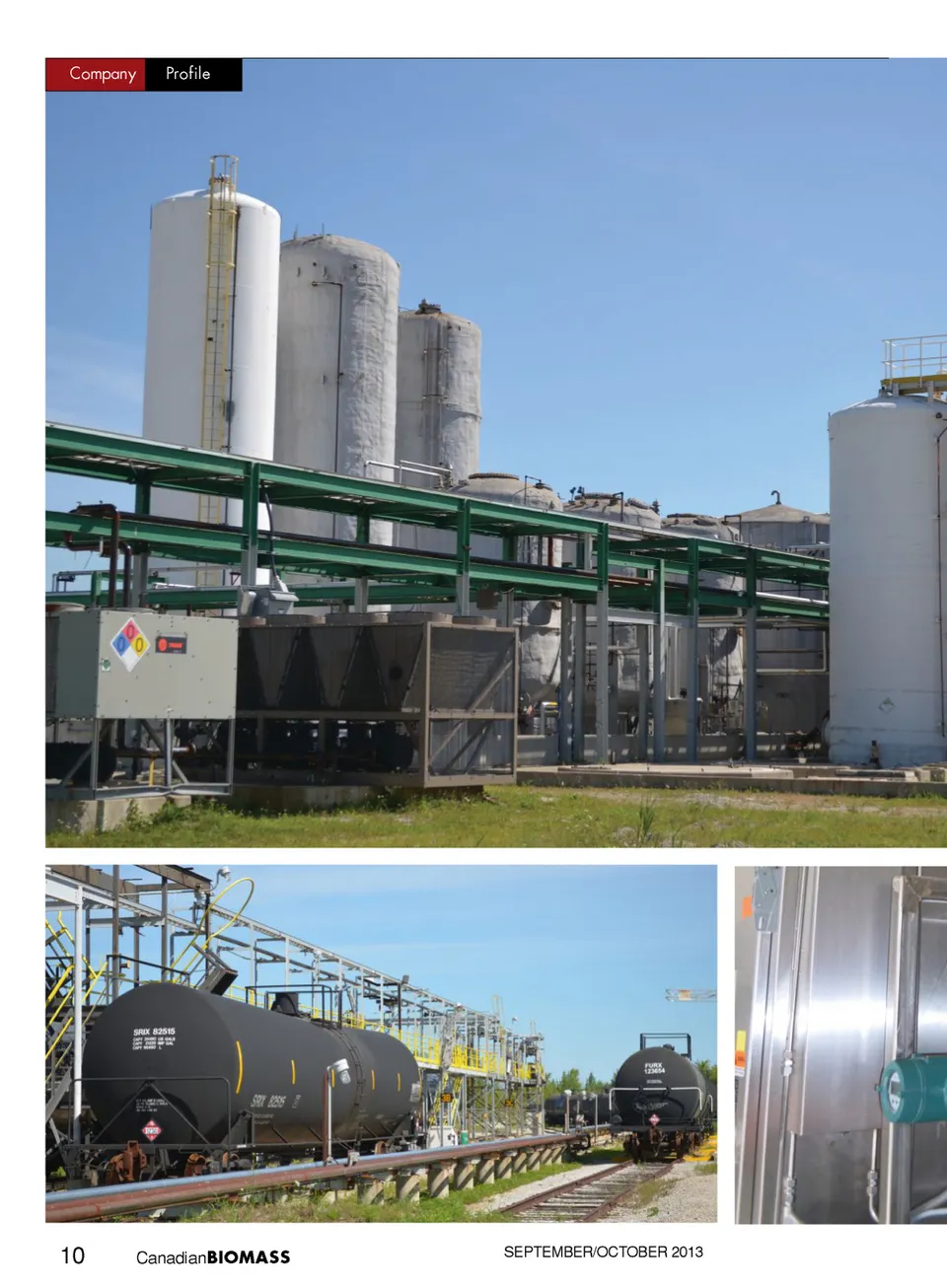
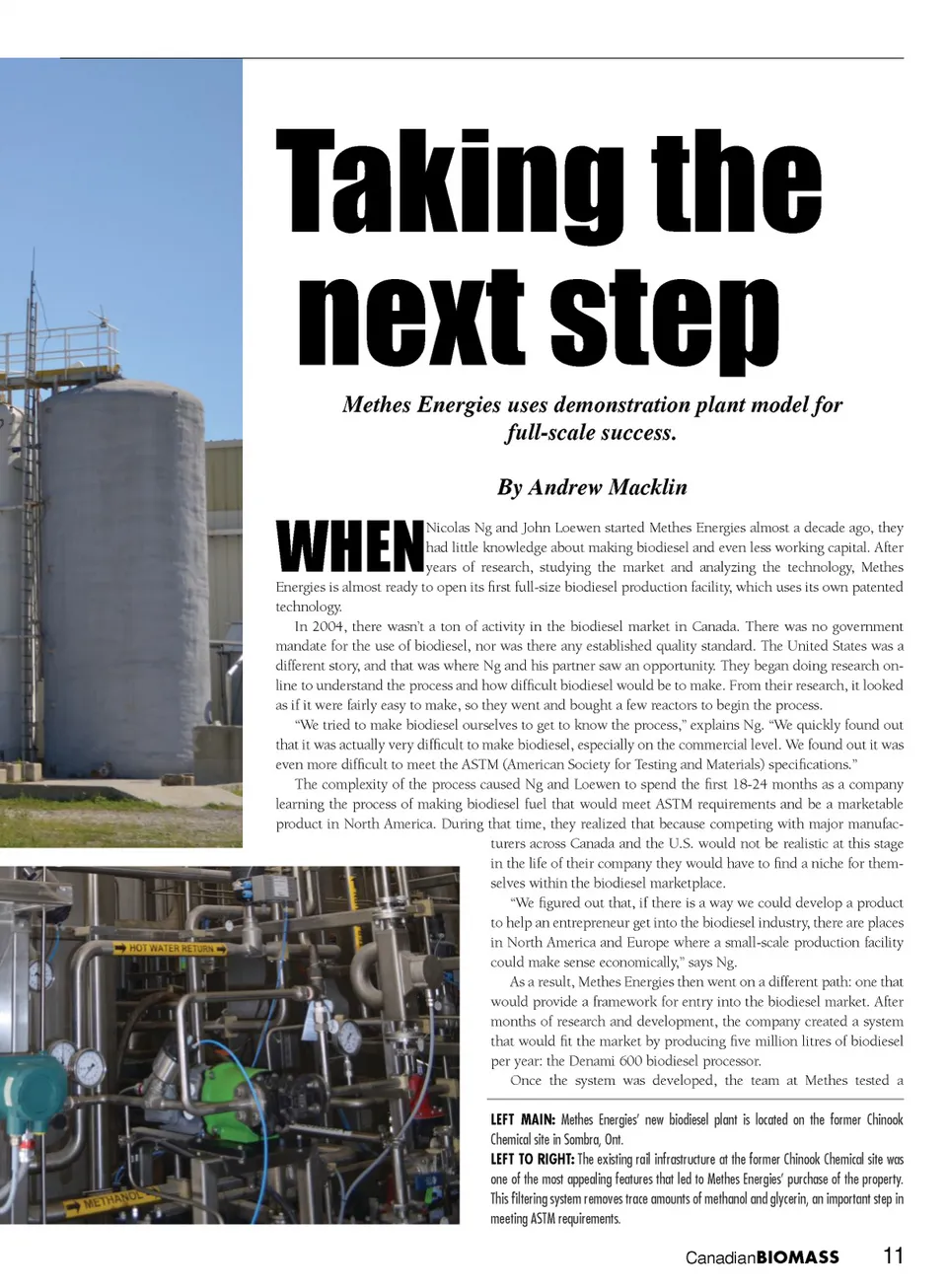
Taking the next step WHen By Andrew Macklin Methes Energies uses demonstration plant model for full-scale success. Nicolas Ng and John Loewen started Methes Energies almost a decade ago, they had little knowledge about making biodiesel and even less working capital. After years of research, studying the market and analyzing the technology, Methes Energies is almost ready to open its first full-size biodiesel production facility, which uses its own patented technology. In 2004, there wasn’t a ton of activity in the biodiesel market in Canada. There was no government mandate for the use of biodiesel, nor was there any established quality standard. The United States was a different story, and that was where Ng and his partner saw an opportunity. They began doing research on-line to understand the process and how difficult biodiesel would be to make. From their research, it looked as if it were fairly easy to make, so they went and bought a few reactors to begin the process. “We tried to make biodiesel ourselves to get to know the process,” explains Ng. “We quickly found out that it was actually very difficult to make biodiesel, especially on the commercial level. We found out it was even more difficult to meet the ASTM (American Society for Testing and Materials) specifications.” The complexity of the process caused Ng and Loewen to spend the first 18-24 months as a company learning the process of making biodiesel fuel that would meet ASTM requirements and be a marketable product in North America. During that time, they realized that because competing with major manufac-turers across Canada and the U.S. would not be realistic at this stage in the life of their company they would have to find a niche for them-selves within the biodiesel marketplace. “We figured out that, if there is a way we could develop a product to help an entrepreneur get into the biodiesel industry, there are places in North America and Europe where a small-scale production facility could make sense economically,” says Ng. As a result, Methes Energies then went on a different path: one that would provide a framework for entry into the biodiesel market. After months of research and development, the company created a system that would fit the market by producing five million litres of biodiesel per year: the Denami 600 biodiesel processor. Once the system was developed, the team at Methes tested a LEFT MAIN: Methes Energies’ new biodiesel plant is located on the former Chinook Chemical site in Sombra, Ont. LEFT TO RIGHT: The existing rail infrastructure at the former Chinook Chemical site was one of the most appealing features that led to Methes Energies’ purchase of the property. This filtering system removes trace amounts of methanol and glycerin, an important step in meeting ASTM requirements. Canadian BIOMASS 11
Canadian Biomass September/October 2013: Page 11