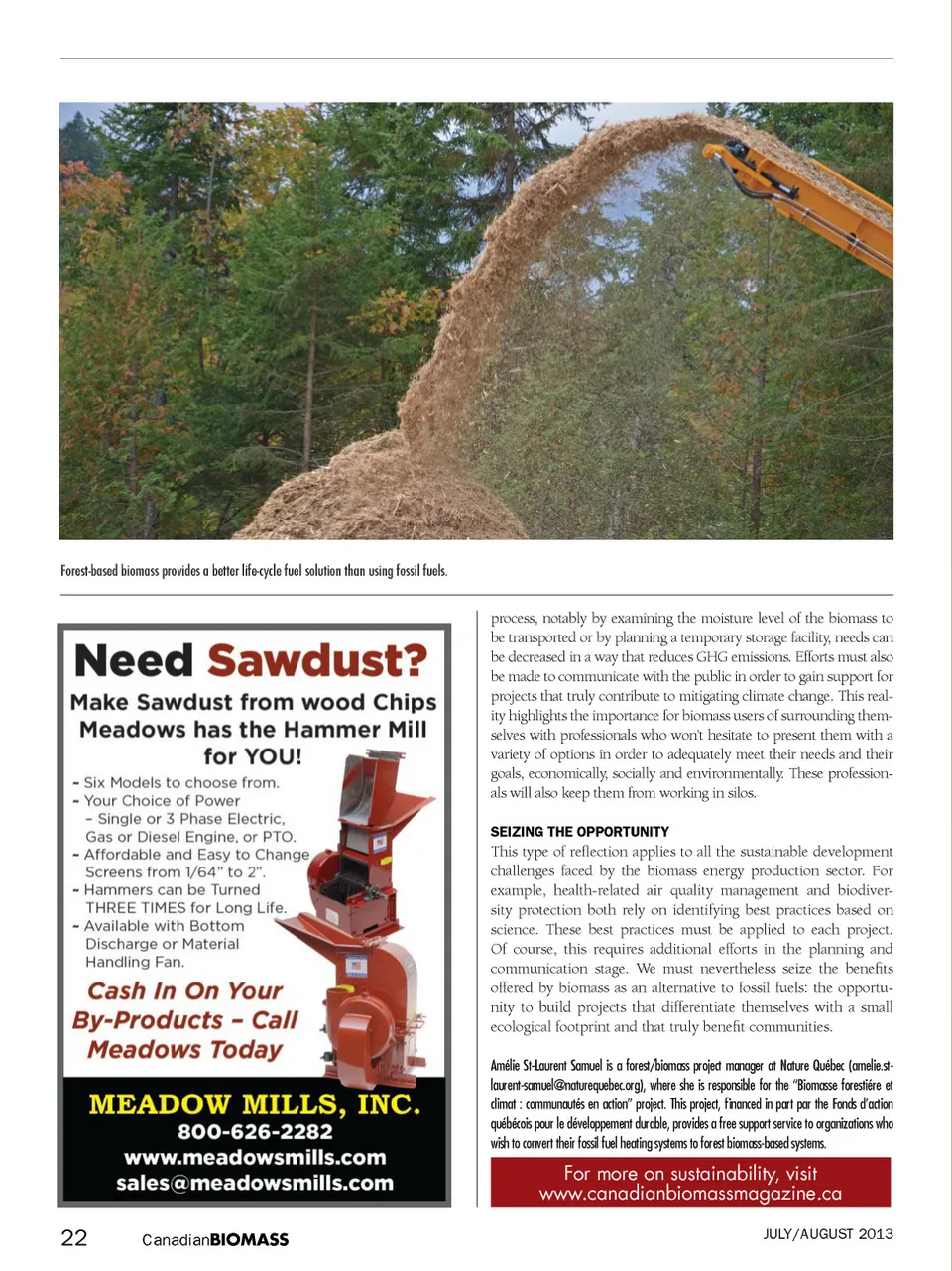
Forest-based biomass provides a better life-cycle fuel solution than using fossil fuels. process, notably by examining the moisture level of the biomass to be transported or by planning a temporary storage facility, needs can be decreased in a way that reduces GHG emissions. Efforts must also be made to communicate with the public in order to gain support for projects that truly contribute to mitigating climate change. This real-ity highlights the importance for biomass users of surrounding them-selves with professionals who won’t hesitate to present them with a variety of options in order to adequately meet their needs and their goals, economically, socially and environmentally. These profession-als will also keep them from working in silos. seizing the opportunity This type of reflection applies to all the sustainable development challenges faced by the biomass energy production sector. For example, health-related air quality management and biodiver-sity protection both rely on identifying best practices based on science. These best practices must be applied to each project. Of course, this requires additional efforts in the planning and communication stage. We must nevertheless seize the benefits offered by biomass as an alternative to fossil fuels: the opportu-nity to build projects that differentiate themselves with a small ecological footprint and that truly benefit communities. Amélie St-Laurent Samuel is a forest/biomass project manager at Nature Québec ([email protected]), where she is responsible for the “Biomasse forestiére et climat : communautés en action” project. This project, financed in part par the Fonds d’action québécois pour le développement durable, provides a free support service to organizations who wish to convert their fossil fuel heating systems to forest biomass-based systems. For more on sustainability, visit www.canadianbiomassmagazine.ca 22 Canadian BIOMASS 13-05-10 7:59 AM JULY/AUGUST 2013 Meadow mills OF june 13.indd 1
Canadian Biomass August/September 2013: Page 22