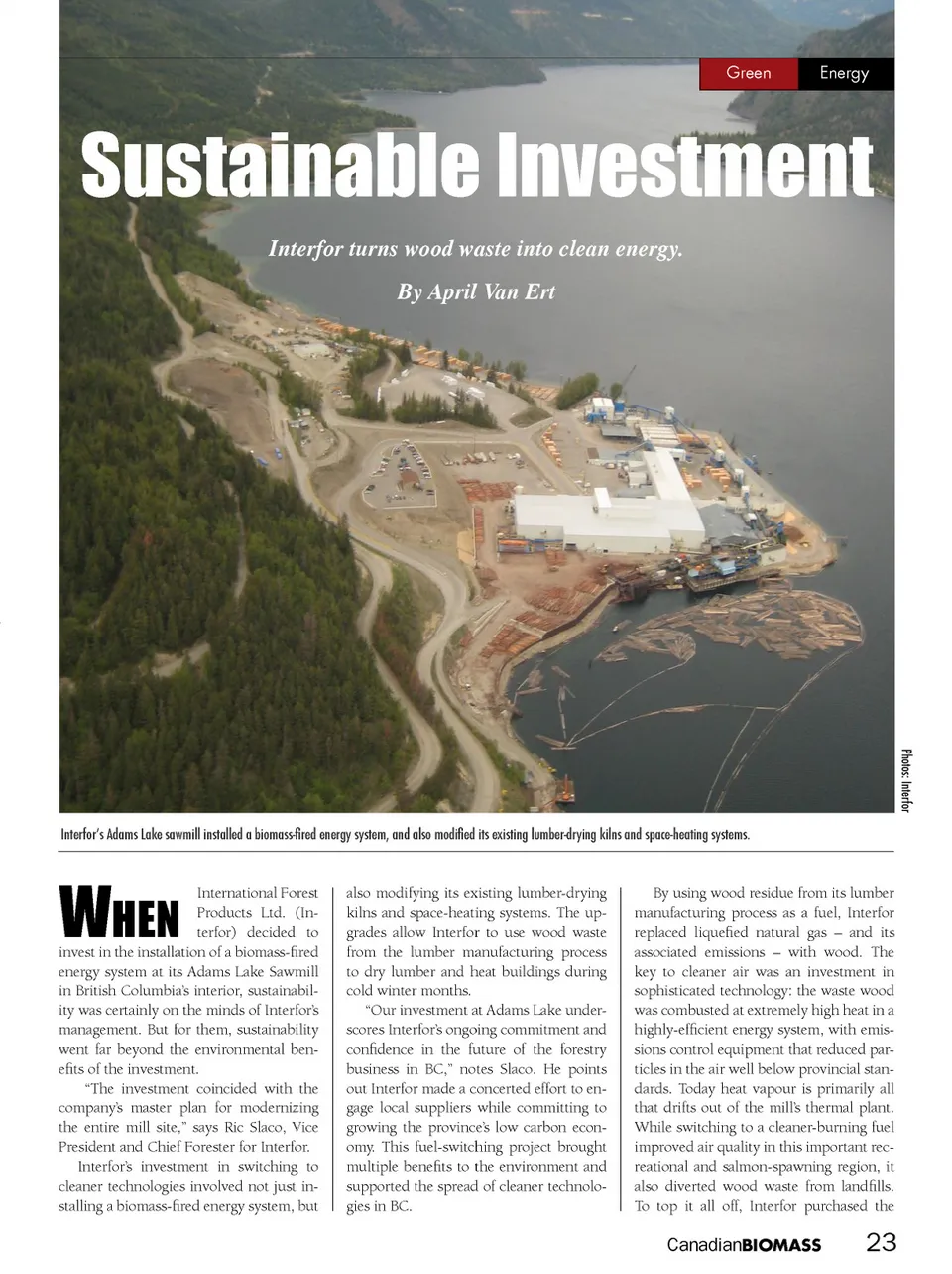
Green Energy Sustainable Investment Interfor turns wood waste into clean energy. By April Van Ert Photos: Interfor Interfor’s Adams Lake sawmill installed a biomass-fired energy system, and also modified its existing lumber-drying kilns and space-heating systems. W hen International Forest Products Ltd. (In-terfor) decided to invest in the installation of a biomass-fired energy system at its Adams Lake Sawmill in British Columbia’s interior, sustainabil-ity was certainly on the minds of Interfor’s management. But for them, sustainability went far beyond the environmental ben-efits of the investment. “The investment coincided with the company’s master plan for modernizing the entire mill site,” says Ric Slaco, Vice President and Chief Forester for Interfor. Interfor’s investment in switching to cleaner technologies involved not just in-stalling a biomass-fired energy system, but also modifying its existing lumber-drying kilns and space-heating systems. The up-grades allow Interfor to use wood waste from the lumber manufacturing process to dry lumber and heat buildings during cold winter months. “Our investment at Adams Lake under-scores Interfor’s ongoing commitment and confidence in the future of the forestry business in BC,” notes Slaco. He points out Interfor made a concerted effort to en-gage local suppliers while committing to growing the province’s low carbon econ-omy. This fuel-switching project brought multiple benefits to the environment and supported the spread of cleaner technolo-gies in BC. By using wood residue from its lumber manufacturing process as a fuel, Interfor replaced liquefied natural gas – and its associated emissions – with wood. The key to cleaner air was an investment in sophisticated technology: the waste wood was combusted at extremely high heat in a highly-efficient energy system, with emis-sions control equipment that reduced par-ticles in the air well below provincial stan-dards. Today heat vapour is primarily all that drifts out of the mill’s thermal plant. While switching to a cleaner-burning fuel improved air quality in this important rec-reational and salmon-spawning region, it also diverted wood waste from landfills. To top it all off, Interfor purchased the Canadian BIOMASS 23
Canadian Biomass July/August 2012: Page 23