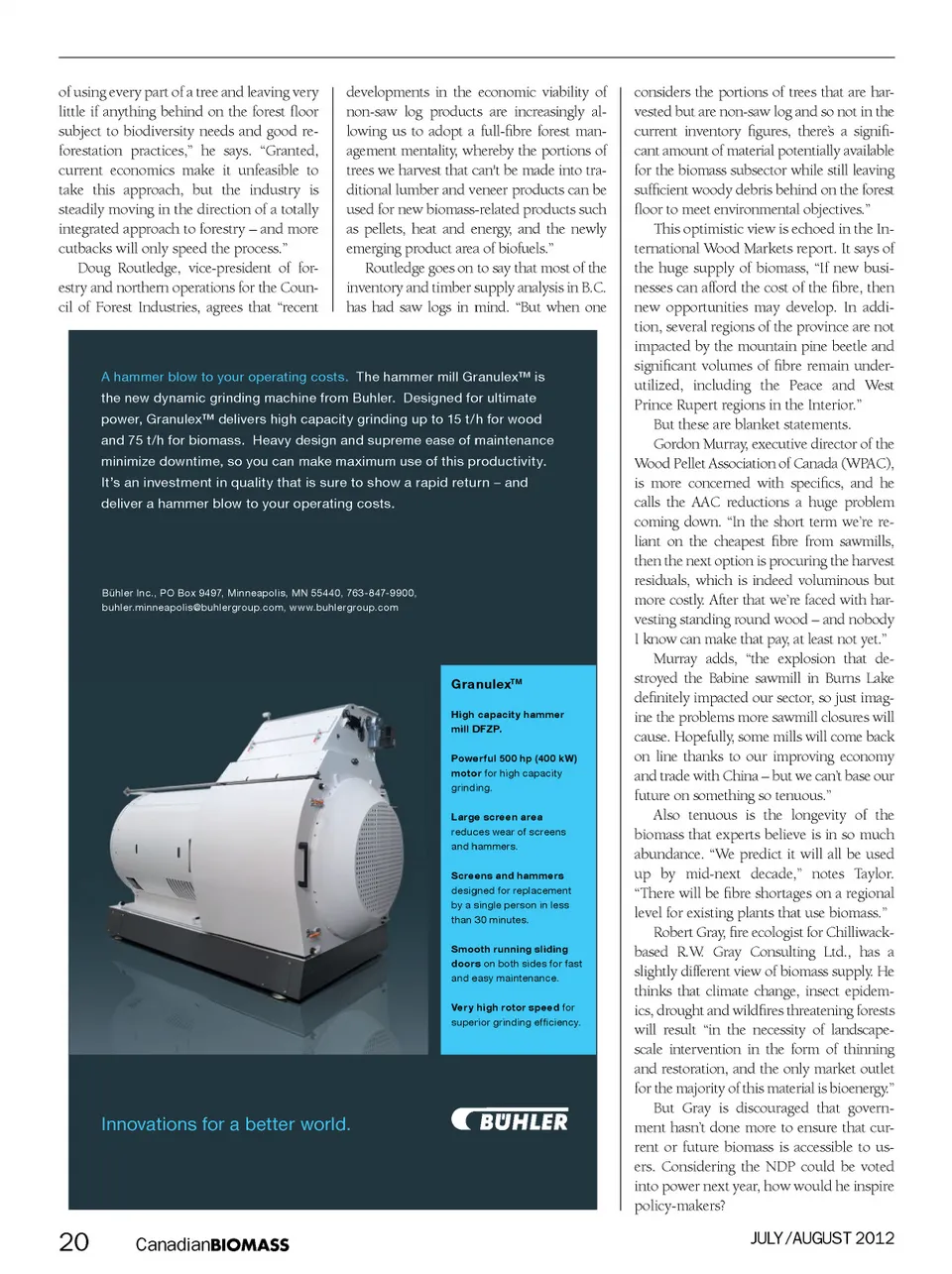
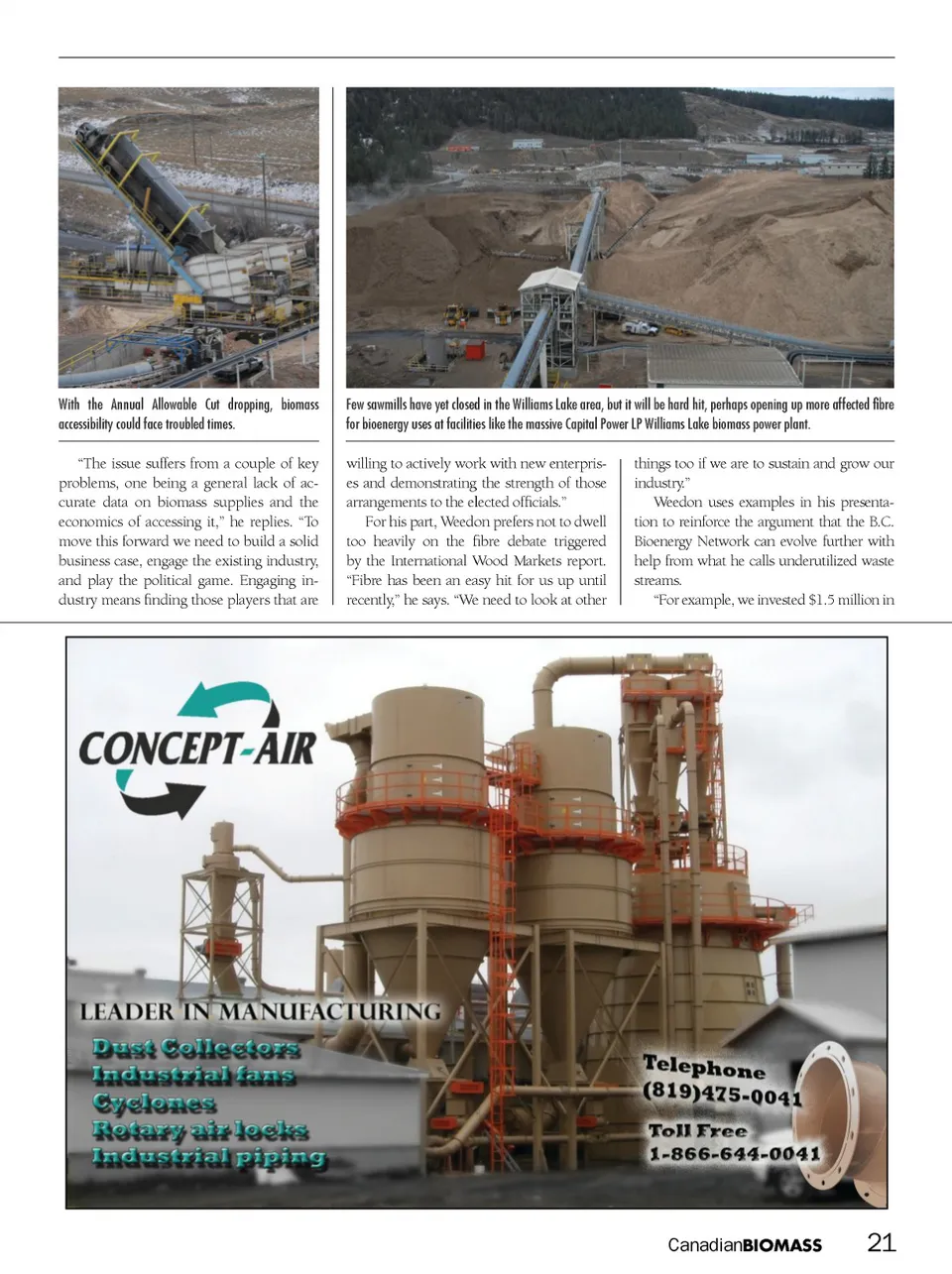
With the Annual Allowable Cut dropping, biomass accessibility could face troubled times. Few sawmills have yet closed in the Williams Lake area, but it will be hard hit, perhaps opening up more affected fibre for bioenergy uses at facilities like the massive Capital Power LP Williams Lake biomass power plant. “The issue suffers from a couple of key problems, one being a general lack of ac-curate data on biomass supplies and the economics of accessing it,” he replies. “To move this forward we need to build a solid business case, engage the existing industry, and play the political game. Engaging in-dustry means finding those players that are willing to actively work with new enterpris-es and demonstrating the strength of those arrangements to the elected officials.” For his part, Weedon prefers not to dwell too heavily on the fibre debate triggered by the International Wood Markets report. “Fibre has been an easy hit for us up until recently,” he says. “We need to look at other things too if we are to sustain and grow our industry.” Weedon uses examples in his presenta-tion to reinforce the argument that the B.C. Bioenergy Network can evolve further with help from what he calls underutilized waste streams. “For example, we invested $1.5 million in Canadian BIOMASS 21
Canadian Biomass July/August 2012: Page 21