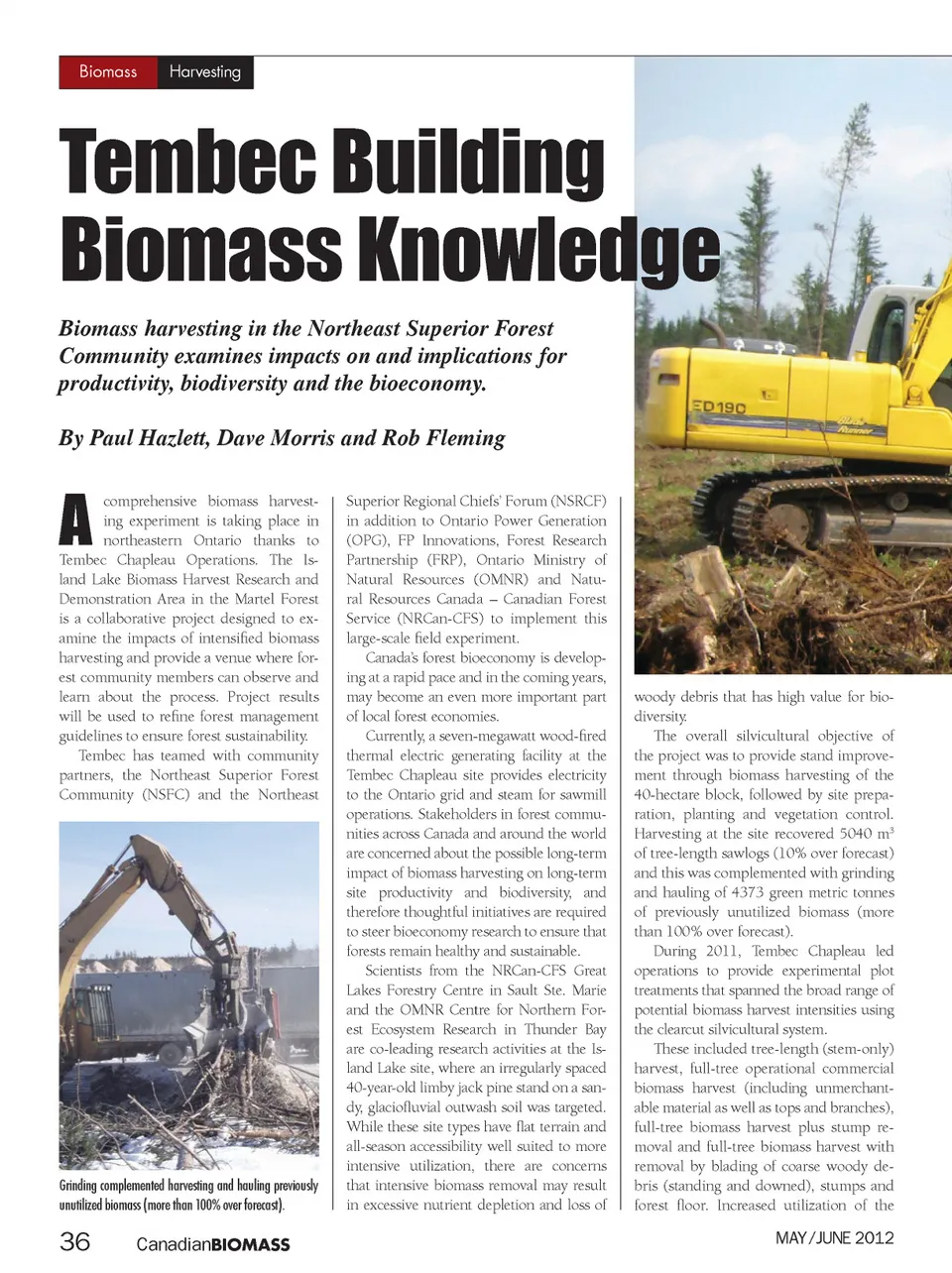
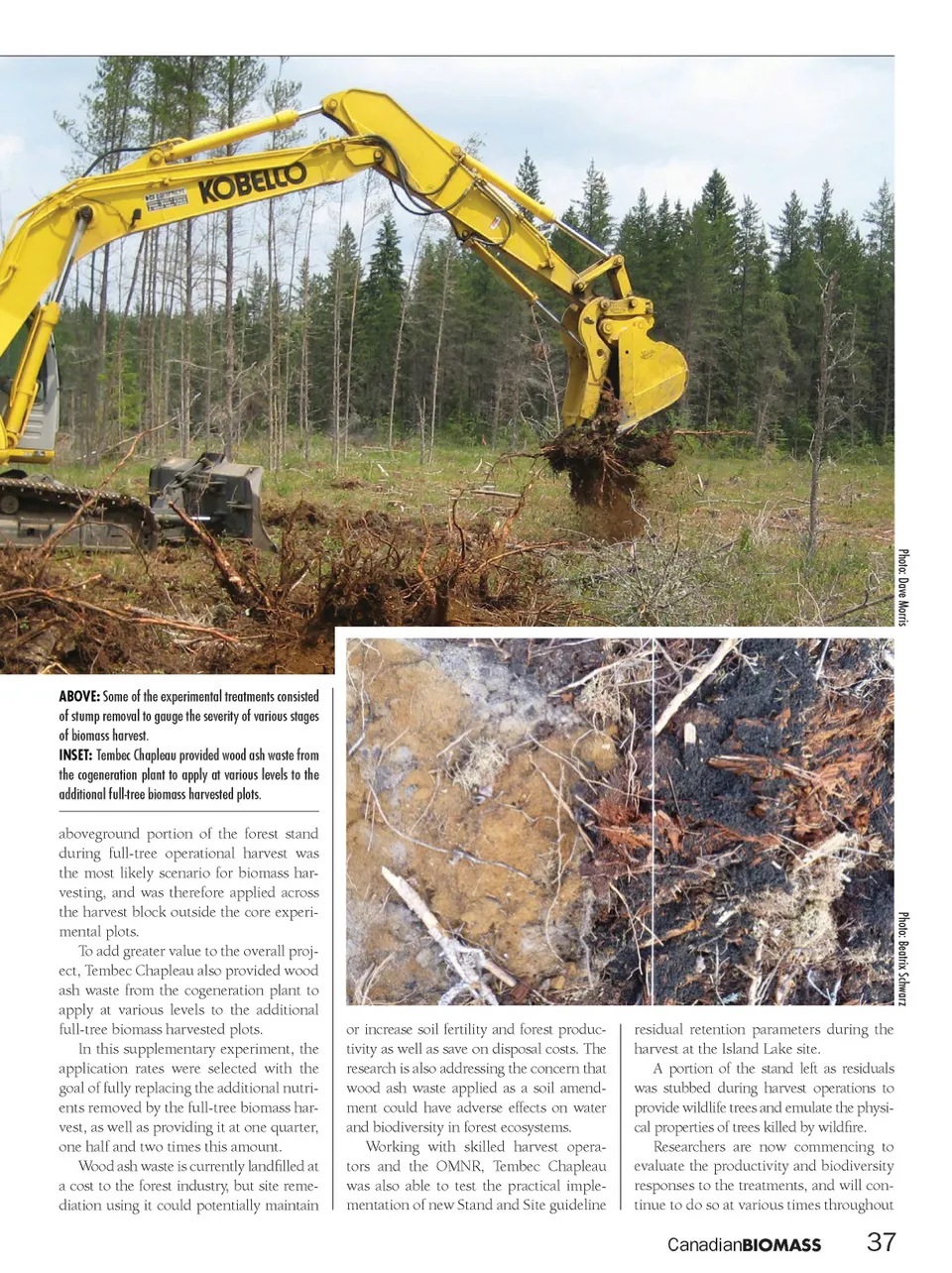
Photo: Dave Morris ABOVE: Some of the experimental treatments consisted of stump removal to gauge the severity of various stages of biomass harvest. INSET: Tembec Chapleau provided wood ash waste from the cogeneration plant to apply at various levels to the additional full-tree biomass harvested plots. aboveground portion of the forest stand during full-tree operational harvest was the most likely scenario for biomass har-vesting, and was therefore applied across the harvest block outside the core experi-mental plots. To add greater value to the overall proj-ect, Tembec Chapleau also provided wood ash waste from the cogeneration plant to apply at various levels to the additional full-tree biomass harvested plots. In this supplementary experiment, the application rates were selected with the goal of fully replacing the additional nutri-ents removed by the full-tree biomass har-vest, as well as providing it at one quarter, one half and two times this amount. Wood ash waste is currently landfilled at a cost to the forest industry, but site reme-diation using it could potentially maintain Photo: Beatrix Schwarz or increase soil fertility and forest produc-tivity as well as save on disposal costs. The research is also addressing the concern that wood ash waste applied as a soil amend-ment could have adverse effects on water and biodiversity in forest ecosystems. Working with skilled harvest opera-tors and the OMNR, Tembec Chapleau was also able to test the practical imple-mentation of new Stand and Site guideline residual retention parameters during the harvest at the Island Lake site. A portion of the stand left as residuals was stubbed during harvest operations to provide wildlife trees and emulate the physi-cal properties of trees killed by wildfire. Researchers are now commencing to evaluate the productivity and biodiversity responses to the treatments, and will con-tinue to do so at various times throughout Canadian BIOMASS 37
Canadian Biomass May/June 2012: Page 37