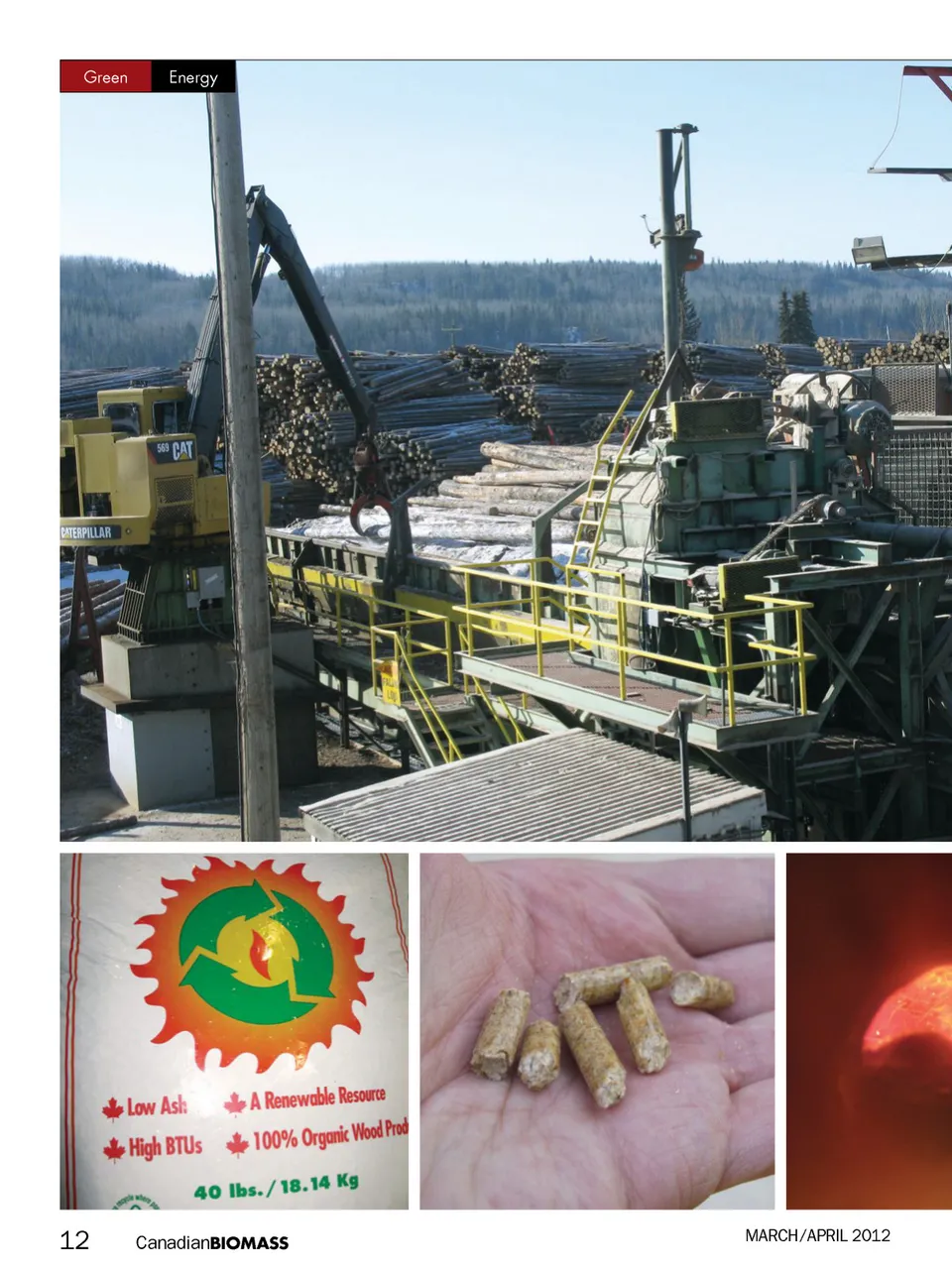
WASTE not, WANT not Premium Pellet and the Nechako group of companies are doing something different – using every last scrap of wood available to produce heat, lumber, pellets and power. By David Manly N estled deep in the British Columbia forests, about an hour away from Prince George, Van-derhoof is a quiet town located near the geographic centre of the province. And just a few minutes outside of town is Premium Pellet Ltd., which produces high-quality and premium-grade wood pellets for industrial and domestic use. Premium Pellet, established in 1998, is a subsidiary of L&M Lumber Ltd. (sawmill) and Nechako Lumber Company Ltd. (planer mill), which brings over 40 years of forest industry background to the table. All three companies are part of the Nechako Group, a fifty-fifty partnership between the Sinclar Group and local partners. All reside in the same complex located outside of Vanderhoof, British Columbia, which Canadian Biomass visited in February. down to the very last Bit The expansion into pellets came from the group’s need to replace its beehive burner with a more environmentally responsible option. The first step was to add a wood-fired energy system to convert wood waste into heat for thermal oil for its lumber drying operations. The goal even then was to turn an environmental liability into opportunity, by putting every part of the tree to use, as Alan Fitzpatrick, general manager and direc-tor of the Nechako group, explains. “We were very similar to a conventional sawmill at the beginning – logs came in from the bush, were stored in the yard and were initially processed in the sawmill,” he says. “Then, lumber was sent over to MAIN: Every part of the tree is used to create lumber, pellets or heat through processing from the Nechako group of companies. LEFT TO RIGHT: Premium Pellet Ltd., established in 1998, produces high-quality premium-grade pellets from sawdust and shavings produced locally; The pellets, once processed, are eas-ily broken, and require cooling for the lignin to harden.; A small portion of white wood waste is burned to power the dryer, but Fitzpatrick hopes this will soon no longer be necessary, thanks to the use of the ORC.; The sawdust is composed of white wood waste and is used to both power the dryer and create pellets. Canadian BIOMASS 13
Canadian Biomass March/April 2012: Page 13