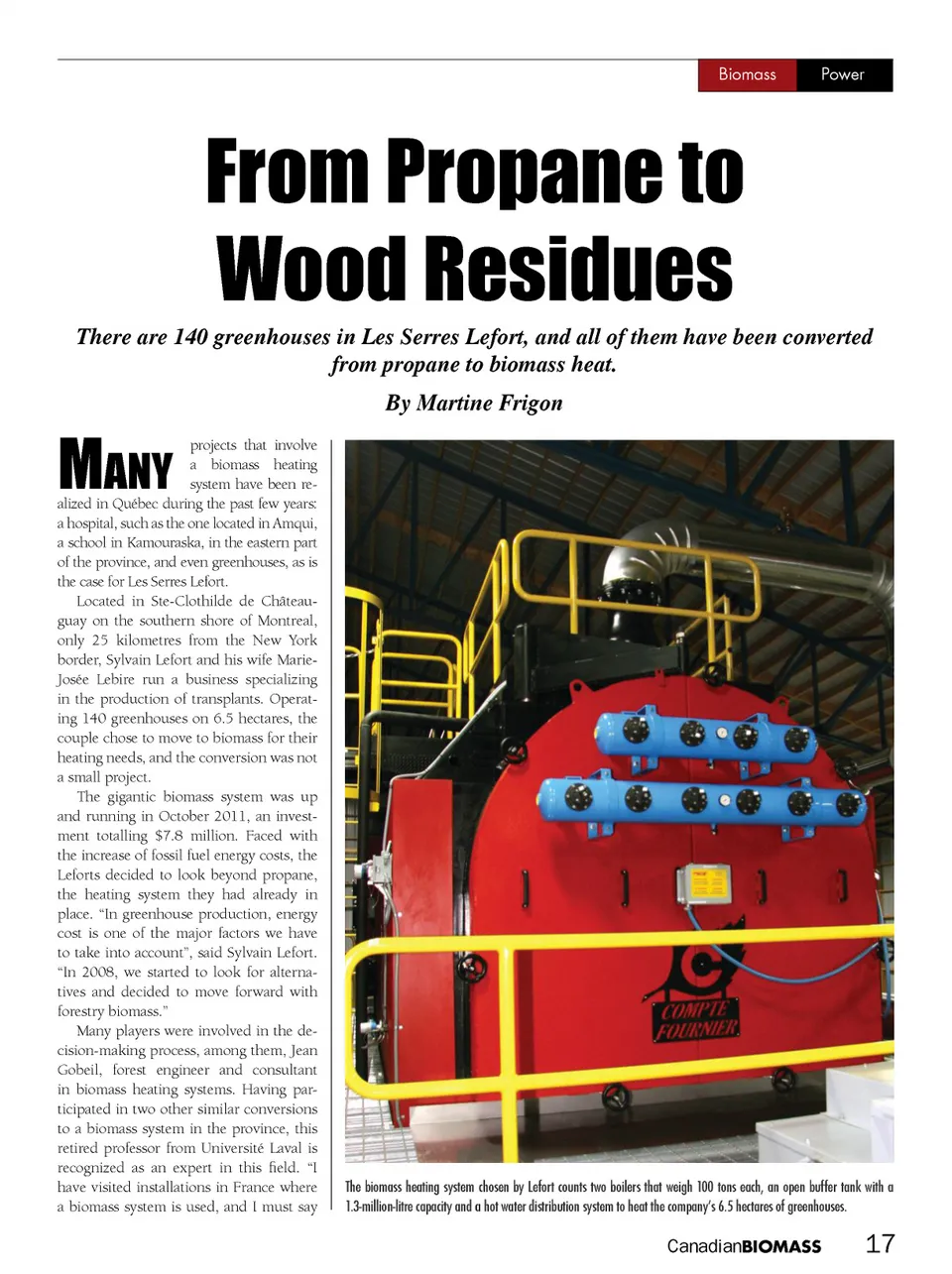
Biomass Power There are 140 greenhouses in Les Serres Lefort, and all of them have been converted from propane to biomass heat. From Propane to Wood Residues By Martine Frigon m any projects that involve a biomass heating system have been re-alized in Québec during the past few years: a hospital, such as the one located in Amqui, a school in Kamouraska, in the eastern part of the province, and even greenhouses, as is the case for Les Serres Lefort. Located in Ste-Clothilde de Château-guay on the southern shore of Montreal, only 25 kilometres from the New York border, Sylvain Lefort and his wife Marie-Josée Lebire run a business specializing in the production of transplants. Operat-ing 140 greenhouses on 6.5 hectares, the couple chose to move to biomass for their heating needs, and the conversion was not a small project. The gigantic biomass system was up and running in October 2011, an invest-ment totalling $7.8 million. Faced with the increase of fossil fuel energy costs, the Leforts decided to look beyond propane, the heating system they had already in place. “In greenhouse production, energy cost is one of the major factors we have to take into account”, said Sylvain Lefort. “In 2008, we started to look for alterna-tives and decided to move forward with forestry biomass.” Many players were involved in the de-cision-making process, among them, Jean Gobeil, forest engineer and consultant in biomass heating systems. Having par-ticipated in two other similar conversions to a biomass system in the province, this retired professor from Université Laval is recognized as an expert in this field. “I have visited installations in France where a biomass system is used, and I must say The biomass heating system chosen by Lefort counts two boilers that weigh 100 tons each, an open buffer tank with a 1.3-million-litre capacity and a hot water distribution system to heat the company’s 6.5 hectares of greenhouses. Canadian BIOMASS 17
Canadian Biomass January/February 2012: Page 17